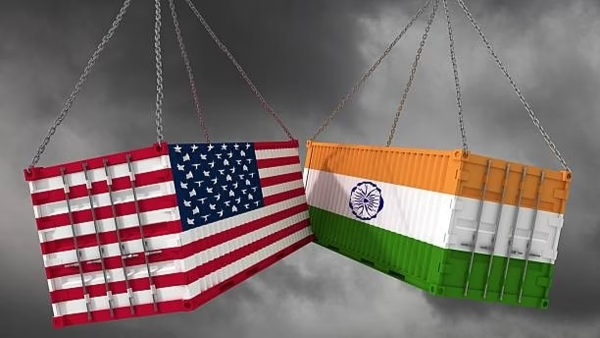
A recent report by the Office of the United States Trade Representative has raised concerns over India’s tariff structure and regulatory framework for medical devices describing them as restrictive and challenging for foreign manufacturers seeking market access. According to the latest National Trade Estimate (NTE) report, the United States has flagged India’s relatively high applied tariffs and frequent, unpredictable changes in customs duties as key barriers. The report notes that such fluctuations create uncertainty for exporters particularly in sectors like medical technology.
A major point of concern highlighted in the report is India’s increasing use of Quality Control Orders (QCOs). These mandates require products to undergo domestic testing and certification before entering the Indian market.The US has termed these measures as non-tariff barriers, arguing that they add compliance burdens for global manufacturers. The report also points out that QCOs are being expanded beyond finished products to include raw materials and intermediates, further complicating supply chains.
Medical devices have been identified as a particularly sensitive area. The US has raised issues related to:
- Price caps on certain devices
- Mandatory certification requirements
- Licensing hurdles for refurbished medical equipment
These factors, according to the report, make India a “policy-heavy” market that is difficult for foreign med-tech companies to navigate. India has maintained that its tariff and regulatory framework is compliant with World Trade Organization norms and is aimed at strengthening domestic manufacturing under initiatives like “Make in India.”
The report also acknowledges some positive steps taken by India, including recent tariff reductions on select medical inputs and life-saving drugs announced in the 2026 Budget. The concerns come amid ongoing efforts by India and the United States to negotiate a broader trade agreement. Both sides are working to address tariff and non-tariff barriers, including issues related to medical devices, as part of a larger push to enhance bilateral trade and supply chain resilience.
The US trade report underscores persistent differences between the two countries on market access and regulatory practices in the healthcare sector. While India continues to prioritize domestic industry growth, the US is pushing for greater transparency and ease of doing business, particularly in the medical devices segment.