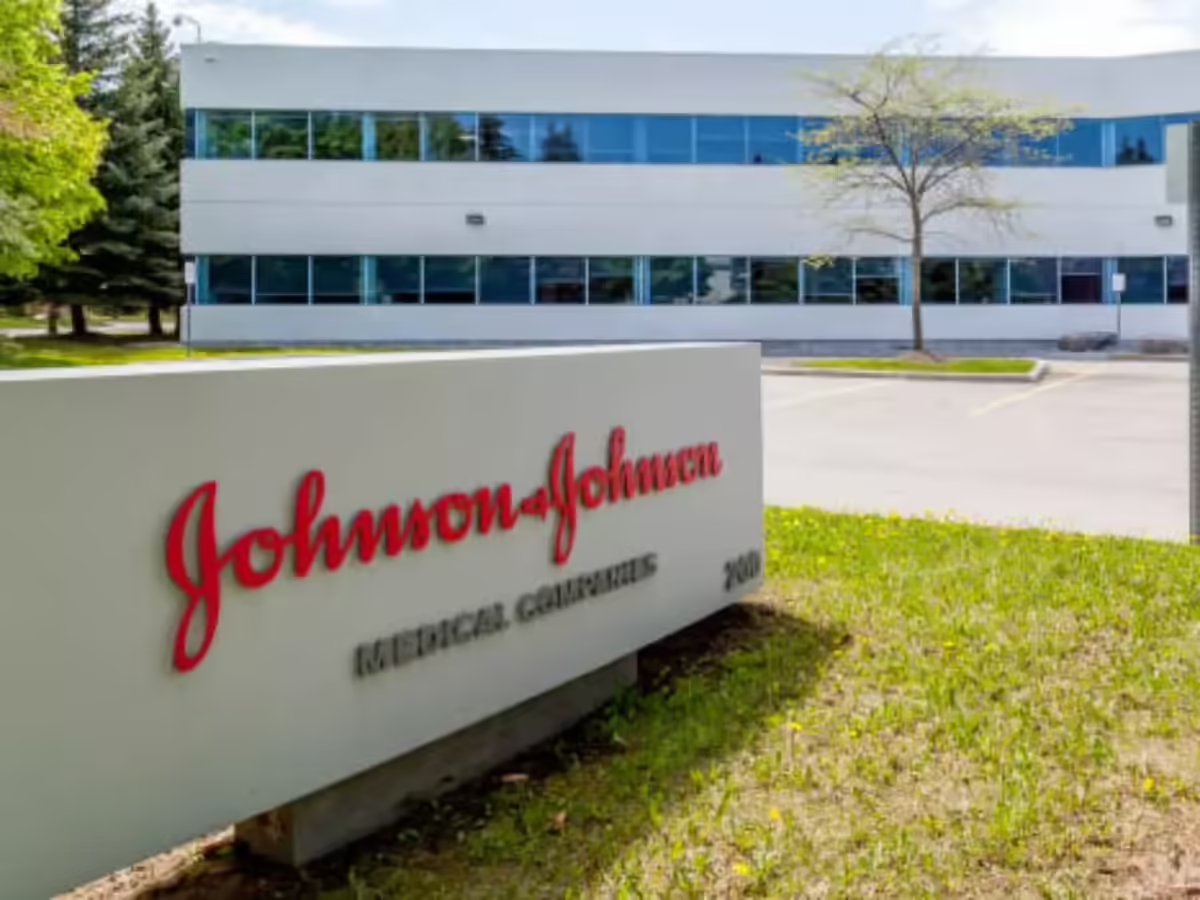
Johnson & Johnson (J&J) has announced a $5.5 billion settlement to resolve tens of thousands of lawsuits alleging that its talc-based products, including its iconic baby powder, caused ovarian cancer. The agreement marks one of the largest settlements in the company’s history and aims to bring an end to years of legal disputes.
The settlement covers approximately 69,000 cases consolidated in the federal court in New Jersey, along with related state court claims, representing 99.75% of all remaining talc-related lawsuits, according to the company.
Law firms representing the plaintiffs welcomed the agreement, calling it a fair resolution after nearly a decade of litigation. However, the settlement still requires approval from the federal judge overseeing the multidistrict litigation.
Despite agreeing to settle, J&J continues to deny that its talc products caused cancer. Erik Haas, the company’s Vice President of Litigation, stated that the allegations are “without merit” and said the company chose to settle to bring finality to the prolonged legal battle.
He added that while J&J believes it would have ultimately succeeded in court as it claims to have done in most previous trials the settlement allows the company to move forward and focus on developing life-saving medicines and medical devices.
The announcement follows a recent legal victory for J&J, in which a federal judge questioned whether individual plaintiffs could conclusively prove that exposure to talc directly caused their ovarian cancer.
J&J has consistently maintained that its talc products were safe and free from asbestos contamination. The company discontinued sales of its talc-based baby powder in the United States in 2020 and replaced it with a cornstarch-based formulation.
The litigation resumed in March 2025 after being paused for more than three years while J&J unsuccessfully attempted to resolve the claims through bankruptcy proceedings involving a subsidiary. Unlike those earlier proposals, the new settlement applies only to existing lawsuits and does not cover any future claims.