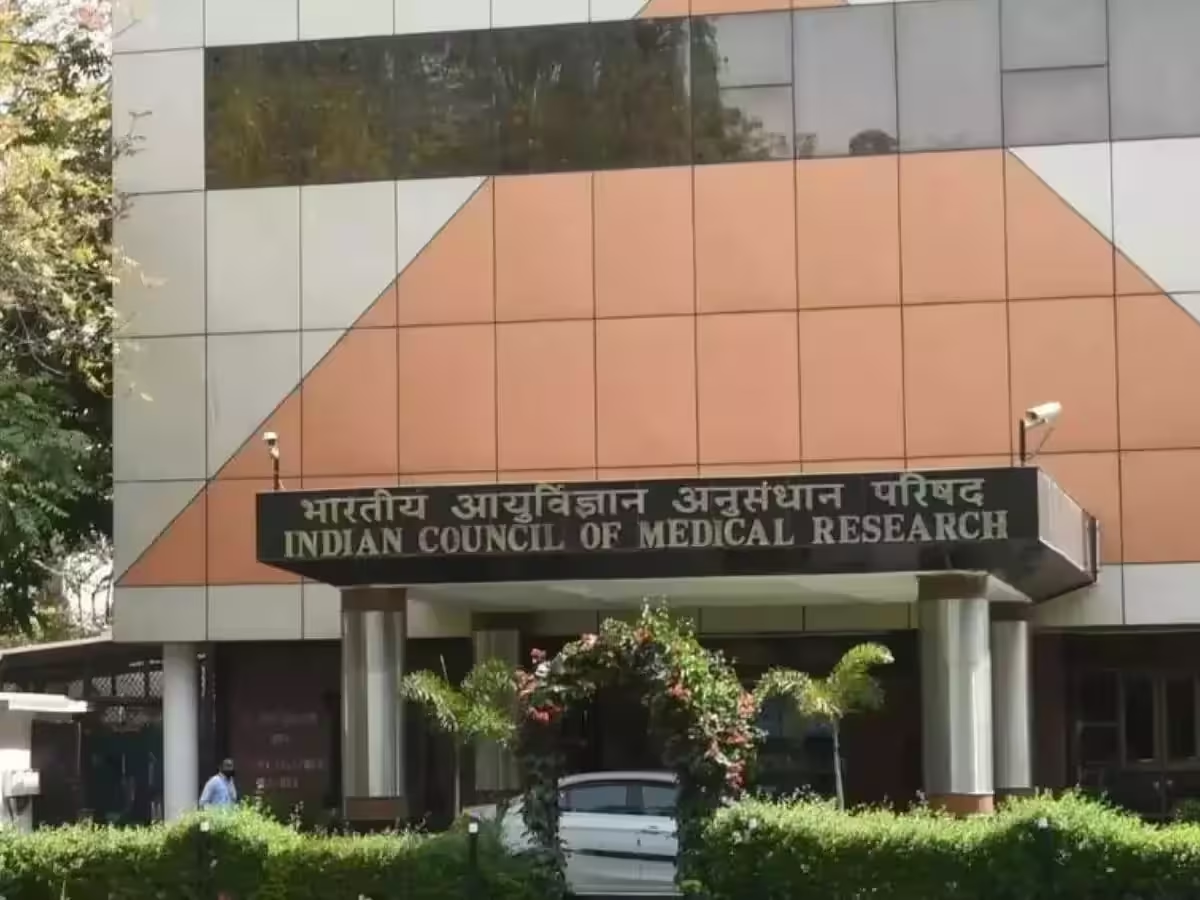
The Indian Council of Medical Research (ICMR) has selected seven research centres at leading academic institutions across India to develop priority medical devices and diagnostic technologies. The initiative focuses on strengthening indigenous healthcare innovation and addressing unmet clinical needs through affordable and accessible medical technologies.
The selected institutions include IIT Kharagpur, IIT Delhi, IIT Bombay, IIT Kanpur, IIT Madras, the Indian Institute of Science (IISc), Bengaluru, and Amrita Vishwa Vidyapeetham, Coimbatore.
Research Centres to Focus on Priority Healthcare Technologies
Each selected centre will work on specific areas of medical technology development, ranging from portable diagnostic solutions to advanced therapeutics and specialised healthcare devices.
At IIT Bombay, a centre led by Dr Abhijit Majumder will develop portable screening, monitoring and point-of-care technologies designed to support primary healthcare services.
Amrita Vishwa Vidyapeetham, under Prof Gopal S Pillai, will focus on the development, validation and translation of healthcare technologies for ophthalmic and vascular diseases.
IISc Bengaluru will concentrate on biomaterials and translational medical devices, while IIT Kharagpur’s PRAGATICAR, headed by Prof Suman Chakraborty, will undertake research in affordable diagnostics, regenerative and personalised healthcare, artificial intelligence, digital health and advanced therapeutics.
At IIT Delhi, Prof Vivekanandan Perumal will lead CAR-PATH, a centre dedicated to priority applied healthcare technologies.
IIT Kanpur, under Prof Amitabha Bandyopadhyay, will undertake a multidisciplinary project aimed at developing 10 priority healthcare products.
Meanwhile, IIT Madras will establish TARaNGaM, a translational hub for next-generation medical technology, devices and diagnostics, led by Prof Mohanasankar Sivaprakasam.
ICMR Identifies Around 100 Priority Medical Technologies
Before launching the initiative, ICMR conducted an assessment of healthcare technology requirements by engaging clinicians working across different healthcare settings, including tier-1, tier-2 and tier-3 cities.
Based on these consultations, the council prepared a list of approximately 100 priority medical devices and diagnostic technologies intended to address existing gaps in healthcare delivery.
Under the original call for proposals, participating institutions were required to propose the development of at least eight to 10 technologies from the identified list, including both low-risk and high-risk medical products.
Funding of Up to ₹15 Crore Per Centre
The scheme provides financial support of up to ₹15 crore for each selected centre over five years. The funding is intended to facilitate the development of medical technologies that meet regulatory requirements and have the potential for commercialisation.
ICMR prioritised institutions with established capabilities in research, product prototyping, technology transfer and commercialisation.
The selected centres are also expected to utilise existing infrastructure, develop a skilled medical technology research workforce and establish sustainable research activities.
Host institutions will be responsible for maintaining these centres as permanent initiatives beyond the five-year funding period.
Focus on Clinical Validation and Commercialisation
The programme aims to strengthen India’s capacity to develop indigenous medical devices and diagnostic solutions while reducing gaps between academic research and practical healthcare applications.
However, translating research projects into clinically validated and commercially available products remains a significant challenge.
The published selection results do not provide details of the individual devices planned by most centres, specific product development timelines or expected dates for clinical availability.
The initiative is expected to support medical technology research and development, with its eventual impact depending on successful product validation, regulatory compliance and commercialisation.