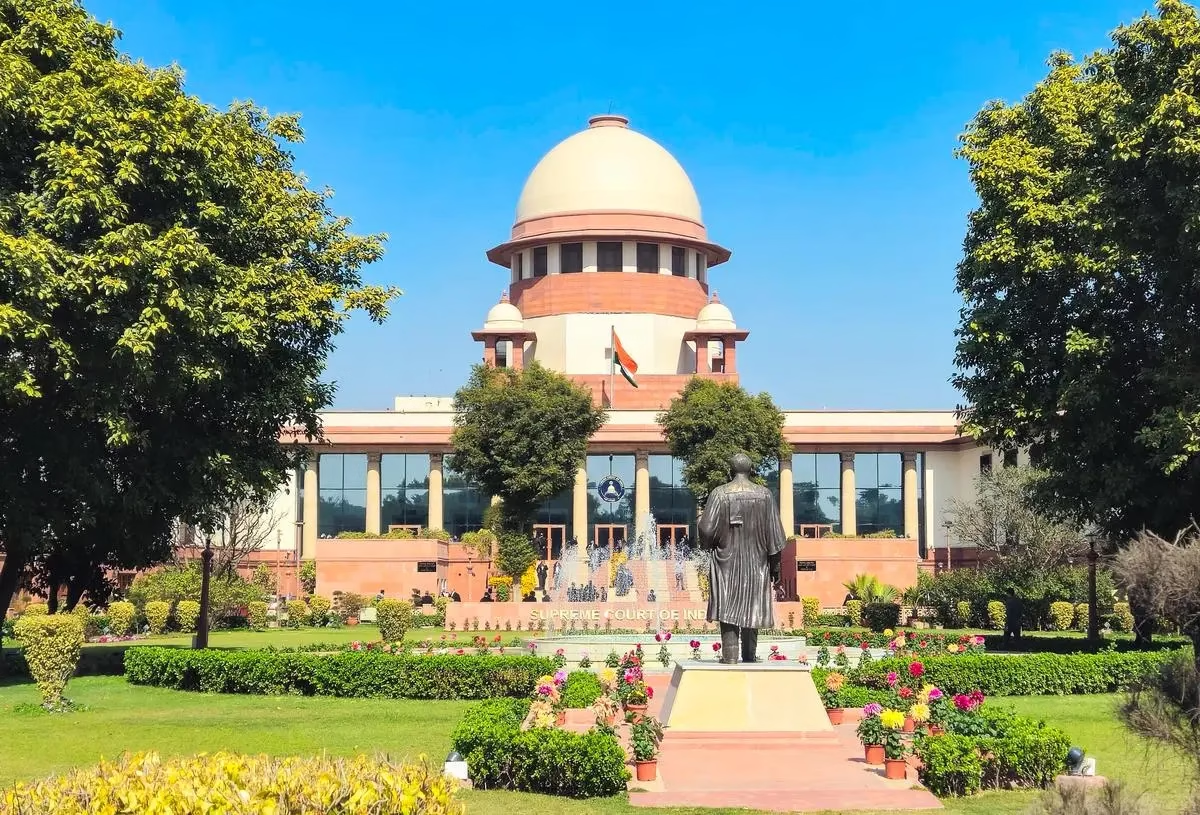

Shares of major listed hospital chains declined sharply on Sept. 30 after the Supreme Court raised concerns over medicine pricing, hospital-owned pharmacies and the commercial practices followed by corporate healthcare providers.
The court’s observations came during proceedings on petitions seeking greater regulation of medicine prices and prescribing practices. The bench of Justices Vikram Nath and Sandeep Mehta questioned the practice of hospitals requiring admitted patients to purchase medicines from their in-house pharmacies, particularly when the same medicines may be available outside at significantly lower prices.
Among the major hospital stocks, Max Healthcare fell 5.59%, Apollo Hospitals declined 5.55%, Fortis Healthcare dropped 4.81% and Manipal Health Enterprises was down 4.44% around 10:20 am. Aster DM Healthcare, KIMS, Global Health and Narayana Hrudayalaya also traded lower.
The combined market capitalisation of the eight companies was around ₹5.26 lakh crore at the time.
SC examines hospital pharmacy practices
During the hearing, the Supreme Court questioned why patients should be required to purchase medicines from a particular hospital pharmacy when equivalent medicines may be available elsewhere at lower prices.
The issue gained prominence after the court previously considered a case involving a cancer medicine with a price to retailer of ₹2,700 and an MRP of ₹27,000.
The bench also examined the implications for patients covered under government-funded healthcare schemes, noting that higher medicine prices can ultimately increase expenditure borne through public funds.
Court raises broader concerns over corporate healthcare
The bench also questioned the pricing of commonly prescribed medicines and raised concerns about the broader commercial structure of corporate hospitals.
“Corporate hospitals are industries. It is not a service at all. Why should the common man suffer all this?” the bench observed during the hearing.
The court indicated that its examination would extend beyond medicine pricing to practices involving medical professionals and the wider healthcare system.
Centre seeks two weeks to respond
Solicitor General Mehta sought two weeks to consult government officials and formulate the Centre’s response.
The government indicated that a balance would need to be maintained between different stakeholders while examining the concerns raised before the court. The proceedings are scheduled to continue on October 12, 2026.
Petitions seek changes in drug-price regulation
The proceedings relate to two petitions dealing with medicine pricing, generic prescriptions and regulation of medical devices under the Drugs (Prices Control) Order, 2013.
One petition has raised concerns about the pricing of non-scheduled medicines and sought stronger enforcement of existing price-control provisions. Another petition seeks action concerning prescriptions of generic medicines by doctors.
Why investors are watching the case
The court’s observations have brought renewed attention to the role of pharmacy revenue within private hospital businesses. Any future regulatory measures concerning medicine mark-ups, mandatory purchases from hospital pharmacies or pricing transparency could affect the economics of hospital operations.
However, no such regulatory changes have been announced at this stage. The eventual financial impact on hospital companies would depend on the measures adopted by the government, the proportion of hospital revenue attributable to pharmacy operations and how individual companies respond.
For investors, the Centre’s response and the Supreme Court’s next hearing on October 12 are likely to remain key developments for the listed hospital sector.
Source: Moneylife