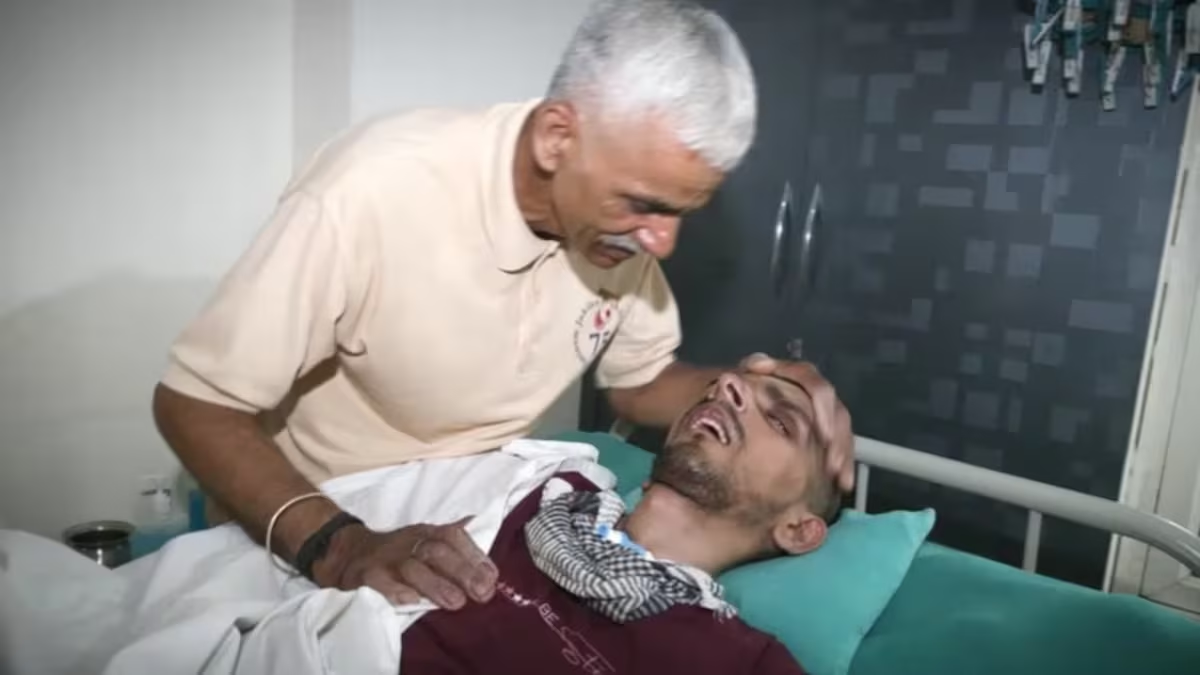
Harish Rana, the first individual in India to receive court approval for passive euthanasia, died at the All India Institute of Medical Sciences (AIIMS), Delhi on Tuesday (March 24), closing a landmark chapter in the country’s legal and medical landscape.
The 31-year-old had remained in a vegetative state since 2013 after sustaining severe head injuries from a fall off a fourth-floor balcony during his time as a BTech student at Panjab University. For more than a decade, he was dependent on artificial feeding and periodic oxygen support.
On March 11, the Supreme Court permitted passive euthanasia in his case, instructing medical authorities to withdraw life support in a structured manner that upheld his dignity.
Care protocol at AIIMS
Rana was moved from his Ghaziabad residence to the palliative care unit at AIIMS Delhi’s Dr BR Ambedkar Institute Rotary Cancer Hospital on March 14. A multidisciplinary team headed by Dr Seema Mishra, chief of anaesthesia and palliative medicine, oversaw the process.
The team comprised experts from neurosurgery, onco-anaesthesia, palliative care, and psychiatry, highlighting the sensitive and complex nature of the procedure.
Step-by-step withdrawal of life support
In accordance with prescribed medical guidelines, Rana’s artificial nutrition was slowly discontinued under strict monitoring, following the Supreme Court’s directions.
His case is widely regarded as a milestone in India’s approach to end-of-life decisions, emphasizing patient dignity, ethical medical practices, and legal oversight.