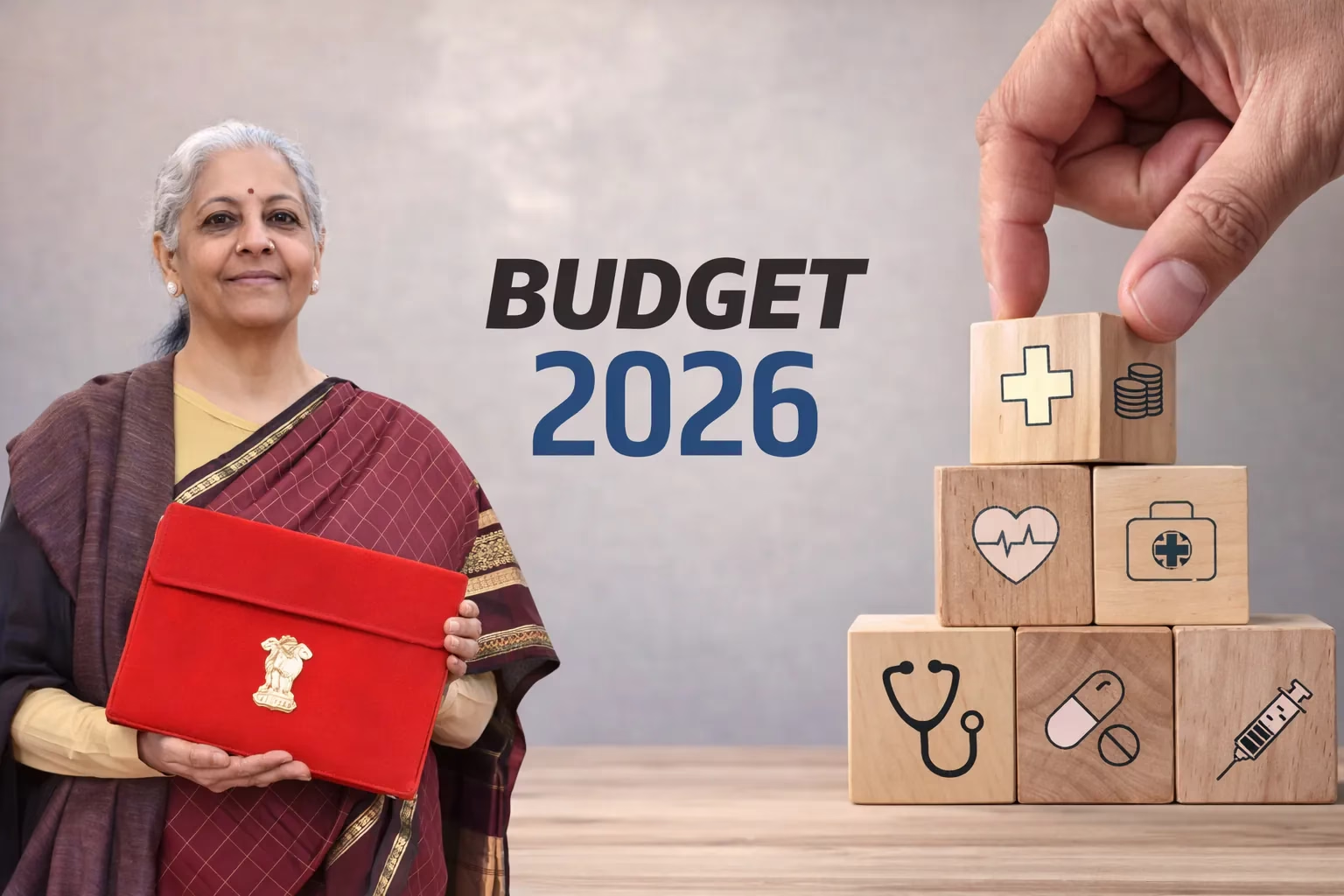
The Union Budget 2026-27 placed significant emphasis on strengthening India’s healthcare delivery and workforce capacity, with Finance Minister Nirmala Sitharaman announcing a series of interventions spanning allied health training, mental health infrastructure, emergency care expansion and 5 regional hubs for medical value tourism. A key focus area is the development of Allied Health Professionals (AHPs). Sitharaman announced programmes to train around 1.5 lakh caregivers and allied care staff under National Skills Qualifications Framework-aligned courses, creating more multi-skilled professionals for elderly care, rehabilitation, wellness and related sectors. The initiative is aimed at addressing workforce shortages and improving the quality of healthcare services nationwide.
In parallel, the Budget outlined steps to strengthen the broader care ecosystem, including structured skill development programmes for caregivers and allied support staff. These efforts are aligned with national skill frameworks and are intended to create a trained workforce for elderly care, rehabilitation and long-term care needs as India’s population ages and demand for organised care services rises.
To position India as a global healthcare destination, Sitharaman proposed the creation of regional hubs for Medical Value Tourism. These hubs, to be developed in partnership with states and the private sector, are expected to function as integrated healthcare clusters offering advanced medical services, diagnostics and post-treatment facilities, thereby attracting international patients and generating employment opportunities.
Mental health and neurosciences also received attention, with the announcement of plans to establish NIMHANS-2, a second national-level institute on the lines of Bengaluru’s National Institute of Mental Health and Neurosciences. The new institute is intended to expand access to specialised mental health services, research and training capacity in the country.
Further, the government proposed to strengthen district hospitals by increasing their capacity by around 50% through the establishment of dedicated Emergency and Trauma Care Centres. This measure is aimed at decentralising critical care services and improving emergency response, particularly in underserved and non-metro regions.Taken together, these measures signal a strategic attempt to expand India’s healthcare workforce, upgrade infrastructure at the district level, boost mental health capacity and enhance the country’s standing in medical tourism.