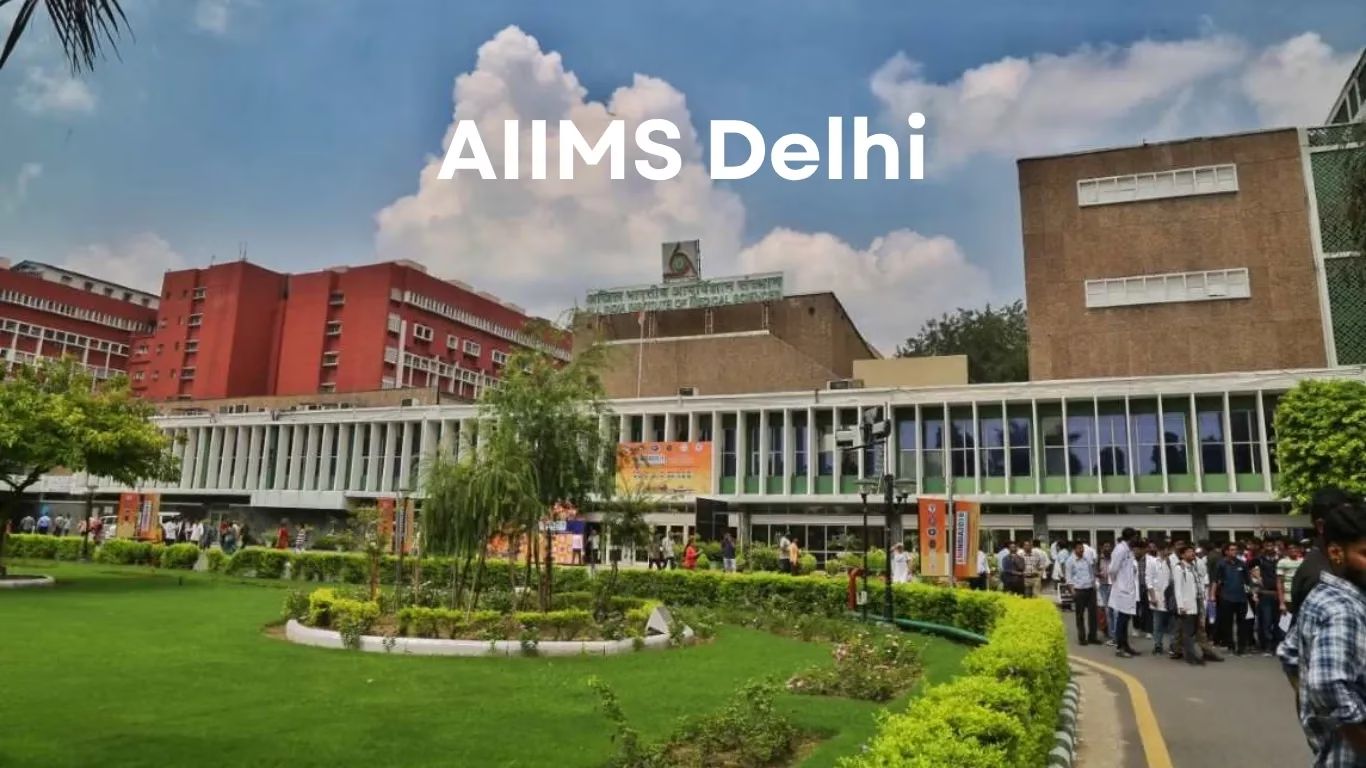
All India Institute of Medical Sciences is likely to appoint an interim head as the process to select a new full-time director is expected to start soon. This comes amid the transition triggered by the likely move of Dr. M Srinivas to NITI Aayog.
With the current leadership nearing a shift, the Union Health Ministry is expected to initiate formal procedures for appointing a permanent director at one of India’s top medical institutions. In the meantime, officials indicate that an acting director may be appointed to ensure continuity in administration.
There is no immediate clarity on who will take charge. As per established practice, the senior-most faculty member is often given interim responsibility. Names being discussed informally include Dr. Nikhil Tandon, head of endocrinology; Dr. Radhika Tandon, chief of ophthalmology; and Prof. Sandeep Chauhan from the cardiac anaesthesia department. However, sources stress that no final decision has been made.
Dr. Srinivas, who assumed office in September 2022, still had time remaining in his tenure. His stint has largely been free of major controversies, apart from an early ransomware attack that disrupted the institute’s servers.
AIIMS Delhi has historically preferred internal candidates for leadership roles, with many directors rising through its own ranks. Dr. Srinivas himself had prior association with the institute before being selected by the Appointments Committee of the Cabinet, despite not formally applying for the role.
The selection of a full-time director typically involves evaluation by a high-level panel set up by the central government, and the process can take several months. During this period, the interim head will manage routine operations and ongoing initiatives.
As a premier centre for tertiary healthcare, medical education, and research, AIIMS Delhi plays a crucial role in India’s healthcare ecosystem. The choice of its director carries significant weight, influencing institutional governance, research direction, and healthcare policy.
Experts emphasize that stable leadership is key to maintaining the institute’s reputation and ensuring continuity in patient care, academic excellence, and innovation.