


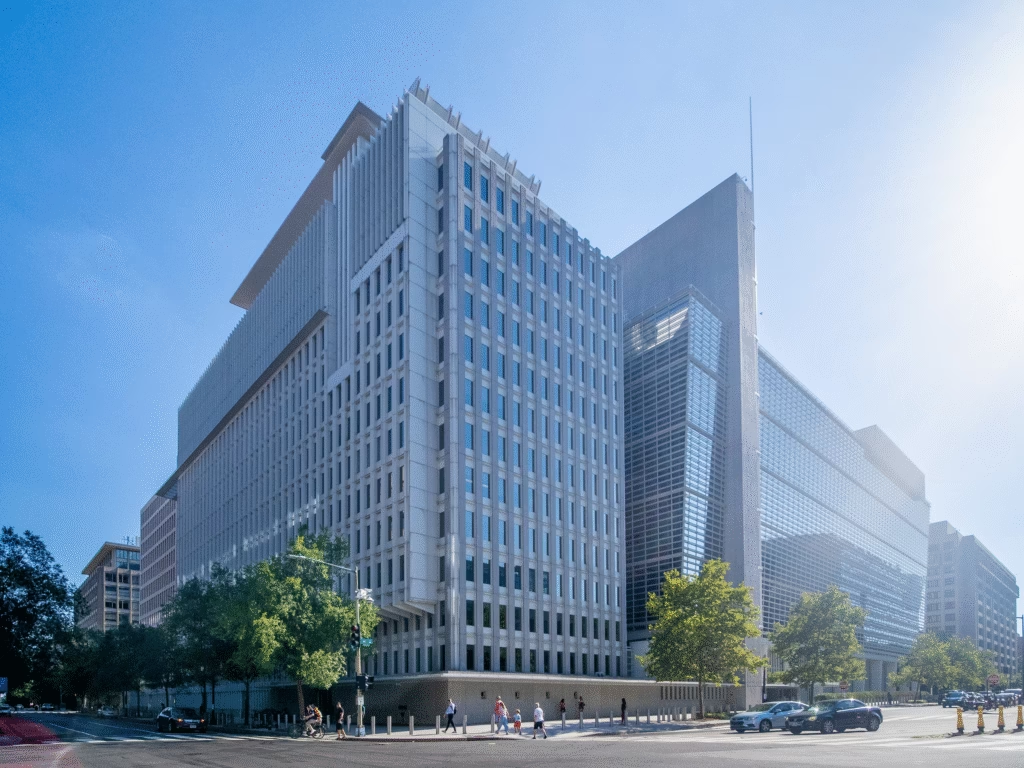
The World Bank has approved a $286 million loan to support reforms aimed at improving health outcomes and life expectancy in West Bengal by expanding equitable access to quality healthcare services.
The funding will support the West Bengal Health System Reform Program Operation, which focuses on delivering personalised healthcare to residents aged 30 years and above. A key component of the programme is the digital monitoring and management of non-communicable diseases (NCDs) such as hypertension and diabetes across the state.
The programme also seeks to shift the state’s health system towards a more patient-focused model, strengthen health outcome measurement, and improve the ability of healthcare facilities to withstand extreme weather events. In addition, it includes measures to strengthen responses to gender-based violence (GBV), with targeted interventions for boys, married adolescents and healthcare workers.
Special attention will be given to five districts Purulia, Birbhum, Murshidabad, Maldah and Uttar Dinajpur where the programme aims to improve access to quality healthcare and address disparities in maternal and adolescent health services.
According to the World Bank, West Bengal has recorded steady health improvements over the past two decades. Infant mortality declined from 32 deaths per 1,000 live births in 2010–2012 to 19 in 2018–2020, while the total fertility rate stood at 1.64 births per woman in 2019, among the lowest in India. Life expectancy in the state is currently 72 years, higher than the national average.
Despite these gains and high literacy levels among adolescent girls, the state continues to face challenges, including a 16 per cent adolescent pregnancy rate the second highest in the country which contributes to a maternal mortality ratio of 103 deaths per 100,000 live births during 2018-2020. The five identified districts face particularly severe gaps in reproductive, maternal and adolescent healthcare.
Paul Procee, Acting Country Director for India at the World Bank, said the programme would help West Bengal deliver more equitable and higher-quality health services with measurable benefits for women, adolescents and people living with NCDs. He added that linking financing to verified outcomes, along with stronger governance and climate resilience, would address long-standing system-level constraints and improve economic opportunities.
Task Team Leaders Rahul Pandey and Meghna Sharma said strengthening primary-level care especially better control of hypertension and diabetes was essential to reducing the burden of NCDs. They also highlighted the programme’s emphasis on quality-of-care improvements and stronger mechanisms to respond to gender-based violence as key to building trust in the healthcare system.
The $286 million loan from the International Bank for Reconstruction and Development (IBRD) has a repayment period of 16.5 years, including a three-year grace period.