


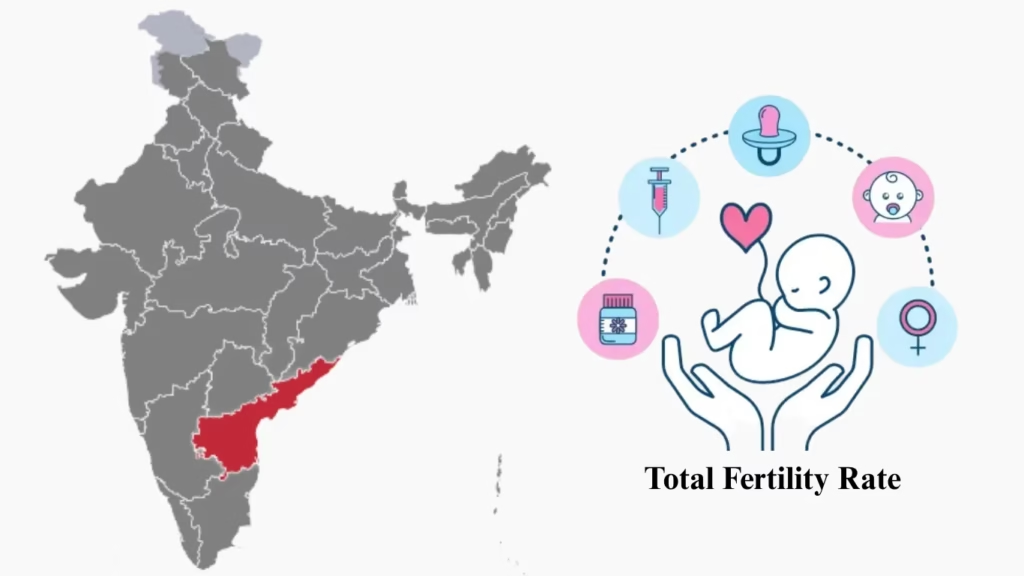
Andhra Pradesh Chief Minister N. Chandrababu Naidu has announced a series of financial incentives aimed at encouraging families to have more children, citing concerns over declining fertility rates and an ageing population in the state.
Addressing a public gathering in Tamrapalli village in Srikakulam district, Naidu said the government would provide ₹30,000 for the birth of a third child and ₹40,000 for a fourth child as part of Andhra Pradesh’s proposed population management policy.
“Children are our wealth,” the chief minister said, stressing the need to reverse the state’s declining birth rate trend.
Andhra Pradesh worried over Falling Fertility Rate
Naidu said Andhra Pradesh’s Total Fertility Rate (TFR) has dropped significantly over the last three decades from 3.0 in 1993 to 1.5 currently well below the replacement level of 2.1 considered necessary to maintain demographic balance.
He warned that if the trend continues, the state could face challenges similar to countries such as Japan, South Korea and Italy, where low birth rates and ageing populations have created economic and labour shortages.
According to the chief minister, around 23% of Andhra Pradesh’s population could become elderly by 2047 if fertility rates continue to decline.
Policy to include financial and welfare support
Apart from incentives for third and fourth child births, the proposed policy also includes:
- ₹25,000 financial assistance for families having a second child or more
- ₹1,000 monthly nutritional support for five years for the third child
- Free education for the child up to 18 years
- Proposal for extended parental leave, including 12 months leave for mothers and two months paternity leave for fathers
Naidu said the policy would follow a five-pillar framework focused on motherhood, empowerment, wellbeing, skills and healthcare.
Focus on economic growth and workforce
The chief minister linked population policy with future economic growth, saying a shrinking working-age population could affect Andhra Pradesh’s long-term development.
He also highlighted the need to improve women’s participation in the workforce. According to him, increasing the female labour force participation rate from the current 31% to 59% could boost the state’s Gross State Domestic Product by nearly 15%.