


Officials at the World Health Organization (WHO) say they are preparing for a potential nuclear emergency as tensions between the U.S., Israel, and Iran intensify.
Hanan Balkhy, WHO’s regional director for the Eastern Mediterranean, stated that the organization remains highly alert following military strikes on Iran ordered by Donald Trump in coordination with Israel. She warned that a nuclear incident represents the gravest risk, with consequences that could affect the region and the world for decades.
Balkhy said UN teams are planning for multiple scenarios, including attacks on nuclear facilities or the possible use of nuclear weapons. WHO is also updating its staff on emergency response measures and the long-term health risks associated with radiation exposure.
She stressed that past nuclear disasters whether accidental or intentional serve as a stark reminder of the scale of devastation such events can cause.
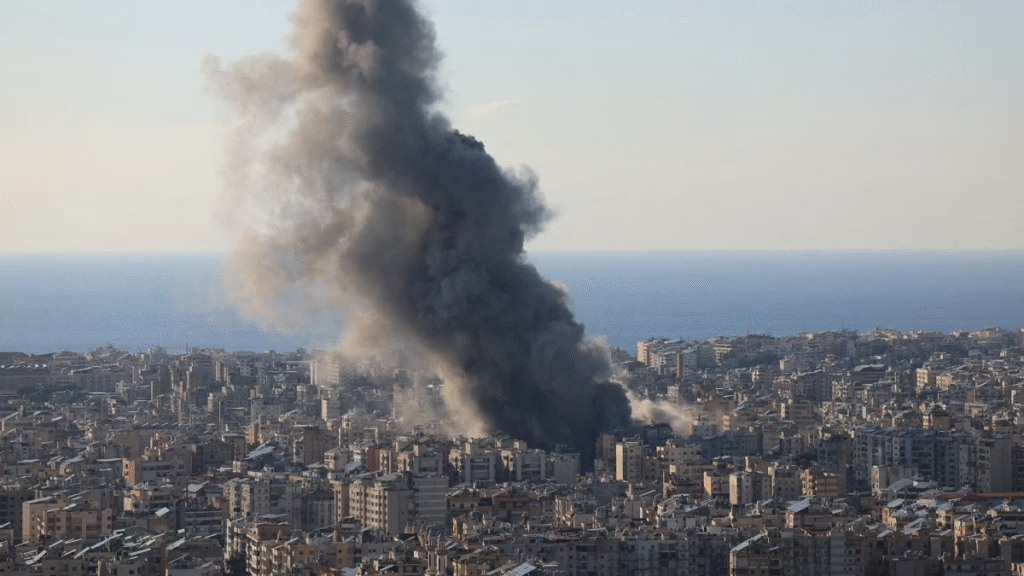
Meanwhile, U.S. and Israeli forces continue targeting Iran’s nuclear infrastructure under “Operation Epic Fury,” launched on February 28. Officials, including Defense Secretary Pete Hegseth, have said the objective is to eliminate Iran’s ability to develop nuclear weapons.
Amid the ongoing conflict, Joe Kent stepped down, saying he could not support the war and did not view Iran as an immediate threat to the U.S.
Testifying before the Senate Intelligence Committee, Tulsi Gabbard claimed earlier strikes had effectively dismantled Iran’s nuclear enrichment capabilities, leaving key facilities inoperable.
Concerns also rose after David Sacks suggested Israel might consider nuclear escalation, though Trump later dismissed the idea, asserting that Israel would not pursue such an option.