


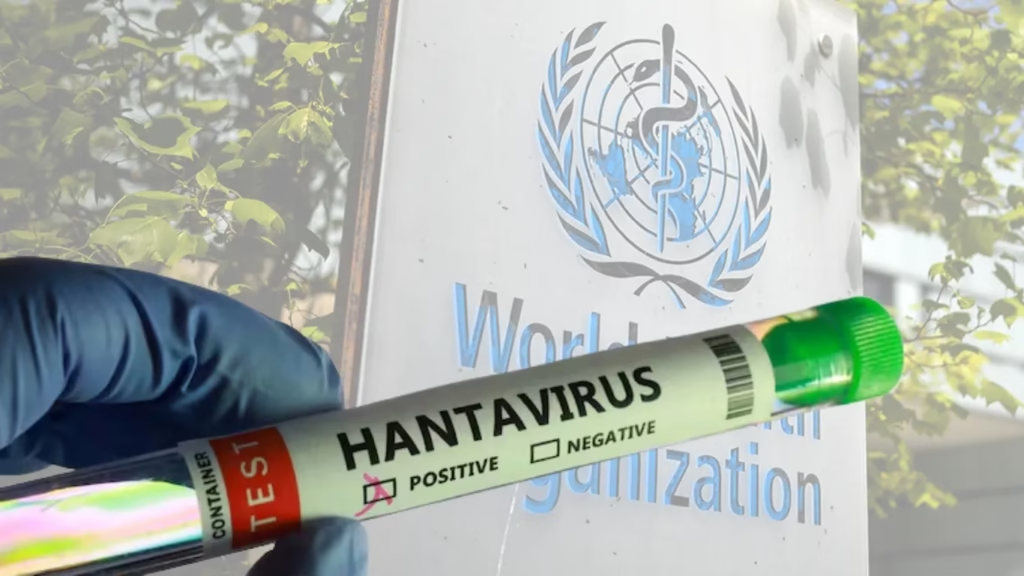
The World Health Organization (WHO) said on April 7 that five cases linked to the hantavirus outbreak aboard the cruise ship MV Hondius have now been confirmed, while three additional cases are still considered suspected. The agency cautioned that more infections could emerge in the coming weeks due to the virus’s long incubation period.
However, WHO officials stressed that the situation does not resemble the early stages of Covid-19 and is not expected to develop into a wider epidemic or pandemic if proper containment measures continue to be followed.
WHO Director-General Tedros Adhanom Ghebreyesus said that eight cases have been identified so far, including three deaths. Of these, five have tested positive for hantavirus, while three remain under investigation. He confirmed that the virus involved is the Andes strain, a rare type of hantavirus found in Latin America that is capable of spreading from person to person.
Tedros noted that no passengers or crew members currently aboard the ship are showing symptoms. Still, because the Andes virus can incubate for as long as six weeks, health authorities are continuing to monitor everyone who may have been exposed.
The Dutch-flagged MV Hondius departed from Ushuaia, Argentina, on April 1 for a transatlantic voyage to Cape Verde. On April 6, the vessel resumed its journey north toward Tenerife, where passengers are expected to be repatriated.
Tedros said he has remained in close communication with the ship’s captain and was informed that morale among those on board has improved since the ship resumed sailing.
WHO emergency response director Abdi Rahman Mahamud said the agency expects the outbreak to remain limited if recommended public health actions are maintained.
Hantavirus infections are typically contracted through exposure to infected rodents or their urine, droppings, and saliva. The Andes variant is the only known strain with proven human-to-human transmission.
According to WHO, the first two patients a Dutch couple who later died had travelled across Argentina, Chile, and Uruguay before boarding the ship. Their itinerary included bird-watching trips in areas inhabited by rodents known to carry the Andes virus. WHO is now working with Argentine authorities to trace the couple’s movements and identify possible sources of exposure.
Tedros also announced that Argentina would send 2,500 diagnostic kits to laboratories in five countries to support testing efforts.
WHO pandemic preparedness director Maria Van Kerkhove emphasized that the outbreak should not be compared with Covid-19 or influenza because hantavirus spreads in a very different way.
The WHO is currently awaiting full genome sequencing results from laboratories in South Africa, Switzerland, and Dakar to better understand how the virus involved in this outbreak compares with earlier cases. WHO viral haemorrhagic fever specialist Anais Legand said the sequencing would help determine whether there are any unusual genetic changes, although no concerning mutations have been identified so far.
Legand added that the virus’s RNA can generally be detected from the onset of symptoms, which usually appear two to three weeks after exposure.
Van Kerkhove also said that a patient being treated in intensive care in South Africa is showing signs of improvement, while two patients hospitalized in the Netherlands after being evacuated from Cape Verde remain in stable condition.