


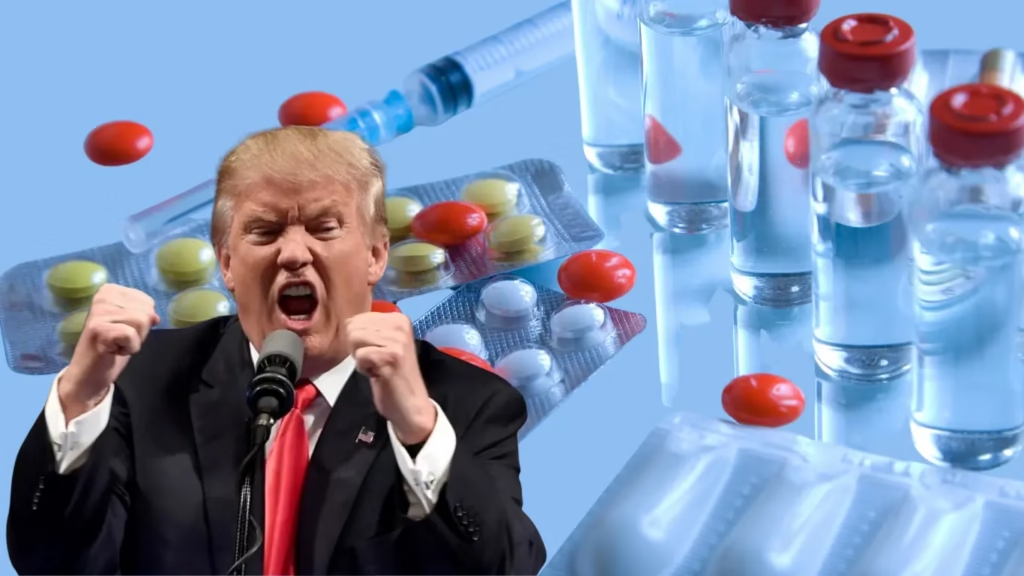
India’s pharmaceutical sector has responded strongly to US President Donald Trump’s recent announcement of a 25% tariff on all Indian imports starting August 1, cautioning that the measure could ultimately harm the US healthcare system more than Indian industry.
Although it’s still unclear if pharmaceuticals will be included in the tariff list Trump’s earlier statements in April had excluded essential drugs industry leaders in India are already voicing concerns about the broader implications.
He’s trying to damage the Indian economy, but it won’t work – said Dilip Kumar, Chairman of the Medical Tourism division of the Chamber of Commerce, in a statement to ANI. We’re major exporters of medical devices, pharmaceuticals and disposables, which are largely sourced from India. The US market depends heavily on both India and China, he emphasized.
He also pointed out that India has alternatives. Even if the US imposes tariffs, we have other markets especially in Europe. India has the resilience to withstand tough times and recover quickly, he said.
Namit Joshi, Chairman of the Pharmaceuticals Export Promotion Council of India (Pharmexcil), echoed these sentiments in a PTI statement, stressing India’s critical contribution to the US drug supply chain.
For years, India has been a pillar in the global supply of affordable, high-quality medicines, particularly generics. We supply nearly 47% of the US’s generic drug demand,” Joshi noted. “Indian pharma companies are essential for maintaining the affordability and availability of key medicines, including cancer drugs, antibiotics and chronic illness treatments.
He warned that any disruption caused by the new tariffs could lead to higher drug prices and potential shortages in the US. This would negatively affect American consumers and strain their healthcare system, Joshi said.
Looking ahead, he cautioned that the long-term effects could be even more damaging. With the US relying so heavily on India for APIs (Active Pharmaceutical Ingredients) and cost-effective generics, it would be extremely difficult to replace this supply quickly. It could take three to five years to build comparable manufacturing capacity elsewhere.
Despite the looming uncertainty, Pharmexcil reiterated its commitment to remain a stable partner in the global pharmaceutical supply chain. We are actively engaging with stakeholders to reinforce the importance of affordable medication and the vital role India plays in ensuring global drug accessibility, Joshi concluded.