


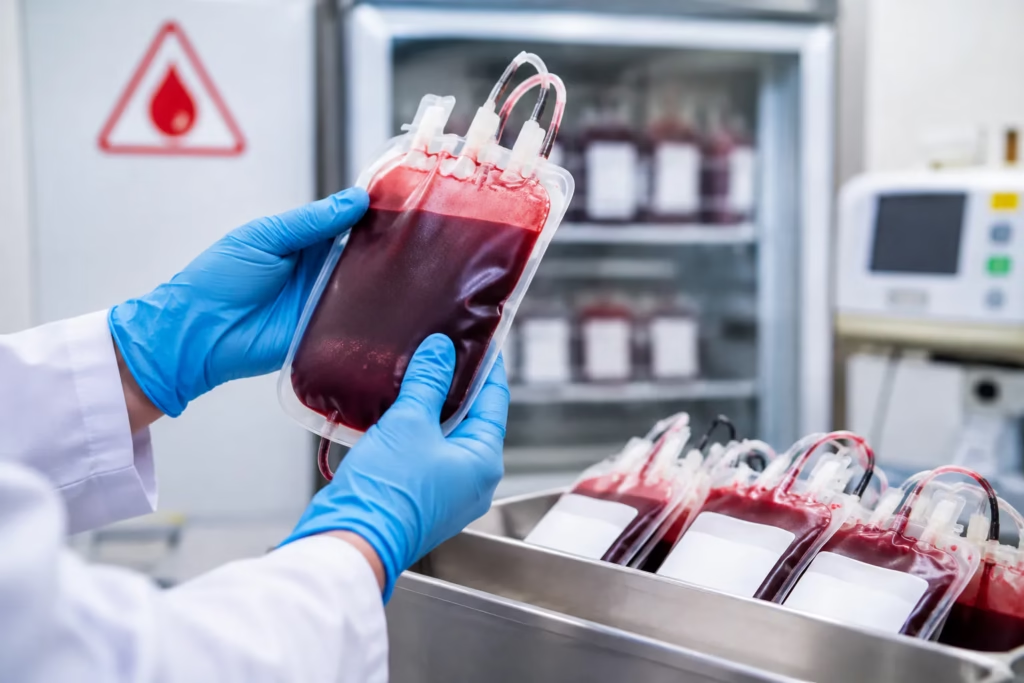
The Uttar Pradesh Food Safety and Drug Administration (FSDA) has halted operations at 24 charitable blood centres across the state following widespread safety violations detected during a special inspection drive. The action aims to strengthen blood safety standards and ensure that patients receive properly tested and stored blood and blood components.
According to the department, 158 blood centres across 62 districts have been inspected so far. In the latest round, operations at 10 additional centres were suspended after inspectors identified serious lapses in testing procedures, storage conditions and staffing.
Inspections revealed instances of blood being issued without mandatory ELISA testing for infections such as HIV, Hepatitis C and Hepatitis B. Other violations included contaminated Fresh Frozen Plasma (FFP), faulty refrigeration systems, disrupted cold chains, expired medicines and the absence of qualified medical and technical personnel.
In one case, 167 units of blood were reportedly issued without mandatory infection screening due to the unavailability of testing kits. Another centre was found with a discrepancy of 67 FFP units between physical stock and register entries. Inspectors also detected blood components being billed above prescribed government rates.
Further irregularities included faulty temperature monitoring systems, missing donor and issue records, inadequate sterilisation arrangements, non-functional equipment and shortages of emergency medicines and oxygen cylinders.
The FSDA’s inter-district inspection teams are examining the complete operational process at blood centres, covering collection, testing, storage, stock management and distribution. The department is also reviewing compliance with prescribed rates and the availability of trained personnel.
In cases involving serious violations, the department has issued stop orders and recommended licence cancellation and blacklisting of the personnel concerned.
The intensified inspection campaign comes amid concerns over blood safety during seasonal illnesses such as dengue and malaria, when demand for blood and platelets increases. The department is continuing its statewide monitoring to identify deficiencies and prevent unsafe blood transfusions.