Recent tariff revisions and the scrapping of punitive duties by key global partners are beginning to reshape India’s healthcare and pharmaceutical landscape, offering relief to exporters while potentially lowering costs of imported medical equipment.
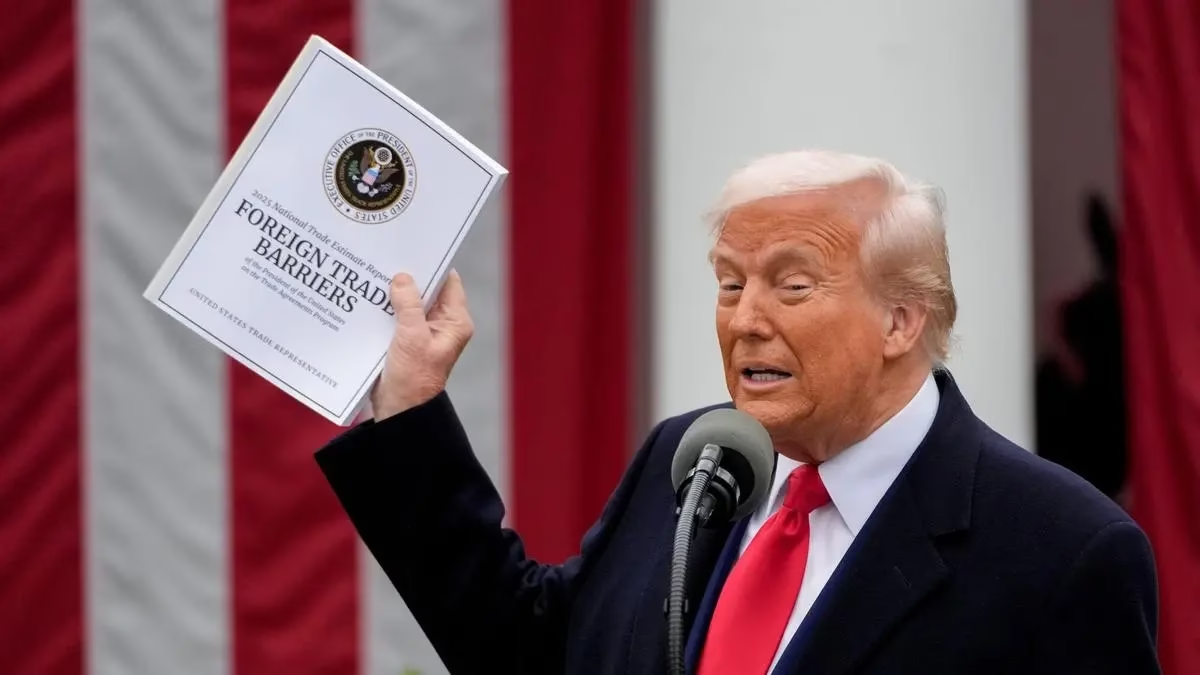
In a significant development, the Supreme Court of the United States struck down broad “reciprocal tariffs” imposed during the tenure of former US President Donald Trump, removing sweeping duties on several categories of imports, including healthcare-linked shipments from India. The move is expected to ease export pressures on Indian pharmaceutical firms that rely heavily on the US market.
The tariff rollback comes alongside an interim trade framework between India and the US, which reduces certain reciprocal duties and signals movement toward a broader bilateral trade agreement. Industry analysts say this provides much-needed stability to Indian drug makers, especially generic medicine exporters who supply a substantial share of affordable medicines to American consumers.
Meanwhile, India’s recently concluded Free Trade Agreement negotiations with the European Union are poised to further alter the sector’s cost structure. The agreement is expected to progressively reduce or eliminate tariffs on a wide range of goods, including medical devices, diagnostic equipment and healthcare technologies.
Healthcare industry experts note that lower import duties on advanced medical equipment from Europe could reduce procurement costs for Indian hospitals. This may eventually translate into more affordable diagnostic and treatment services, provided the savings are passed on to patients. At the same time, domestic medical device manufacturers could face intensified competition from European firms benefiting from tariff concessions.
For India’s pharmaceutical sector often dubbed the “pharmacy of the world” the easing of tariff barriers strengthens export competitiveness in two major markets: the US and Europe. With generics forming a key component of India’s export basket, reduced trade friction helps maintain price advantage and supply continuity.
However, trade analysts caution that the full impact will depend on the fine print of the agreements, including regulatory alignment, quality standards and intellectual property provisions. While tariff scrapping offers immediate relief, long-term gains will hinge on how effectively Indian manufacturers scale innovation and diversify supply chains.
Overall, the recent tariff recalibrations mark a potentially transformative phase for Indian healthcare lowering external cost pressures, expanding export opportunities and reshaping competitive dynamics in both pharmaceutical and medical device segments.