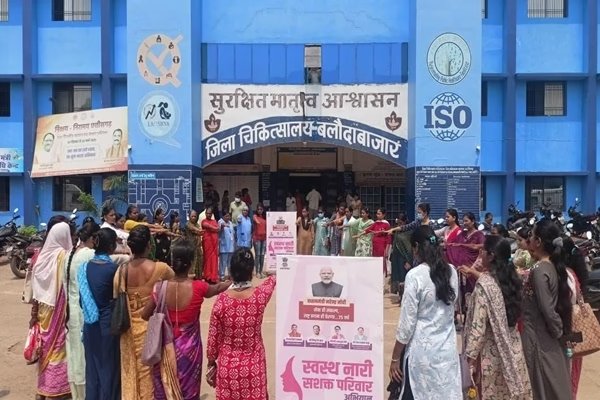
The Swasth Nari Sashakt Parivar Abhiyaan, launched on 17 September 2025, has conducted more than 2.83 lakh health camps across the country as of 20 September 2025 as per the government record, with participation from over 76 lakh citizens. The services provided so far include screenings for hypertension, diabetes, cancer, tuberculosis and sickle cell disease, maternal and child health services, anaemia checks, nutrition counselling, blood donation, and the issuance of Ayushman Bharat–PM-JAY cards. Reports indicate that around 37 lakh people have been screened for hypertension, 35 lakh for diabetes, over 9 lakh women for breast cancer, 4.7 lakh for cervical cancer, and more than 16 lakh for oral cancer. More than 18 lakh antenatal check-ups have been conducted and over 51 lakh children have received vaccinations. In addition, around 15 lakh people have been screened for anaemia, 22 lakh for tuberculosis, and 2.3 lakh for sickle cell disease, while 1.6 lakh individuals have registered as blood donors and 4.7 lakh new Ayushman Bharat–PM-JAY cards have been issued.
The initiative has been implemented through the National Health Mission network and Ayushman Arogya Mandirs, with additional support from AIIMS, Institutes of National Importance, tertiary care hospitals, medical colleges, and private organizations. Together, these institutions have organized 3,410 specialty camps benefitting more than 5.8 lakh people.
Across the states and union territories, the Abhiyaan has taken different forms. In Delhi, health camps were organized at Safdarjung Hospital, CGHS RK Puram and Ayushman Arogya Mandirs, covering TB, non-communicable diseases, maternal and mental health. Gujarat hosted camps in Dahod, Kutch and Navsari, which focused on cancer and NCD screenings and reached more than 42,000 women. In Jammu and Kashmir, large-scale camps in Srinagar and RS Pura were held as part of the Sewa Pakhwada.
In the Northeast, the programme extended to remote tribal communities in areas such as Papum Pare in Arunachal Pradesh and Imphal in Manipur. Goa and Maharashtra saw active community involvement through PHCs and panchayats, which organized rallies, screenings and blood donation drives. In Bihar and Uttar Pradesh, district hospitals and Ayushman Arogya Mandirs facilitated maternal and NCD health services for thousands of people. In Ladakh, camps were set up in remote villages such as Lingshed to provide general consultations, cataract screening and menstrual hygiene awareness.
The campaign will continue until 2 October 2025, with the stated objective of promoting accessible preventive and curative health services nationwide.