
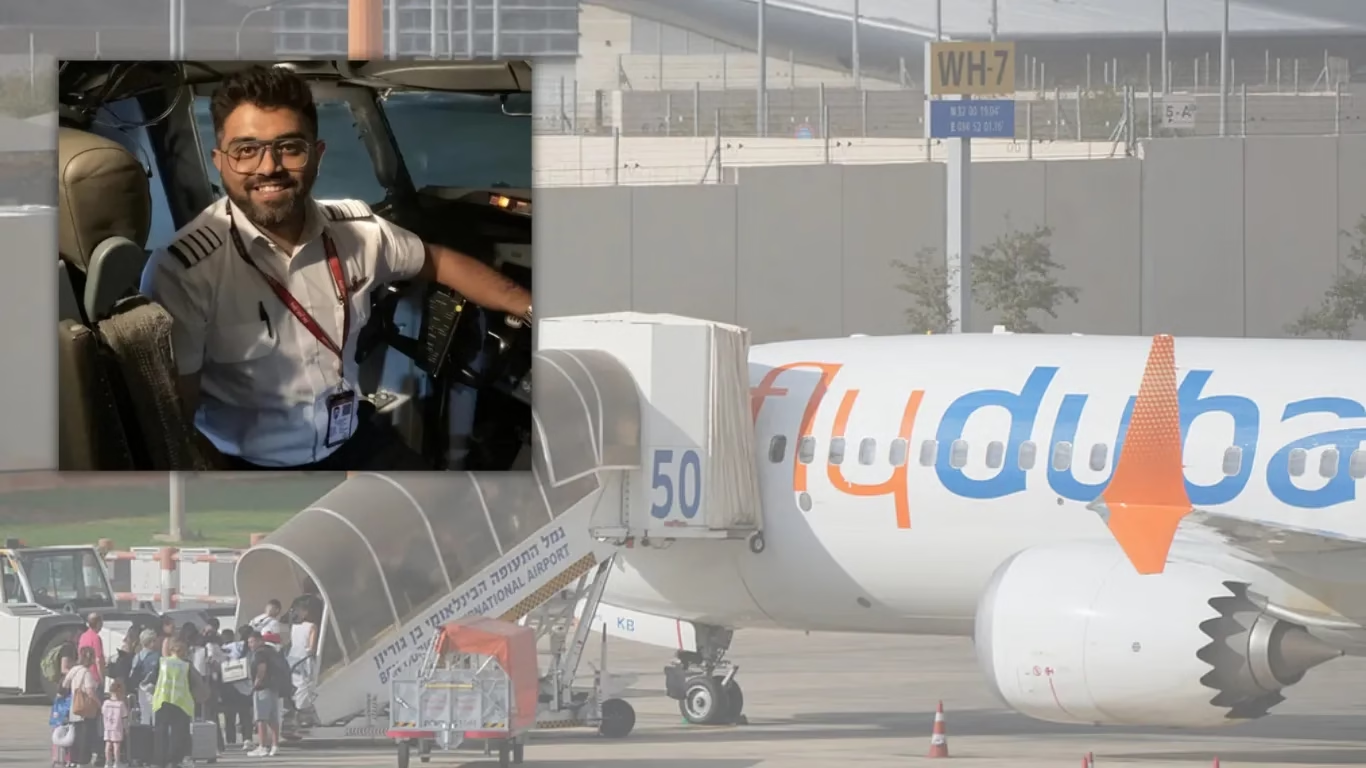
The emergency involving Indian pilot Captain Smit Machchhar became a crucial factor in averting a potentially catastrophic incident aboard a flydubai flight from Saudi Arabia to Tel Aviv, after he was reportedly stabbed multiple times by his co-pilot.
Machchhar suffered severe blood loss after sustaining injuries to his head and hands, according to passenger accounts cited by CNN. Despite his condition, he managed to activate emergency signals and open the cockpit door, allowing passengers to enter and overpower the attacking co-pilot.
Israeli Prime Minister’s spokesperson Doron Spielman said Machchhar was lying injured on the cockpit floor when he used what was described as his “last moments of energy” to open the door. The action enabled passengers to intervene while the aircraft was reportedly experiencing a loss of control.
Severe blood loss posed immediate medical risk
Among the passengers who entered the cockpit was dentist Dr Shota Musaev, who provided immediate medical assistance to the injured pilot. Musaev said Machchhar had suffered extensive cuts and had lost a significant amount of blood.
According to Musaev, the pilot’s blood pressure had fallen sharply and his condition was critical, with the possibility that further delay could have proved fatal.
The incident highlights the importance of rapid first aid, bleeding control and medical intervention following traumatic injuries, particularly in situations where professional emergency medical support may not be immediately available.
Passengers provide emergency assistance
While Machchhar received treatment, two off-duty flydubai pilots travelling as passengers reportedly took control of the aircraft and eventually carried out an emergency landing at Tabuk in Saudi Arabia.
Machchhar was subsequently taken to hospital for treatment and was reported to be in stable condition.
From a healthcare perspective, the incident underscores how early recognition of severe blood loss, immediate intervention and coordinated emergency response can be critical to survival following major trauma. It also demonstrates the potential importance of medically trained passengers and basic first-aid preparedness during in-flight emergencies.