
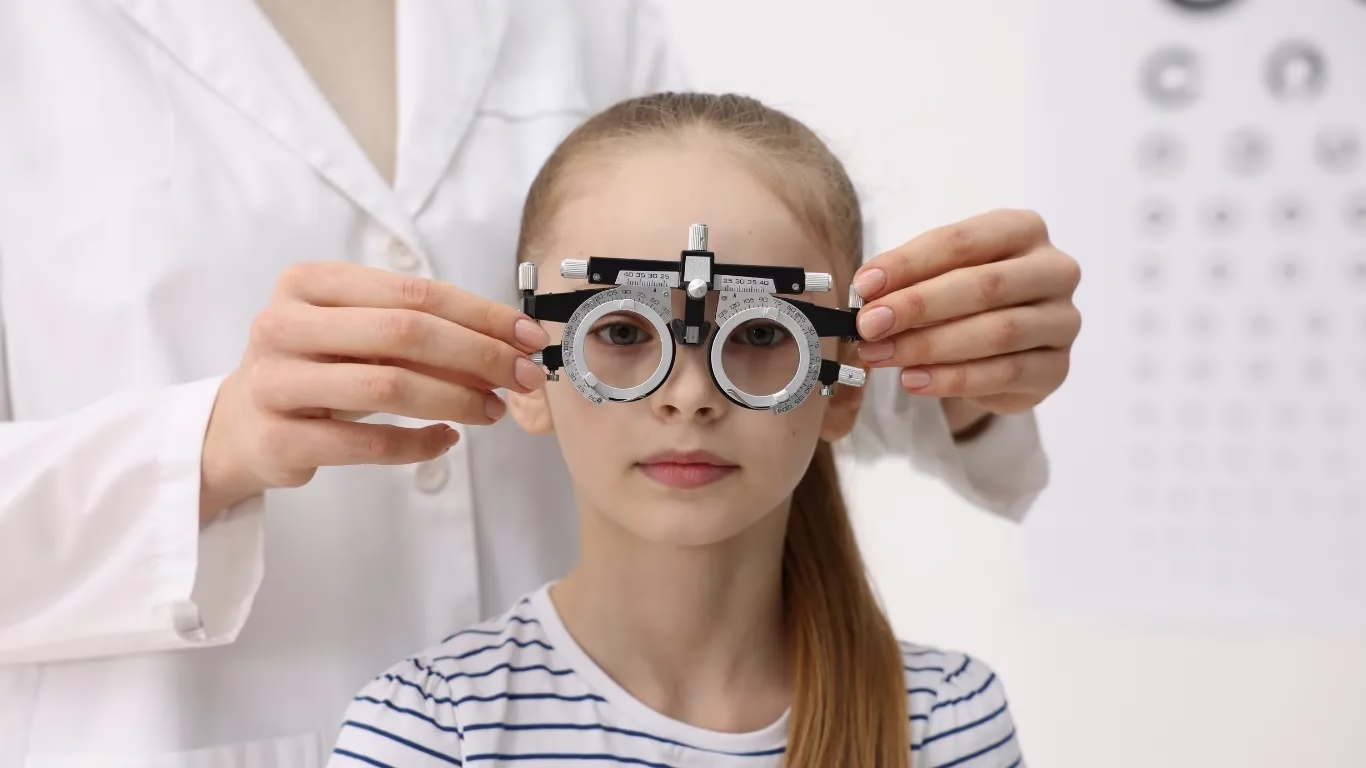
Amid the growing rise in childhood myopia in India and across the world, the All India Ophthalmological Society has issued new guidelines stressing the importance of yearly eye check-ups, school vision screening programmes, and at least two hours of outdoor activity every day for children.
Released during World Myopia Week 2026, the guidelines on the prevention and management of childhood myopia also reinforce the widely recommended 20-20-20 rule. Under this rule, children are advised to take a 20-second break after every 20 minutes of screen or near work and look at an object around 20 feet away to reduce eye strain.
Prepared by leading paediatric eye specialists with unconditional support from Sun Pharma, the recommendations are aimed at helping parents, teachers and healthcare professionals tackle the growing vision problem among children.
Myopia, or nearsightedness, is a condition in which nearby objects appear clear while distant objects look blurry. Experts warn that it is becoming a major public health concern worldwide. According to recent estimates, nearly half of the world’s population could be affected by myopia by 2050.
In India, studies show a sharp increase in myopia among school children, particularly in urban areas where prevalence has reached nearly 14 per cent. Rural regions have also reported a rise, increasing from 4.6 per cent to 6.8 per cent over the last decade.
Screening programmes conducted by Sun Pharma across 13 cities and 12 states among more than one lakh children found that around 13.6 per cent were suffering from myopia, while 27 per cent had abnormal vision requiring medical attention.
Dr Jeewan Singh Titiyal said childhood myopia is no longer limited to children needing spectacles at an early age. He warned that severe myopia can permanently change the eye’s structure and raise the risk of retinal detachment, glaucoma, cataract and irreversible vision loss later in life.
He added that many children do not complain about blurred vision because they are unaware of what normal vision should be like, making it important for parents, teachers and caregivers to recognise behavioural signs and ensure timely eye examinations.
Specialists attribute the surge in childhood myopia to changing lifestyles, including excessive screen time, increasing academic pressure, reduced outdoor activities and prolonged close-up work. The growing shift toward digital learning has further increased daily screen exposure among children, often extending to four to six hours or more.
Dr Namrata Sharma said managing childhood myopia requires a preventive approach rather than simply treating it after it develops. She noted that while treatments such as atropine eye drops, specialised spectacles, orthokeratology and soft multifocal contact lenses may help slow progression, lifestyle changes remain the most effective preventive measure.
The guidelines also highlight that such therapies should only be used under the supervision of trained ophthalmologists.
Dr Rohit Saxena emphasised that controlling childhood myopia requires cooperation between families, schools, healthcare systems and policymakers. He said schools should promote outdoor activities and healthier visual habits, while parents must limit excessive screen use and encourage balanced lifestyles.
Experts also stressed the importance of adequate sleep, proper nutrition and regular physical activity, adding that early diagnosis and timely treatment can help prevent long-term vision complications and avoidable visual impairment in children.