


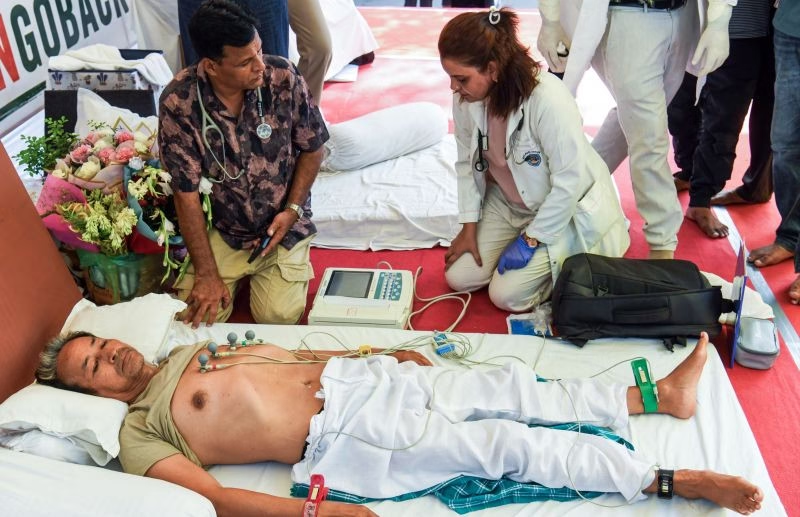
As climate activist Sonam Wangchuk enters the 19th day of his indefinite hunger strike at Delhi’s Jantar Mantar, concerns over his deteriorating health have prompted the Delhi High Court to direct the Centre to ensure daily clinical monitoring and necessary medical intervention. The case has once again brought attention to the medical risks of prolonged fasting and the role hunger strikes have played in political and social movements across India and the world.
What kind of hunger strike is Wangchuk on?
Wangchuk is on an indefinite hunger strike, meaning he has stopped consuming solid food while continuing to take water and medically permitted fluids. There is no official confirmation that he is consuming lemon water or any nutritional supplements. It is not considered a “dry fast,” in which both food and water are withheld.
How does prolonged fasting affect the body?
Doctors say the human body adapts to starvation in stages, but prolonged fasting gradually increases the risk of serious complications.
- Day 1: The body uses stored glucose (glycogen) for energy.
- Days 2-3: Fat becomes the primary energy source as glycogen stores are depleted.
- Days 4-7: Weight loss accelerates, blood pressure may fall, and weakness, dizziness and fatigue become common.
- Week 2: Muscle breakdown increases, electrolyte imbalance may develop, and immunity begins to weaken.
- Week 3: Risks of heart rhythm abnormalities, kidney injury, severe muscle wasting and organ dysfunction increase.
- Beyond three to four weeks: The chances of irreversible organ damage, infection, cardiac arrest and death rise significantly if nutrition is not restored.
The timeline can vary depending on hydration, body weight, underlying health conditions and medical supervision.
How is the health of a person on hunger strike monitored?
Medical teams typically conduct regular assessments that include:
- Body weight
- Blood pressure and heart rate
- Blood sugar levels
- Oxygen saturation
- Temperature
- Kidney and liver function tests
- Electrolyte levels
- ECG to assess heart rhythm
- Mental status and consciousness
- Hydration and urine output
These parameters help doctors determine whether emergency medical intervention or hospitalisation is required.
What is the latest official update on Wangchuk’s health?
According to the latest medical update, Wangchuk has lost more than 9 kg since beginning his fast on June 28. Weight reduced to 56.65 kg, blood pressure of 105/61 mmHg, blood sugar of 80 mg/dL and oxygen saturation of 97%.
Doctors have said he remains conscious and mentally alert but requires continuous monitoring. Taking note of his condition, the Delhi High Court directed the Centre to ensure daily medical examinations and provide any treatment considered necessary by government doctors.
What if the hunger strike continues?
Medical experts warn that prolonged fasting can leads to severe muscle loss, electrolyte imbalance, heart rhythm disturbances, kidney and liver dysfunction, increased risk of infection, multi-organ failure and death in extreme case. The risk increases with the duration of the fast, particularly if medical complications develop.
Major hunger strikes that changed history
Several hunger strikes have had significant political and social consequences:
- Jatin Das (1929): Indian freedom fighter who died after a 63-day hunger strike in Lahore Jail.
- Potti Sriramulu (1952): Died after a 58-day fast demanding a separate Andhra State, eventually leading to its creation.
- Bobby Sands (1981): Irish republican prisoner who died after 66 days, drawing global attention to the Northern Ireland conflict.
- Terence MacSwiney (1920): Irish nationalist who died after 74 days on hunger strike while imprisoned by British authorities.
- Irom Sharmila (2000–2016): Conducted one of the world’s longest hunger strikes, protesting the Armed Forces (Special Powers) Act (AFSPA), surviving through force-feeding.
Mahatma Gandhi and the politics of fasting
Mahatma Gandhi transformed fasting into a powerful instrument of non-violent protest and moral persuasion during India’s freedom movement.

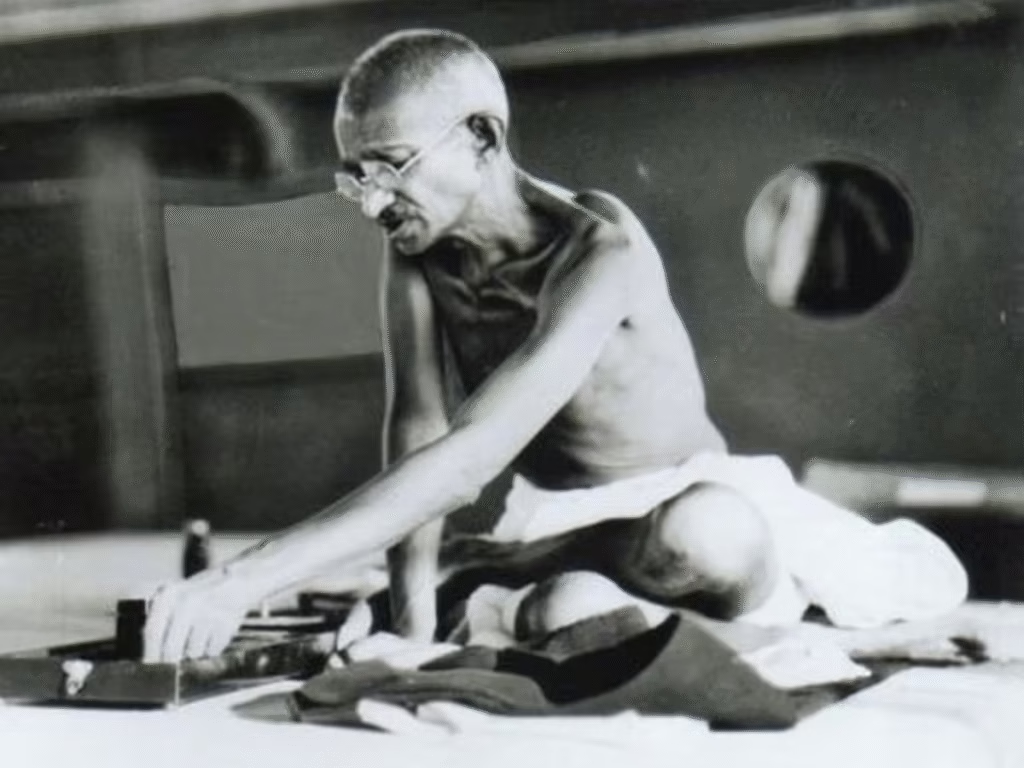
His major fasts included:
- 1918: Ahmedabad Mill Workers’ dispute
- 1924: 21-day fast for Hindu-Muslim unity
- 1932: Yerwada Jail fast, which led to the Poona Pact
- 1933: 21-day fast for the upliftment of Dalits
- 1943: Fast during imprisonment in the Quit India Movement
- 1947-48: Fasts to restore communal harmony after Partition
Unlike many modern political hunger strikes, Gandhi’s fasts generally ended after negotiations or assurances from political leaders.
A continuing form of peaceful protest
Hunger strikes remain one of the most visible forms of non-violent protest across democracies. While they can draw national attention to a cause, medical experts caution that prolonged fasting poses serious health risks. The Delhi High Court’s recent direction for daily monitoring of Sonam Wangchuk underscores the balance authorities must maintain between respecting the right to protest and protecting the life and health of individuals undertaking such extreme forms of dissent.