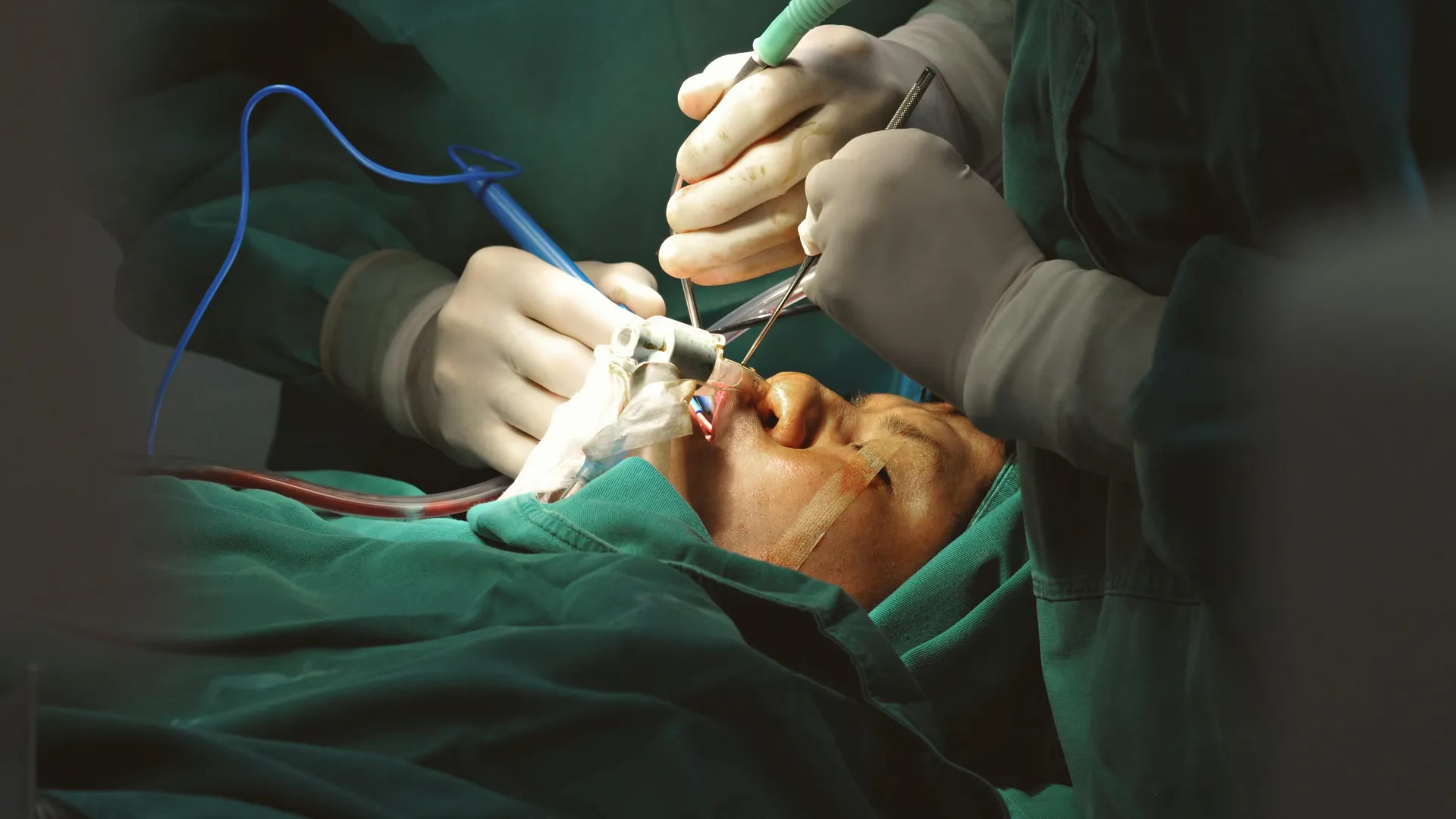

In a significant medical advancement, a private hospital in Pune has successfully performed a superficial circumflex iliac artery perforator (SCIP) free flap surgery for head and neck reconstruction. This groundbreaking procedure was conducted by Dr. Pranav Thusay, a leading plastic and reconstructive surgeon, on a 55-year-old woman who had a cancerous tumor. This innovative surgical technique is poised to revolutionize the treatment of patients with hemiglossectomy defects.
Understanding Hemiglossectomy
Hemiglossectomy is a surgical procedure that involves the removal of half the tongue, usually due to cancer or other severe conditions. While necessary for treating underlying health issues, this surgery often results in significant functional and cosmetic impairments. Patients may experience difficulty speaking, swallowing, and maintaining oral hygiene.
The SCIP Free Flap Technique
The SCIP free flap surgery is an advanced technique in the reconstruction of head and neck defects. This procedure involves harvesting a thin, pliable flap of tissue from the lower abdomen and groin area. This flap contains a network of perforator blood vessels with diameters ranging from 0.5 to 0.8 mm. The harvested tissue is then transferred to the head and neck region to reconstruct the buccal mucosa tissue. The tiny blood vessels in the flap are meticulously joined to the major neck vessels using sutures thinner than a single strand of hair, under a microscope.
Advantages of SCIP Free Flap
SCIP free flap surgery offers several advantages over traditional tongue reconstruction methods:
- Reduced Donor Morbidity: The flap is harvested from an inconspicuous area of the abdomen, resulting in a single line scar that is hidden under the undergarment. This minimizes visible scarring and donor site morbidity.
- Excellent Tissue Match: The procedure provides non-hairy, pliable tissue that is ideal for reconstruction, leading to a more functional and aesthetically pleasing outcome.
- Improved Tongue Movement: Due to its thin and pliable nature, the SCIP flap can restore good tongue movement, enhancing the patient’s ability to speak and swallow effectively.
Expert Opinions
Dr. Pranav Thusay emphasized the significance of this procedure in enhancing patient outcomes. “This surgery is necessary to treat an underlying condition, but it comes with significant functional and cosmetic impairments. The SCIP free flap is a next step and future advance in the reconstruction of head and neck defects, adding to the plastic surgeons’ reconstructive armamentarium,” he stated.
Dr. Sujay Hedge, a renowned oncosurgeon, also highlighted the benefits of the SCIP free flap. “It helps minimize donor site morbidities. SCIP free flap expands the armamentarium of a plastic surgeon and can be used as an alternative to free radial forearm flap in certain circumstances,” he opined.
The successful execution of SCIP free flap surgery in Pune marks a significant leap in the treatment of patients with hemiglossectomy defects. This innovative technique not only reduces donor morbidity but also provides excellent tissue match and improved tongue functionality. As the SCIP free flap surgery continues to evolve, it promises to offer more effective and aesthetically pleasing reconstruction options for patients suffering from head and neck defects.
Join TISHHA.