


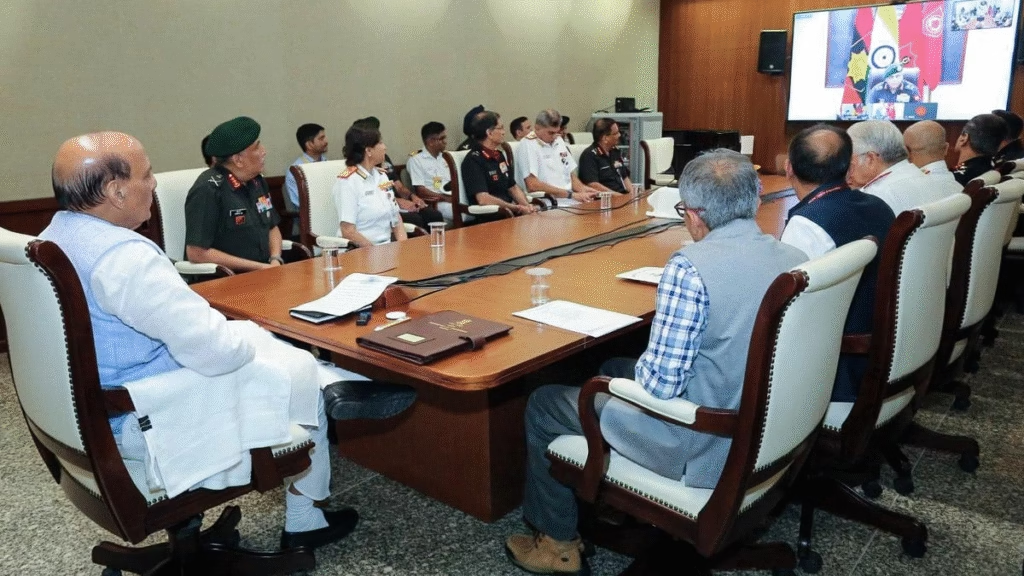
Defence Minister Rajnath Singh on July 29 inaugurated India’s first academic and operational Department of Military Medicine at Command Hospital (Central Command), Lucknow. The facility has been established to strengthen the country’s military healthcare capabilities and prepare armed forces personnel for future security and medical challenges.
Speaking during the virtual inauguration, Singh highlighted that military medicine focuses on understanding and managing the physical and psychological challenges faced by soldiers in combat and extreme operational environments. He noted that Indian troops serve in some of the most demanding terrains and climatic conditions, making specialised medical research and training essential.
The newly established department will function as a centre for research, innovation, and advanced training, helping the Armed Forces Medical Services (AFMS) develop medical protocols suited to diverse operational requirements. Singh also pointed out that despite changing warfare technologies, threats such as weapons of mass destruction remain relevant, making preparedness in military medicine increasingly important.
According to the Ministry of Defence, the department will enhance India’s capabilities in disaster response, field hospital operations, mass casualty management, epidemic control, and humanitarian assistance missions. It has been envisioned as the primary academic, research, and doctrinal institution for military medicine under the AFMS.
The department will offer structured education and specialised training programmes, including opportunities for super-specialisation in military medicine. Officials believe this initiative will strengthen India’s expertise in military healthcare while contributing to global medical research and innovation.
Established under the Directorate General of Medical Services (Army), the facility aims to improve combat medical readiness, advance research, develop indigenous military medical doctrines, and create specialised expertise for future battlefields and emergency situations.
During his address, Singh stressed that national security depends not only on military strength but also on the health and readiness of soldiers. He described preventive healthcare as the “first line of defence” and advocated for stronger disease surveillance, vaccination programmes, sanitation, nutrition, physical fitness, occupational health measures, and regular health screenings.
He also highlighted the role of emerging technologies such as artificial intelligence, wearable health devices, predictive analytics, and advanced diagnostics in monitoring soldiers’ health and identifying risks at an early stage.
The department will focus on several key areas, including military trauma care, combat psychiatry, environmental and operational medicine, military medical logistics, chemical, biological, radiological, nuclear and explosive (CBRNe) medical response, emergency and critical care, disaster medicine, humanitarian assistance and disaster relief (HADR), as well as medical research and data analytics.
In addition, it will promote innovation in battlefield medicine through simulation-based training, telemedicine, prolonged field care, and advanced medical decision-support systems.
The project will be implemented in phases. The initial phase will focus on setting up infrastructure and academic programmes, while future phases will establish dedicated Centres of Excellence for HADR and CBRNe medicine.