


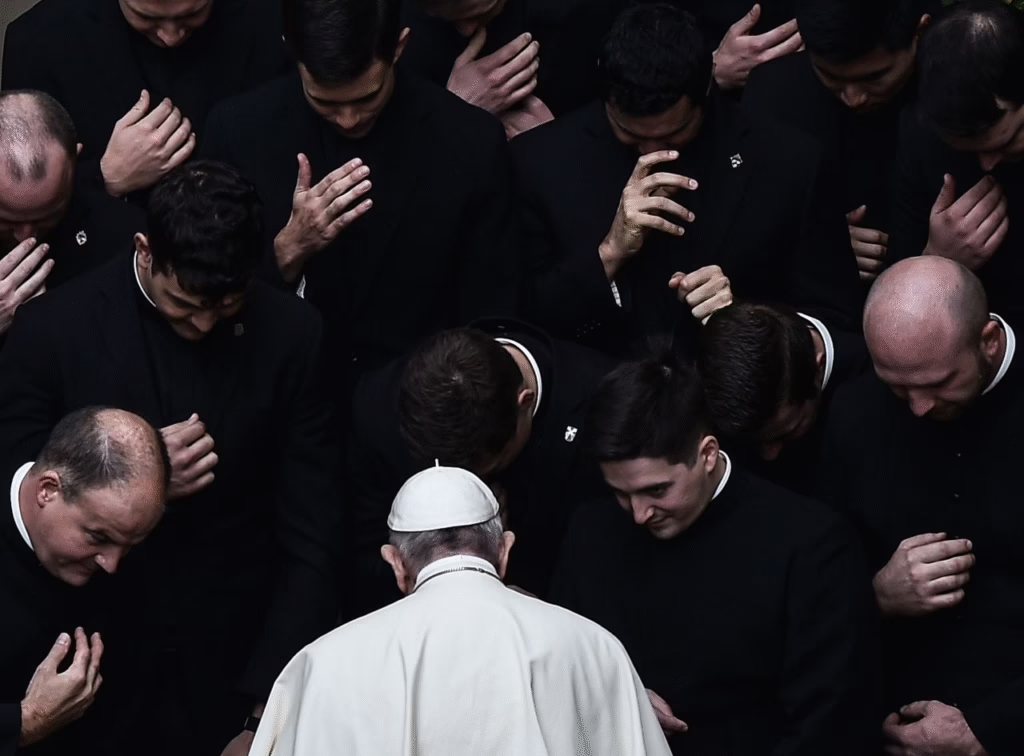
Pope Francis has passed away at the age of 88 in Rome after a prolonged illness, the Vatican confirmed on 21st of April. His death marks the end of a historic papacy, during which he became the first Latin American to lead the Roman Catholic Church. He was elected as Pope on March 13, 2013, and spent 12 years at the helm of the Church, often working to reform long-standing traditions and address internal tensions.
His passing came just a day after he made a surprise appearance on Easter Sunday, greeting over 35,000 people gathered in St. Peter’s Square. It was his most public outing since battling a severe case of double pneumonia, a condition that had left him hospitalized in recent weeks.
Earlier this year, in February, Pope Francis was admitted to the hospital due to a respiratory tract infection, which later escalated into pneumonia in both lungs. Vatican officials also reported that he was experiencing early signs of kidney dysfunction and had been undergoing treatment for anaemia. Blood tests conducted over the weekend showed mild kidney impairment, though it was said to be under control at the time. He also received hematin during blood transfusions to improve his haemoglobin levels and oxygen circulation.
A History of Health Challenges
Throughout his life, Pope Francis faced several serious health issues, many of which worsened in his later years:
Lung and Respiratory Issues
- At just 21, he was diagnosed with pleurisy, an inflammation of the lung lining, and had part of one lung removed.
- Since early 2023, he had struggled with recurring flu-like illnesses and lung inflammation.
- In November 2023, he canceled his planned visit to the COP28 climate summit in Dubai due to worsening respiratory symptoms.
Physical Injuries from Falls
- In December 2024, he fell in his residence and sustained a bruised chin.
- In January 2025, he experienced another fall, injuring his arm.
Digestive System Surgeries
- In July 2021, Pope Francis underwent a major surgery to remove 33 cm (13 inches) of his colon due to diverticulitis, a painful condition affecting the intestines.
- The condition returned in 2023, and in June of that year, he was again hospitalized—this time for surgery to treat an abdominal hernia causing intestinal blockages.
Chronic Pain and Mobility Issues
- He long suffered from sciatica, a nerve condition causing severe pain in the lower back, hips, and legs.
- He also dealt with a debilitating knee condition, for which he tried laser and magnetic therapies. In recent years, he often used a wheelchair or cane to move around.
Vatican Response and Global Concern
Throughout his illness, the Vatican made adjustments to his schedule, cancelling or postponing public appearances as his health declined. In the final days, Catholics around the world held prayer vigils and gatherings, hoping for his recovery.

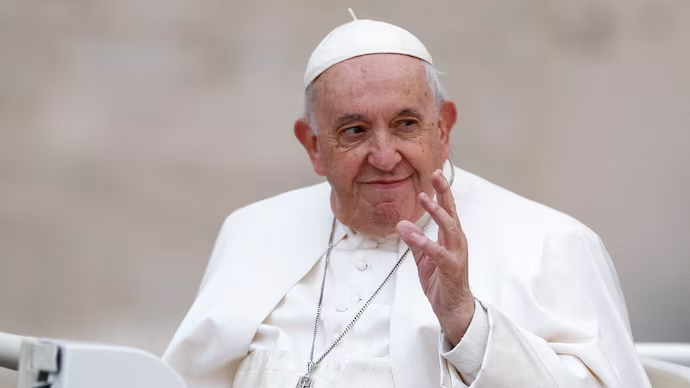
Pope Francis leaves behind a legacy of compassion, reform, and tireless service to the Church, even in the face of significant personal health battles. His leadership, humility, and dedication will be remembered by millions across the globe.