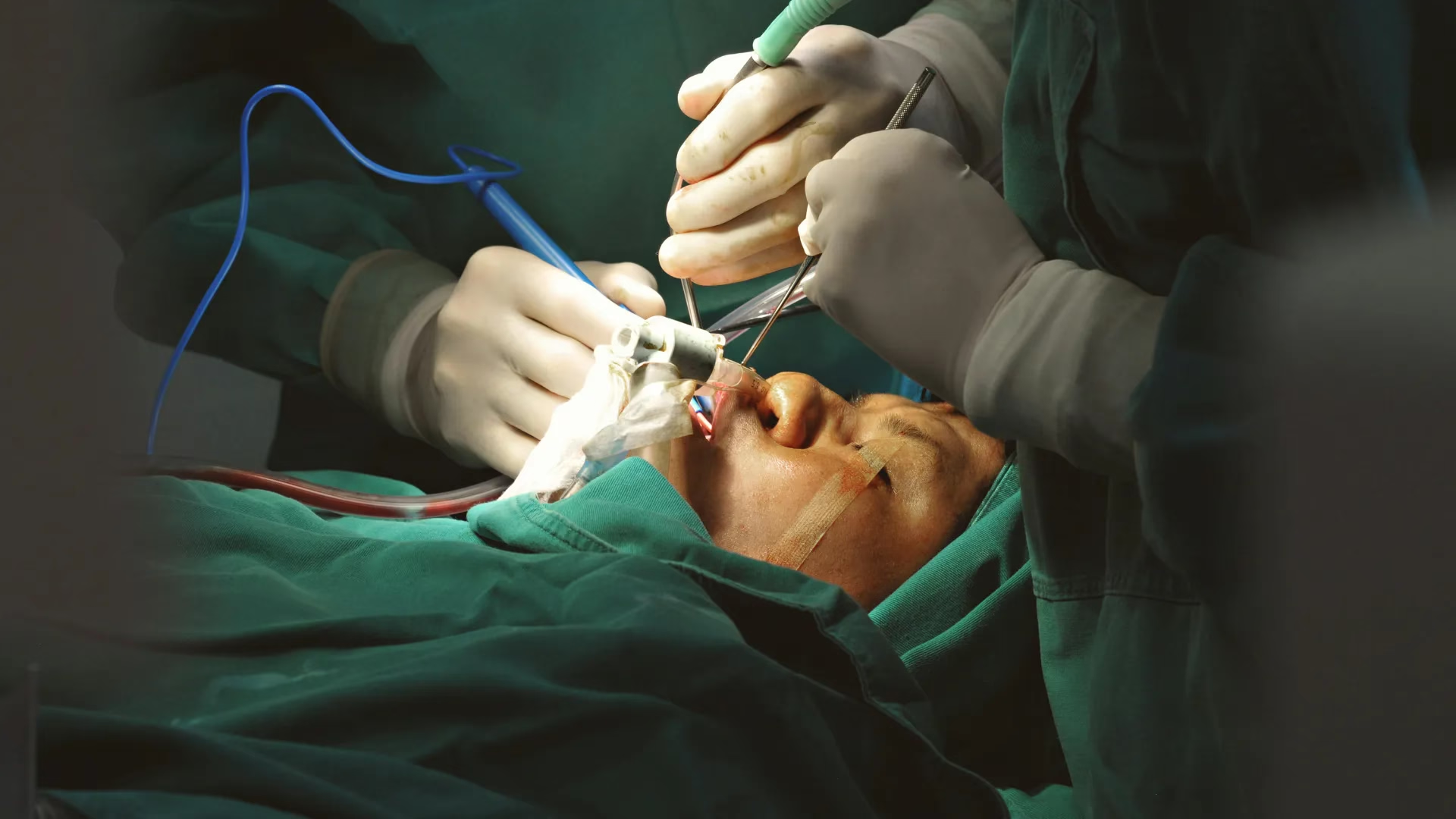

India reports nearly 15 lakh new cancer cases every year comparable to the population of a city like Nashik yet a significant number of seasoned oncologists in the private sector are being barred from treating patients under the Ayushman Bharat Pradhan Mantri Jan Arogya Yojana (PMJAY).
The exclusion is not due to lack of expertise or clinical experience, but because many of these doctors do not possess super-specialty qualifications recognised by the National Medical Commission (NMC), such as DM, MCh, or DrNB degrees.
Several affected doctors pointed out that until a few decades ago, structured super-specialty programs in oncology were limited or unavailable. During that time, fellowships at leading cancer institutions were the primary route for specialised training. Even today, these fellowships often lasting two to three years are considered prestigious and provide hands-on expertise in areas like head and neck oncology, gynecologic oncology, hemato-oncology, and pediatric cancer surgery.
Many of the now-ineligible doctors have decades of experience and have held senior roles, including department heads, educators, and medical directors. Some have even trained candidates who later obtained DM or DrNB qualifications. According to data compiled by Surat-based oncologist Dr. Hemish Kania, over 300 such specialists across multiple states have been affected.
This development is particularly concerning given India’s already strained oncology workforce, with roughly one medical oncologist per million people and only about 4,000 oncosurgeons nationwide. The exclusion of these specialists could significantly impact patient access to cancer care, especially in smaller cities where reliance on government-funded healthcare schemes is high.
For instance, a surgeon from Uttar Pradesh, trained through a three-year fellowship at Tata Memorial Hospital, returned to serve his hometown but is now unable to treat PMJAY patients. In cities with limited specialists, such exclusions could increase waiting times and reduce access to timely care.
The issue has also affected hospital operations, with some doctors reportedly being removed from the PMJAY-linked HEM 2.0 portal managed by the National Health Authority (NHA). As a result, hospitals are reconsidering contracts with these specialists since they are unable to process PMJAY claims.
The roots of the problem date back to the early 2000s when India faced a shortage of oncology educators. At that time, the erstwhile Medical Council of India (MCI) promoted fellowship-based training to bridge the gap. These fellowships, though not formally recognised, were widely accepted and played a crucial role in building the oncology workforce.
However, after the NMC replaced MCI in 2020, new regulations mandated recognised super-specialty degrees for oncologists, without acknowledging fellowship pathways. This shift has created confusion and inconsistency in implementation, particularly at the state level.
While the NHA maintains that it empanels hospitals rather than individual doctors, and that qualification standards fall under NMC’s jurisdiction, the lack of clear guidance has led to a policy deadlock. State authorities have asked doctors to seek clarification from both bodies, but no definitive resolution has emerged so far.
Medical bodies, including the Indian Medical Association, have raised concerns and urged authorities to reconsider the rule. Experts argue that applying such criteria retrospectively is unfair and could harm patient care. They have proposed that fellowship-trained oncologists from reputed institutions, or those with substantial hands-on experience, should be made eligible under PMJAY.