


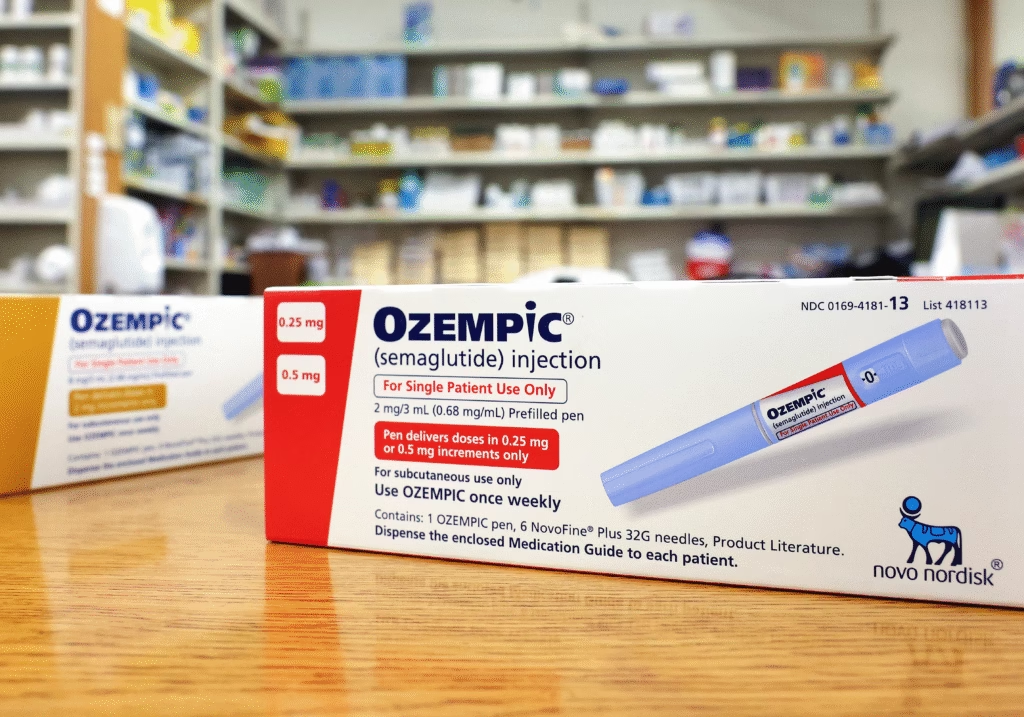
The patent for semaglutide the key ingredient in Ozempic and Wegovy developed by Novo Nordisk is set to expire in India on March 20, opening the door for a wave of low-cost alternatives.
Several Indian pharmaceutical firms, including Mankind Pharma, Ajanta Pharma, Sun Pharmaceutical Industries, Dr. Reddy’s Laboratories, and Lupin, are preparing to launch generic versions immediately after the patent lapses. These alternatives are expected to cost roughly half as much as the original drug, at around ₹5,000 per weekly dose.
Healthcare providers are already gearing up for increased demand. Hospitals, clinics and telehealth platforms are expanding obesity management services, anticipating a surge in patients seeking treatment. India will be one of the first major markets after Canada to see generic semaglutide enter the market, making it a key test case for how sharply prices can drop.
Rising cases of obesity and metabolic disorders driven by sedentary lifestyles and calorie-rich diets are fueling demand. India now has the world’s third-largest overweight population, behind the United States and China.
Amid this growing market, regulators have stepped in to curb aggressive promotion. Authorities have banned advertisements and marketing campaigns related to weight-loss treatments, including social media endorsements and disease-awareness initiatives.
Experts believe the GLP-1 drug market in India could expand fivefold, from ₹10 billion to ₹50 billion by 2030, with prices expected to fall 40-50% initially and decline further as competition intensifies.
Healthcare companies are moving quickly to capitalize on the opportunity. Chains like Apollo Health & Lifestyle and Fortis Healthcare are launching or scaling up specialized obesity clinics that combine medication with dietary, fitness, and psychological support.
Digital health platforms and pharmacies are also stepping in. Companies such as Tata 1MG and PharmEasy are offering diagnostic packages and home delivery of weight-loss drugs following online consultations.
Meanwhile, partnerships are shaping the competitive landscape. Cipla is marketing tirzepatide in India through an agreement with Eli Lilly, while also collaborating with clinics in smaller towns to expand access.
Industry analysts say combining medication with ongoing care services could significantly boost revenues for healthcare providers. Startups and wellness platforms are also entering the space, forming partnerships and expanding physical clinics to capture new users.
Globally, adoption of such drugs has varied, with telehealth playing a major role in the US and online platforms driving sales in China. In India, however, where patients largely pay out of pocket, structured programs offering long-term support are expected to gain traction.
Overall, the patent expiry is set to transform India’s weight-loss treatment market, making therapies more accessible and triggering widespread industry expansion.