


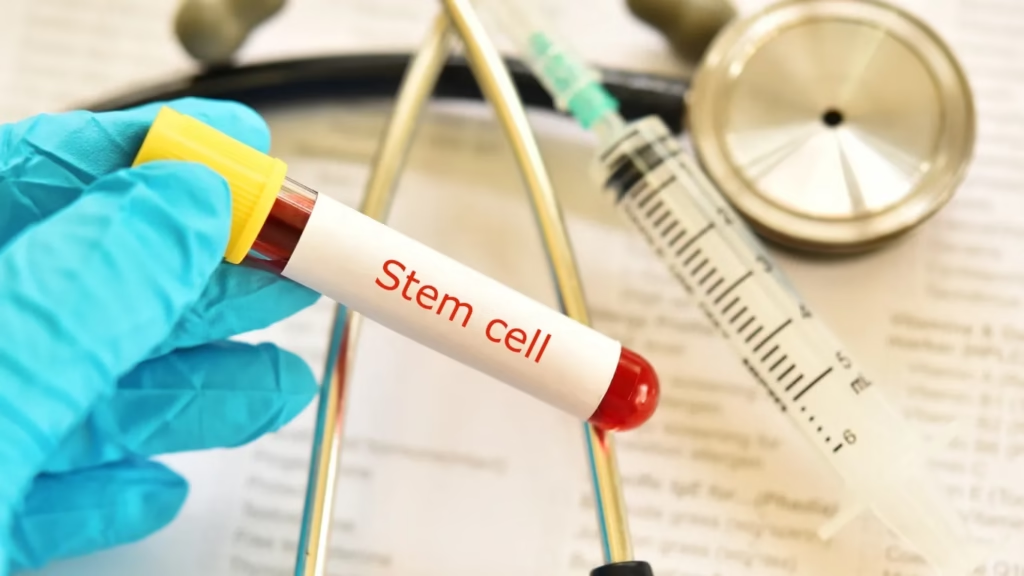
The National Medical Commission (NMC) has tightened its advisory on stem cell therapy, warning doctors and healthcare institutions against promoting the treatment as a routine option for diseases where its effectiveness has not been established. The move aims to curb the commercial use of experimental stem cell therapies, particularly for conditions where patients and families may be seeking unproven “miracle” cures.
Stem cell therapy allowed only for approved conditions
According to the advisory issued by the NMC’s Ethics and Medical Registration Board (EMRB) on September 5, stem cell therapy can be offered as standard treatment only for specified conditions approved by the Ministry of Health and Family Welfare (MoHFW).
The advisory cautions medical professionals against recommending stem cell therapy as a standard treatment for conditions such as autism spectrum disorder, spinal cord injuries, cancer, Alzheimer’s disease, Parkinson’s disease and multiple sclerosis when there is no approved indication.
Experimental treatments to remain within research
For conditions outside the approved indications, stem cell therapy will be permissible only in the context of authorised research.
The regulatory pathway will depend on how the stem cells are processed. Research involving stem cells that have undergone more than minimal manipulation will come under the Central Drugs Standard Control Organisation (CDSCO).
Where the cells have undergone less than minimal manipulation, the research will be regulated by the Department of Health Research (DHR), along with approval from the National Stem Cell Research Regulation Committee and a DHR-registered Institutional Ethics Committee.
Patient protection made mandatory
The advisory also reinforces ethical safeguards for clinical research involving stem cell therapy. Trials must follow applicable ICMR ethical guidelines, including written informed consent from patients.
Patients participating in such research should not be charged for the experimental treatment, while provisions must also be made for compensation in cases of treatment-related injury or death.
Limited list of approved indications
Stem cell therapy is currently recognised as a standard treatment for a defined set of conditions. The approved list includes 18 conditions in adults, including multiple sclerosis, myelofibrosis, acute myeloid leukaemia and follicular lymphoma.
For children, stem cell therapy is recommended for 14 conditions, including thalassemia, neuroblastoma, Ewing’s sarcoma and certain other specified disorders.
The latest advisory effectively draws a clearer line between established stem cell treatments and experimental therapies, directing doctors and institutions to ensure that unproven interventions are not presented to patients as routine or guaranteed treatments.