


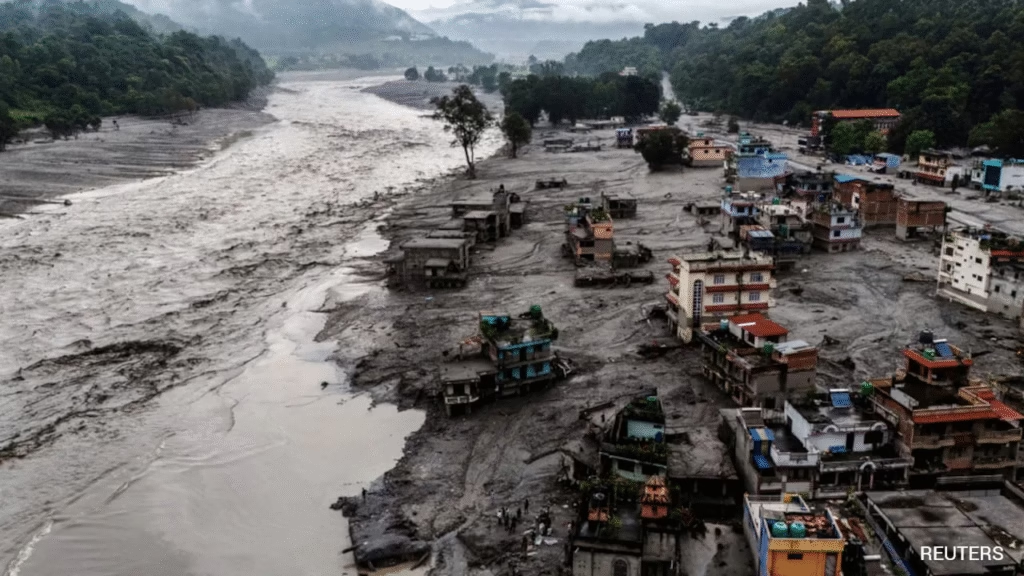
Nepal has sought urgent financial assistance from the global Fund for Responding to Loss and Damage following the catastrophic Bhotekoshi flash flood that struck the country on August 26, as the disaster continues to place significant pressure on healthcare, emergency response and essential services.
The Nepal government has written to the board of the climate finance mechanism, seeking a rapid response to what it described as an unprecedented disaster that has caused widespread loss of life, displacement, destruction of homes and critical infrastructure, and disruption of essential services.
According to Nepalese authorities, the full economic and non-economic losses are still being assessed. The government said the scale of the disaster has exceeded the country’s immediate response capacity and warned that urgent international support is required for relief, rehabilitation and reconstruction.

Healthcare emergency grows
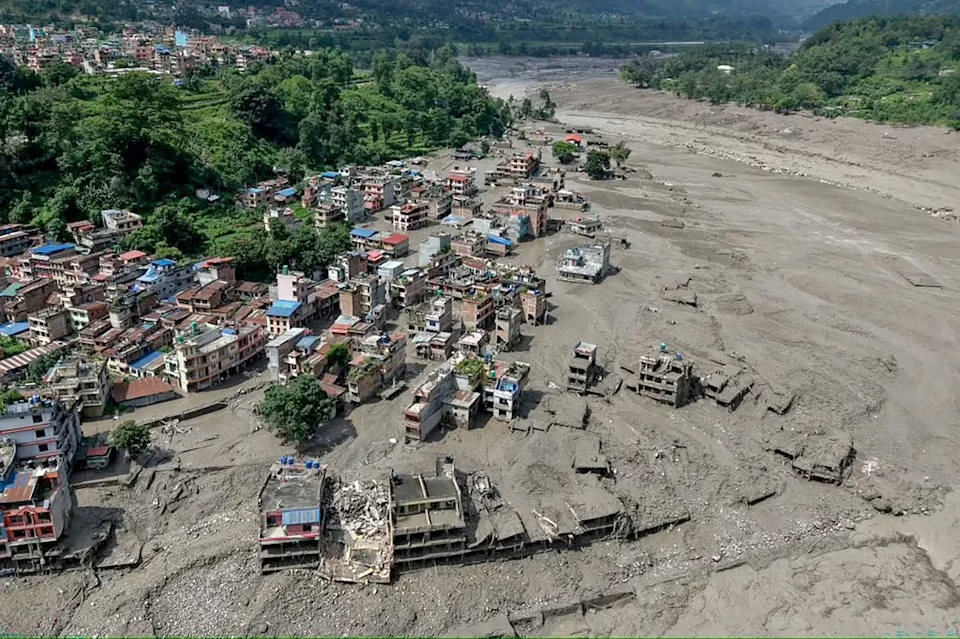
The disaster has created an extensive humanitarian and healthcare challenge across communities along the Bhotekoshi and Trishuli river corridors. Rescue teams are continuing to evacuate survivors, while authorities face the difficult task of treating injured people, supporting displaced communities and managing large numbers of recovered bodies.
Healthcare authorities have also been dealing with the identification and preservation of human remains. An 18-member Indian forensic team specialising in DNA analysis has arrived in Kathmandu and is working with the Nepal Police Central Forensic Science Laboratory and Tribhuvan University Teaching Hospital to analyse DNA samples and help identify victims.
Nepal has also sought additional medical and emergency supplies, including medicines, body bags, freezers and other essential equipment. The requirement for such supplies has become increasingly urgent because of the scale of fatalities and the difficult terrain in which rescue and recovery operations are taking place.
The disaster has also damaged roads, bridges and other infrastructure, making access to affected communities difficult and potentially disrupting delivery of healthcare and essential services.
India, China, World Bank Extend Aid to Flood-Hit Nepal
India, China and the World Bank have stepped up support for Nepal following devastating floods, with assistance focused on rescue, relief and reconstruction.
India has deployed an 11-member tunnel-rescue team near the Chilime Hydropower Project and sent an 18-member forensic DNA team to Kathmandu to help identify victims. Relief supplies include medicines, rescue equipment, generators, tents, blankets, food and body bags.
The World Bank said up to Rs. 25 billion could be mobilised as emergency assistance, while China has also committed immediate cash support.
India has additionally placed NDRF and rescue teams on high alert along the Bihar and Uttar Pradesh border amid concerns over downstream flooding.
Nepal has declared affected municipalities in Rasuwa, Nuwakot and Dhading as “disaster crisis areas” to facilitate domestic and international assistance.
Nepal seeks climate justice
Nepal’s appeal for climate finance comes against the backdrop of its vulnerability to climate-related disasters. The government argues that the country contributes negligibly to global greenhouse gas emissions while facing disproportionately severe impacts from climate change.
The Bhotekoshi disaster has highlighted the growing threat posed by extreme events in the Himalayan region, with consequences extending from high-altitude areas into densely populated downstream communities. The impacts are being felt across health, food and water security, energy, infrastructure, livelihoods and human security.
Nepal is therefore asking the Loss and Damage Fund to make a special and rapid decision, arguing that immediate financial support is essential to protect affected populations, restore essential services and prevent further suffering.
The government has said it wants assistance before the fund’s next scheduled board meeting, expected in December. If successful, Nepal’s request could also become an important precedent for other climate-vulnerable mountainous countries seeking international support after extreme weather disasters.
As Nepal moves from rescue to recovery, the healthcare response is expected to remain a critical priority, particularly for emergency medical care, disease prevention, trauma support, victim identification, medicines and restoration of health services in affected communities.