


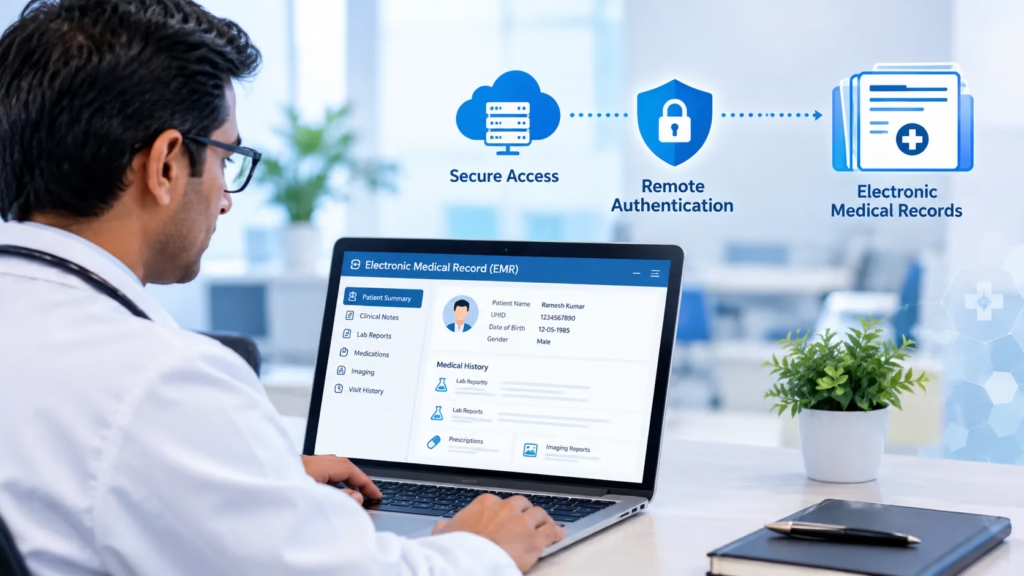
The healthcare industry body NATHEALTH has welcomed the National Medical Commission’s (NMC) clarification permitting Registered Medical Practitioners (RMPs) to remotely review and digitally authenticate electronic medical records. The organisation said the move could improve access to diagnostic services, reduce reporting delays and support digital healthcare delivery, particularly in areas facing a shortage of specialists.
The clarification follows an advisory issued by the NMC on October 13, which states that registered doctors may review and authenticate electronic clinical records remotely using digital or electronic signatures recognised under the Information Technology Act, 2000.
Remote Authentication to Support Faster Healthcare Services
The NMC advisory applies to several categories of electronic medical documentation, including laboratory and pathology reports, radiology reports, diagnostic interpretations, discharge summaries and other clinical records.
Under the clarification, doctors are not required to be physically present at a healthcare facility to authenticate these documents. However, they must examine the relevant clinical information, apply independent professional judgement and retain full responsibility for the records they authenticate.
The provision is expected to support healthcare facilities that depend on specialists working across multiple locations, particularly diagnostic centres and hospitals in smaller towns.
NATHEALTH Highlights Benefits for Patients and Healthcare Providers
Dr Sangita Reddy, President of NATHEALTH and Joint Managing Director of Apollo Hospitals, described the clarification as an important development for India’s healthcare system.
She said NATHEALTH had previously recommended remote authentication of medical records to the government and welcomed the recognition of this practice.
According to Dr Reddy, allowing doctors to authenticate reports without being physically present could reduce delays in patient care while maintaining clinical accountability and patient safety.
She also highlighted the role of the decision in strengthening digital healthcare services and improving access to medical expertise.
Diagnostic Industry Expects Improved Reporting Efficiency
Shankha Banerjee, Treasurer of NATHEALTH and CEO of Dr Lal PathLabs, said the clarification addresses uncertainty surrounding the remote signing of diagnostic reports.
He noted that the provision could help diagnostic service providers extend reporting hours and reach patients in locations where specialists are not continuously available on-site.
Banerjee also emphasised that remote authentication does not reduce a doctor’s professional responsibility for the accuracy and clinical interpretation of reports.
Clinical Accountability Remains Mandatory
While the NMC clarification enables remote authentication, it does not remove the requirement for medical professionals to independently assess clinical information before approving a document.
Registered Medical Practitioners remain accountable for the records they authenticate, regardless of whether the process is completed remotely or at the healthcare facility.
The clarification establishes a regulatory basis for remote authentication of electronic medical records and could support more efficient use of specialist medical services across hospitals and diagnostic networks.