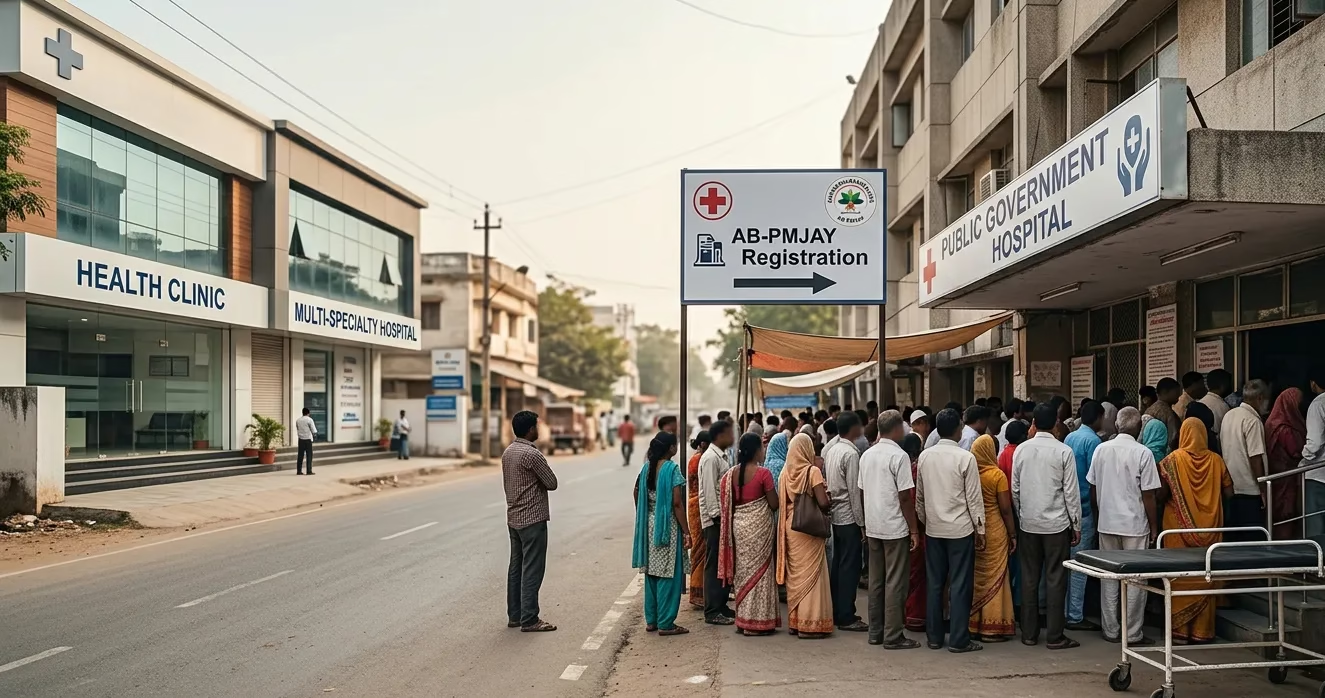
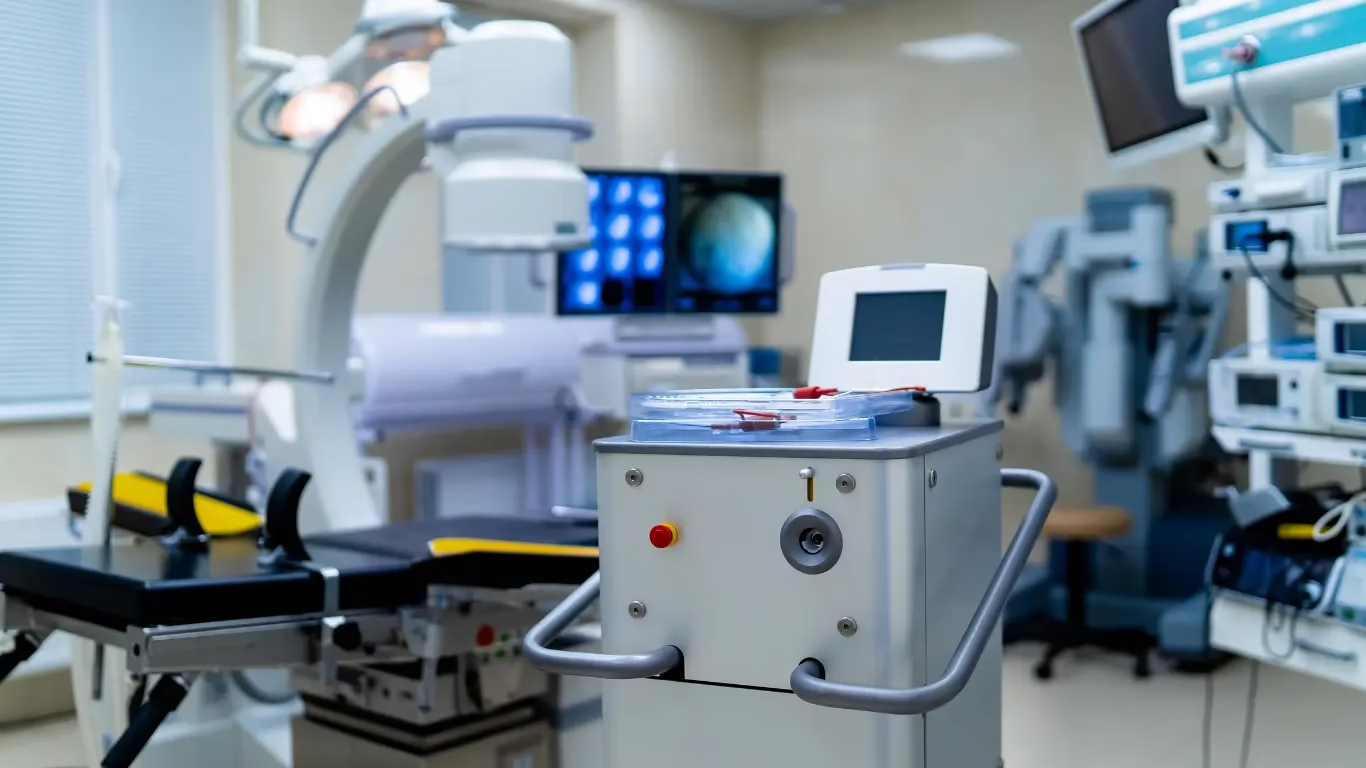
The Medical Technology Association of India (MTaI) has appealed to the government to restart imports of refurbished medical devices, subject to approvals from the Directorate General of Health Services (DGHS) and the Ministry of Environment, Forest and Climate Change (MoEFCC). The industry body noted that the current suspension has put significant pressure on India’s healthcare system, particularly in tier 2–4 towns and rural areas, where more than 70% of hospitals are small, privately run facilities that depend on affordable second-hand equipment like CT scanners, MRI machines, and now even robotic systems.
MTaI chairman Pavan Choudhary cautioned that a prolonged ban could weaken these providers and put jobs at risk. As an immediate measure, he recommended permitting imports under strict regulatory oversight. He also differentiated between import substitution which governments often push through tariffs and subsidies but which may dampen competitiveness and import replacement, which happens organically. Drawing on Japan’s example, he explained how local workshops there moved from repairing imported bicycles to making spare parts and eventually building full products, driving both industrial expansion and job creation.
Globally, refurbished medical equipment accounts for 7–9% of market demand in the U.S. and EU, while countries such as the UK, Japan, Canada, South Korea, and Australia already regulate and allow their trade. To uphold safety and quality, MTaI has stressed that only Original Equipment Manufacturers (OEMs) should handle refurbishment, using authentic parts and offering strong service support. Such a framework, it argued, would make advanced medical technologies more affordable outside big cities and help build new skilling opportunities aligned with India’s ambition of training and exporting 200,000 healthcare professionals each year.
MTaI has urged policymakers to adopt a collaborative, future-ready approach that strengthens healthcare access, promotes skill development, and positions India as a hub for medical device repair and refurbishment. It also welcomed the government’s Electronics Repair Services Outsourcing (ERSO) initiative designed to make India a global leader in electronics repair and called for medical devices to be included in its scope.
The ERSO pilot in Bengaluru, involving companies such as Lenovo and Flex, has already cut customs clearance timelines from 10–15 days to just 2–3 days and enabled exports to markets in the U.S. and Europe. With the government aiming for a 20% share of the $100 billion global repair industry, MTaI believes extending ERSO to cover medical devices would attract international expertise, encourage technology transfer, build advanced recycling systems, and establish India as a preferred destination for medical device refurbishment and export.