


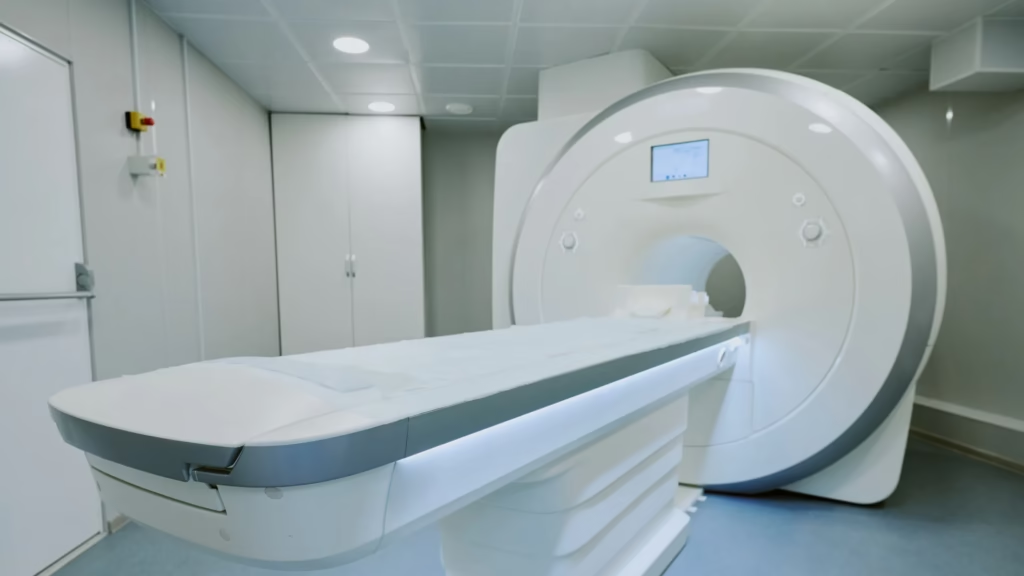
The ongoing conflict in West Asia has begun to impact the healthcare sector, with experts indicating a slight rise in the cost of new MRI machines. The disruption has driven up prices of plastic raw materials and affected supply chains, though the overall impact on MRI machine pricing is expected to remain limited.
Dr. Harsh Mahajan, Mentor at FICCI Health Sector and Founder-Chairman of Mahajan Imaging and Labs, explained that while new MRI machines may become marginally more expensive, patients are unlikely to face higher scan charges. He noted that modern MRI systems require around 1,500 litres of liquid helium only during initial setup, and thanks to “Zero Boil Off” technology, they do not need frequent refilling. As a result, fluctuations in helium prices have minimal influence on overall machine costs.
He added that high-field superconducting MRI machines typically cost between ₹7 crore and ₹20 crore, and even a rise in helium prices would only slightly affect the total price.
Meanwhile, Himanshu Baid, Managing Director of Poly Medicure Limited, highlighted a significant surge in plastic raw material costs rising by 40-50%. He warned that ongoing shortages are disrupting production and could lead to supply constraints for essential medical equipment.
Anil Vinayak, Group Chief Operating Officer at Fortis Healthcare, pointed out that the conflict has also slowed the growth of India’s medical tourism sector. International patient inflow, especially from the Middle East, has dropped sharply. He noted a 75% decline in patient footfall from the region over a short period, contributing to an overall 30% drop in international business at Fortis.
He further estimated that medical tourism revenues could decline by 15-20% in the near term. Travel disruptions, including halted flights from Iraq and reduced connectivity across parts of the Middle East, along with rising airfares and safety concerns, have discouraged patients from travelling.
Vinayak emphasized that the situation remains uncertain, and the coming weeks will be crucial in determining recovery trends. Typically, the medical tourism sector takes two to three months to rebound after major geopolitical disruptions, as travel confidence and logistics gradually stabilize.