


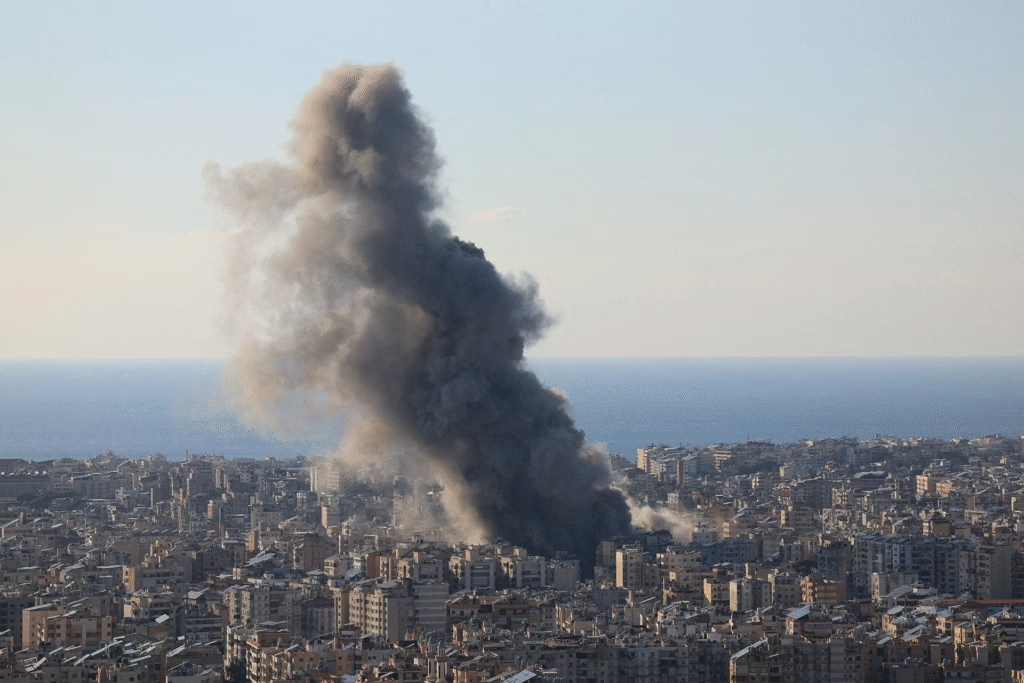
The ongoing conflict in the Middle East has begun to affect India’s medical tourism industry, prompting major hospital chains to explore new international markets for patients. With travel disruptions and reduced air connectivity in the region, hospitals are increasingly looking toward Southeast Asia, Africa and Central Asia to maintain the inflow of foreign patients.
Leading healthcare providers such as Apollo Hospitals, Fortis Healthcare, Manipal Hospitals and HealthCare Global Enterprises traditionally receive a significant share of international patients from Middle Eastern countries. Patients from nations including Oman, Saudi Arabia, Iran, Iraq and Yemen often travel to India for specialised treatments such as cancer care, cardiac surgeries, organ transplants and orthopaedic procedures. However, due to the ongoing conflict involving Iran and disruptions to regional air traffic, the arrival of these patients has slowed dramatically.
According to Karthik Rajagopal, Group Chief Operating Officer at Manipal Hospitals, the Middle East contributes nearly 20-25 percent of the hospital group’s medical value travel (MVT) revenue. He noted that if the situation continues for a longer period, patient volumes from the region may temporarily decline. In response, the hospital network is increasing its outreach efforts in Southeast Asia, Africa and certain developed markets to balance the shortfall.
Before the escalation of the conflict, Fortis Healthcare was receiving around five to six new patients every day from the Middle East, mainly from Iran and Iraq. Ganapati Hegde, Cluster Head for International Markets at Fortis, said the hospital group hopes the situation stabilises within the next few months. In the meantime, the organisation plans to conduct new market research and strengthen its presence in regions such as Africa and parts of Europe, where patients often face long waiting periods for specialist consultations.
Experts say India’s medical value travel industry, estimated at around $7–8 billion, depends heavily on patients from the Middle East. Aryaman Tandon, Managing Partner for Healthcare and Life Sciences at Praxis Global Alliance, explained that India’s strong cost advantage remains a major attraction, with many major surgical procedures costing 60–80 percent less compared to hospitals in the Middle East.
The decline in patient flow could affect hospitals beyond just numbers. Patients from the Gulf region typically opt for premium services, undergo complex treatments and make payments in foreign currency, which makes them highly profitable for hospitals. Salil Kallianpur, Managing Director at ARKS Knowledge Consulting, noted that even a short-term disruption could significantly impact hospital revenues because a relatively small number of such patients contribute a substantial portion of profits.
Hospitals that depend heavily on Middle Eastern patients are already anticipating potential financial impacts. The 500-bed KIMSHEALTH Al‑Shifa Super Speciality Hospital stated that its international patient revenue could decline if the conflict continues, as most of its foreign patients come from Gulf countries. According to chairman P. Unneen Haji, the hospital could see a 10–15 percent reduction in revenue if the situation does not improve soon.
Government data also highlights the importance of the region. The Tourism Data Compendium 2025 report from the Ministry of Tourism (India) indicates that the Middle East accounted for nearly 18 percent of total foreign medical visitors to India in 2024, making it one of the largest sources of medical tourists after South Asia and Africa.
With uncertainty continuing in the region, hospitals are now focusing on diversifying their international patient base. Industry experts believe providers may increase efforts to attract patients from Africa, Central Asia and neighbouring South Asian countries. Hospitals are also expanding teleconsultation and second-opinion services so that international patients can begin their treatment planning remotely and travel later when conditions stabilise.
Flight connectivity is another concern for the industry. Several Middle Eastern airports function as major transit hubs for patients travelling to India from other regions, including Africa and Central Asia. If these routes remain disrupted, hospitals could lose patients from multiple regions simultaneously. To address this challenge, Fortis Healthcare has indicated it may approach the government to increase direct flight connectivity from other countries, as many connecting flights currently rely on Gulf transit points.
Despite the temporary disruption, hospital leaders believe India will continue to remain a preferred destination for international patients. They point out that people travel to India primarily for clinical expertise, affordable treatment and faster access to advanced medical care rather than tourism. For now, the industry’s immediate priority is to develop new patient corridors and reduce dependence on a single region for international medical travel.