


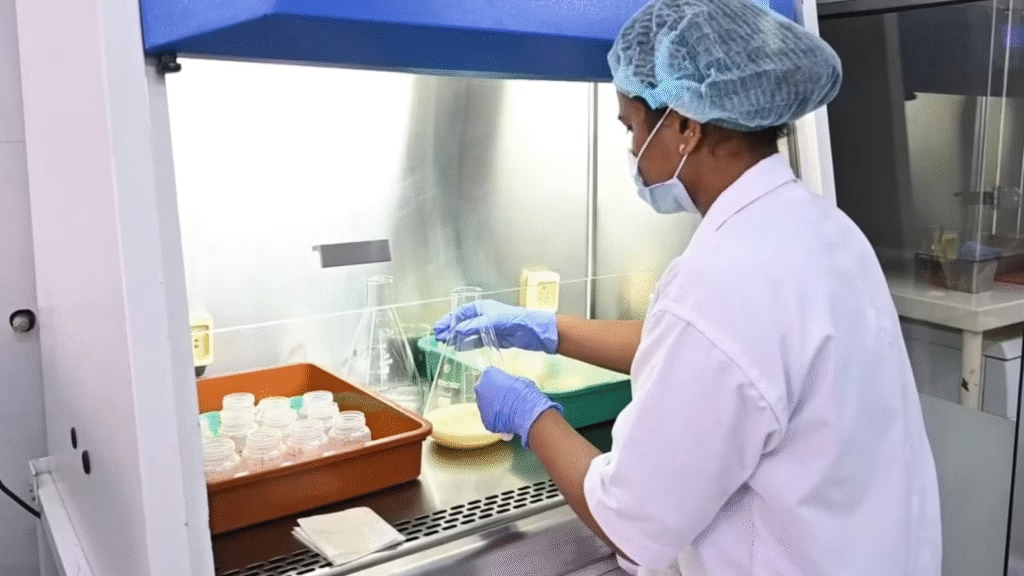
Doctors at King George’s Medical University (KGMU) have discovered that some donated breast milk contains bacteria that can resist antibiotics, raising alarms about its safety for newborns who are premature or seriously ill.
This discovery was made through a study conducted at the university’s human milk bank and was recently published in the International Journal of Medical Microbiology. It was also highlighted during World Breastfeeding Week (August 1–7).
The study, led by Professor Sheetal Verma from the Microbiology Department, tested 151 samples of donated milk. While 58 samples were clean, 93 samples (61%) had bacteria. Among them, 54 samples had Gram-positive bacteria, and 39 had Gram-negative ones.
The most common bacteria found was Staphylococcus, appearing in 49 samples. Other bacteria found included Acinetobacter (20 samples), Pseudomonas (9), Enterococcus (5), and Klebsiella.
Prof Verma explained that while heating the milk (pasteurization) helps kill most harmful germs, some bacteria that are resistant to antibiotics may survive. This makes it important to follow strict cleanliness and do regular testing.
She also said that if donor mothers take antibiotics often, their milk might carry resistant bacteria.
Dr Astha Yadav, who also worked on the research, said that since donated milk is mainly given to weak and premature babies, it should be carefully tested before use.
Other team members included Prof Vimala Venkatesh, Prof Amita Jain, Prof Mala Kumar, Dr Saurabh Kashyap, and Dr Shalini Tripathi.