The Kerala government‘s decision to replace an expensive branded medicine for Spinal Muscular Atrophy (SMA) with a significantly cheaper generic alternative has sparked concerns among parents over drug safety, treatment effectiveness and the need for clinical evidence. The controversy intensified following reports that certain medicine bottles distributed through Sree Avittom Thirunal Hospital in Thiruvananthapuram carried labels stating “Physician Sample” and “For Clinical Trials Only”.
The government has defended the decision, stating that the generic medicine has received regulatory approval and could help expand access to treatment for children affected by the rare genetic disorder.
The controversy centres on the replacement of Roche’s Evrysdi, which contains risdiplam and costs approximately ₹6.2 lakh per bottle in the open market, with Natco Pharma’s generic version, Natsmart, priced at ₹15,900 per bottle.
The nearly 40-fold price difference has brought attention to the balance between reducing treatment costs and ensuring the safety of patients already receiving long-term medication.
Parents Seek Evidence Before Switching Medicines
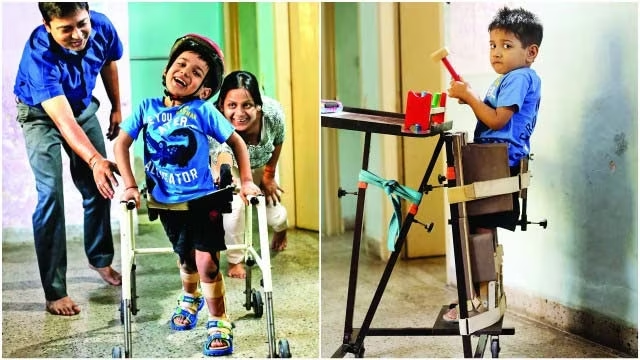
SMA is a rare genetic disorder that causes progressive muscle weakness and can affect mobility, swallowing and breathing. Risdiplam is among the available treatments used to manage the condition.
According to parents, approximately 118 children are currently receiving risdiplam free of cost through the state’s healthcare system.
Several families have opposed the proposed switch, arguing that their children have shown improvements while receiving Evrysdi. They have requested adequate evidence demonstrating that the generic formulation offers comparable safety and effectiveness.
The Cure SMA Foundation of India has also raised concerns about changing treatment for children who have been receiving the branded medicine for several years.
Parents have questioned whether sufficient bioequivalence or therapeutic equivalence data have been made available and whether families were adequately informed about the change.
Government Cites Regulatory Approval and Affordability
The decision to procure Natsmart followed recommendations from the state’s Technical Committee on Spinal Muscular Atrophy.
According to the committee, Natco Pharma’s generic risdiplam formulation has received approval from the Central Drugs Standard Control Organisation (CDSCO).
The government maintains that introducing the lower-cost medicine would allow public healthcare resources to support a larger number of SMA patients.
The financial difference is substantial. Depending on the prescribed dosage, treatment with the generic medicine could cost approximately ₹40,000 per month, compared with more than ₹15.5 lakh for the branded formulation at its stated open-market price.
Concerns Over Medicine Labels Prompt Questions
The controversy intensified following reports that certain medicine bottles distributed through Sree Avittom Thirunal Hospital in Thiruvananthapuram carried labels stating “Physician Sample” and “For Clinical Trials Only”.
These reports led to concerns among parents and political leaders about whether medicines intended for testing had been distributed to children without appropriate consent.
Hospital authorities clarified that the medicine being supplied had received CDSCO approval.
The Health Minister stated that an inquiry into the labelling allegations could be conducted upon receipt of a written complaint.
The reported labels have raised questions about distribution procedures, although their presence alone does not establish that an unauthorised clinical trial was conducted.
Experts Differ on Generic Drug Substitution
Former Kerala Health Minister K.K. Shailaja has expressed concern over the decision, emphasising that medicine quality and patient safety must remain priorities alongside affordability.
She highlighted the improvements reported among children receiving the existing treatment and called for greater scrutiny before changing their medication.
Public health expert Dr B. Ekbal, however, has supported the introduction of generic risdiplam, arguing that lower prices should not automatically lead to doubts about a medicine’s quality.
He has emphasised the importance of regulatory standards and bioequivalence requirements in establishing comparability between generic and branded medicines.
Dr Ekbal also referred to the Delhi High Court’s October 9, 2025, ruling permitting Natco Pharma to manufacture and market generic risdiplam following legal proceedings involving Roche.
Debate Highlights Access and Patient Safety
The dispute has brought renewed attention to the challenges of financing treatment for rare diseases, particularly when medicines require prolonged administration and carry substantial costs.
While lower-cost generic alternatives could help governments extend treatment to more patients, families are seeking greater transparency regarding regulatory assessments, comparative evidence and monitoring after the switch.
The issue remains centred on whether the government can achieve significant cost reductions while maintaining confidence in the safety and effectiveness of treatment for children with SMA.