


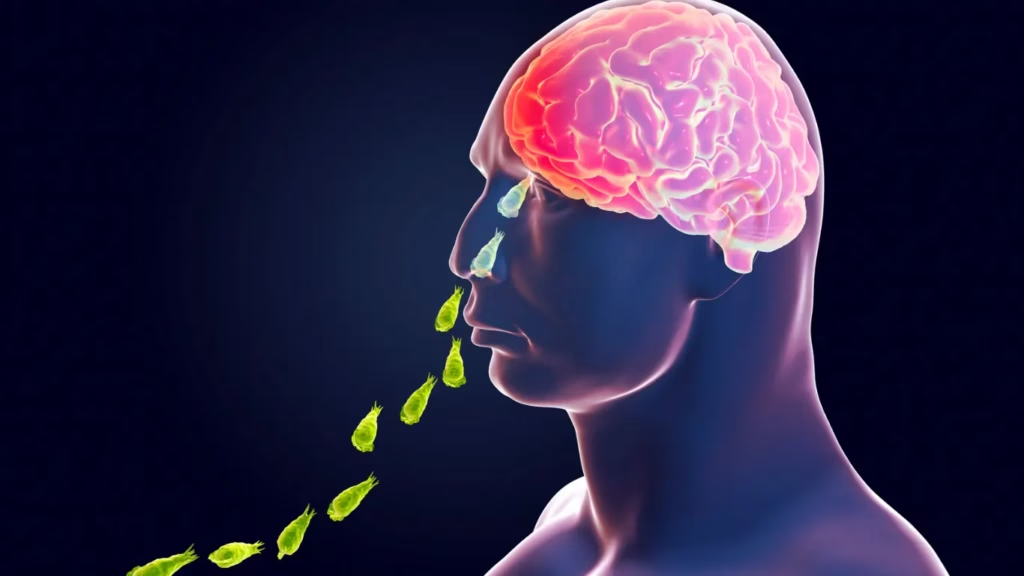
Kerala is confronting an unusual health threat: a microscopic organism that has already claimed 19 lives this year. The culprit, Naegleria fowleri infamously known as the “brain-eating amoeba” causes Primary Amoebic Meningoencephalitis (PAM), a condition that is almost always fatal. Over 70 suspected cases have been reported in the state in recent months.
The parasite thrives in warm freshwater such as ponds, lakes, rivers, and inadequately maintained swimming pools. It poses no risk when ingested, but if contaminated water enters through the nose, the amoeba can travel to the brain and trigger severe inflammation. Once symptoms begin headache, fever, nausea, and a stiff neck the disease rapidly progresses to confusion, seizures, coma, and often death within one to two weeks.
Doctors warn that PAM is frequently mistaken for bacterial meningitis, delaying diagnosis until it is too late. Kerala’s Health Minister Veena George recently told the Assembly that while amoebae are common in most water bodies, only a few are harmful. The first case in Kerala was documented in 2016, and since then the state has been working to equip hospitals with protocols and testing facilities. Earlier, confirmation of PAM required sending samples to labs outside the state; now Kerala has its own diagnostic centres capable of PCR testing.
Treatment remains one of the biggest challenges. There is no single drug that can cure PAM, and survival cases worldwide are rare. Patients who pulled through received combinations of antifungal and antiparasitic drugs such as amphotericin B, miltefosine, and rifampicin, alongside therapies to reduce brain swelling. Kerala has begun assembling multi-specialty teams including neurologists, infectious disease experts, and intensive care doctors to handle confirmed cases.
Public health officials emphasize prevention as the only reliable protection. Residents are advised to avoid swimming in stagnant or poorly maintained freshwater sources, especially in the hot season. Using nose clips, properly chlorinating pools, boiling or filtering water for nasal rinsing, and preventing children from forcing water up their noses during play are among the recommended precautions.
Scientists caution that climate change could make such outbreaks more likely. Rising temperatures create favorable conditions for Naegleria fowleri while also pushing more people into lakes and rivers to cool off. In the aftermath of the Nipah outbreak in Kozhikode in 2023, Kerala has made it mandatory to investigate all cases of “brain fever,” ensuring rare infections like PAM do not go undetected.
Though extremely rare, the brain-eating amoeba’s high fatality rate has cast a shadow of unease across the state, underlining the urgent need for vigilance, rapid diagnosis, and preventive awareness.