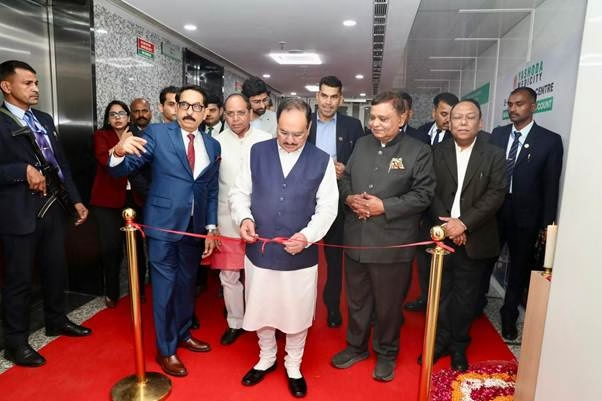
Union Health Minister J. P. Nadda on Tuesday (Feb 24) inaugurated an AI-powered E-ICU Command Centre at Yashoda Medicity in Ghaziabad, marking a significant push toward technology-led critical care services.
The advanced Command Centre integrates artificial intelligence with centralized patient monitoring systems to strengthen clinical decision-making and improve outcomes in intensive care settings. The facility aims to enable real-time monitoring, timely interventions, and enhanced patient safety.
Addressing the gathering, Nadda commended Yashoda Medicity for delivering quality healthcare across 65 specialities and building a comprehensive multi-speciality ecosystem. He also appreciated the hospital’s integration of the E-ICU system with MMG District Hospital, calling it a strong example of corporate social responsibility and public-private collaboration in healthcare.
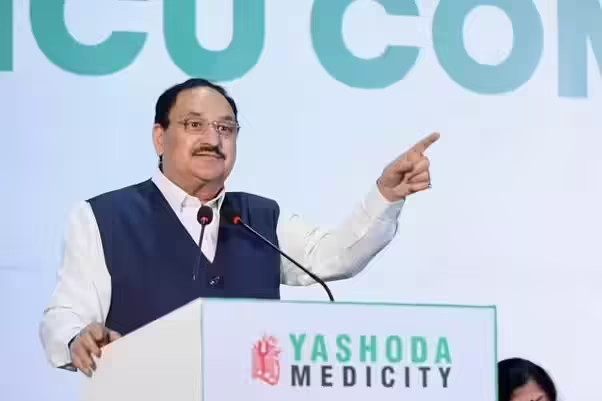
Highlighting the broader vision of the government under Narendra Modi, Nadda said digital innovation and AI integration remain central to India’s healthcare transformation. He noted that the National Health Policy laid the groundwork for a robust digital health ecosystem aligned with the Digital India mission.
The Minister revealed that more than 1.81 lakh Ayushman Arogya Mandirs have been certified under National Quality Assurance Standards (NQAS), with a target to achieve full certification nationwide within the next two years to ensure consistent primary healthcare standards.
Emphasising telemedicine growth, he said the eSanjeevani platform has delivered over 45.2 crore teleconsultations, significantly expanding access to specialist services, particularly in rural and remote regions.
Nadda also highlighted the success of the U-WIN digital platform, which monitors maternal and child healthcare services. With over 11.47 crore registrations, the platform supports the Universal Immunisation Programme, providing 27 vaccine doses against 12 preventable diseases and helping India achieve nearly 99% immunisation coverage.
On disease control, he underscored the role of AI-enabled handheld X-ray devices in tuberculosis detection, noting that India’s TB incidence has declined by 17%, well above the global average of 7%. He further stated that maternal and under-five mortality rates have improved faster than global benchmarks, driven by digital tracking and focused interventions.
The Minister also referred to the launch of the SAHI (Strategy for Artificial Intelligence in Healthcare for India) portal and the BODH (Benchmarking Open Data Platform for Health AI) initiative at the AI Summit, aimed at ensuring responsible AI adoption and validating AI-driven healthcare solutions nationwide.