


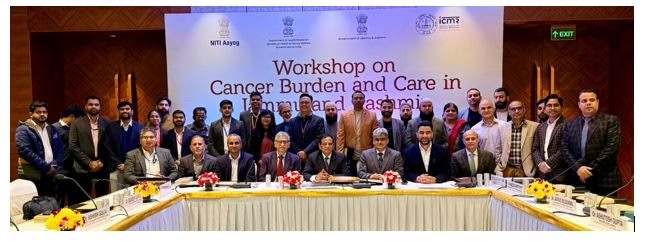
A high-level consultation on cancer burden, research, and care in Jammu and Kashmir was held at Bharat Mandapam in New Delhi, bringing together senior officials from NITI Aayog, the Department of Health Research (DHR), the Indian Council of Medical Research (ICMR), the Government of Jammu and Kashmir, along with leading clinicians, researchers, and public health experts from premier national institutions.
The meeting was attended by NITI Aayog Member (Health) Dr V.K. Paul, J&K Chief Secretary Atal Dulloo, Secretary DHR and Director General ICMR Dr Rajiv Bahl, Secretary Health and Medical Education J&K Dr Syed Abid Rasheed Shah, and other senior officials and domain experts.
Discussions focused on developing a comprehensive, evidence-based, and implementable cancer control strategy tailored to the specific needs of Jammu and Kashmir. Emphasis was placed on understanding regional disease patterns, assessing existing health system capacities, and ensuring long-term sustainability. Participants underscored the urgent need to strengthen cancer screening and early detection, including identifying priority cancers suitable for population-based screening.
Addressing the gathering, the Chief Secretary stated that the J&K government would adopt a phased and research-driven approach aligned with national priorities to effectively tackle the growing cancer burden in the region. He stressed that early diagnosis, timely referral, and equitable access to quality cancer care should form the foundation of future interventions.
Secretary Health J&K, Dr Syed Abid Rasheed Shah, highlighted recent efforts such as the expansion of tertiary healthcare services and an increase in medical education seats. He also emphasized the importance of developing context-specific, evidence-based cancer prevention guidelines and strengthening information, education, and communication (IEC) strategies.
The consultation also highlighted the need for district-level implementation models supported by structured implementation research to evaluate coverage, feasibility, cost-effectiveness, and health outcomes. A broad consensus emerged on positioning implementation research as a central pillar of cancer prevention, screening, and treatment.
It was proposed to establish a Centre for Implementation Research in Oncology to generate scalable, real-world solutions, with a focus on improving quality of life, integrating palliative care, and strengthening health systems. The role of community medicine departments in advancing preventive oncology initiatives was also emphasized.
Participants called for cancer prevention strategies aligned with national DHR frameworks, focusing on tobacco control, HPV-related cancer prevention, lifestyle and dietary risk factors, and infection-related cancers, including those linked to Helicobacter pylori.
The meeting stressed the importance of prioritizing large, high-impact research projects over fragmented small studies. Recommendations included the development of longitudinal cohorts, biobanks, randomized controlled trials, and the establishment of a comprehensive, state-wide cancer registry to support evidence-based planning, monitoring, and policymaking in Jammu and Kashmir.
Strengthening cancer care infrastructure across the Union Territory was identified as a key priority. Suggested measures included setting up advanced diagnostic facilities in all medical colleges covering molecular diagnostics and immunohistochemistry along with clearly defined referral systems and patient navigation pathways through designated Centres of Excellence.
The consultation concluded with an agreement to adopt a phased, research-linked, and implementable cancer control framework for Jammu and Kashmir, supported by institutional partnerships and technical collaboration with ICMR and leading national cancer institutions. The outcomes of the meeting are expected to shape future policy initiatives, research collaborations, and health system strengthening efforts aimed at reducing the cancer burden and improving patient outcomes in the region.