India’s proposed medical isotope reactor in Visakhapatnam, Andhra Pradesh, is expected to begin production around 2035, marking a significant step towards strengthening domestic supplies of radioactive isotopes used in cancer diagnosis and treatment.
The project, first announced in May 2020 under the Atmanirbhar Bharat initiative, aims to reduce India’s dependence on imported medical isotopes while expanding its capacity to supply radiopharmaceutical materials to domestic and international healthcare markets.
Project to Strengthen Nuclear Medicine Infrastructure
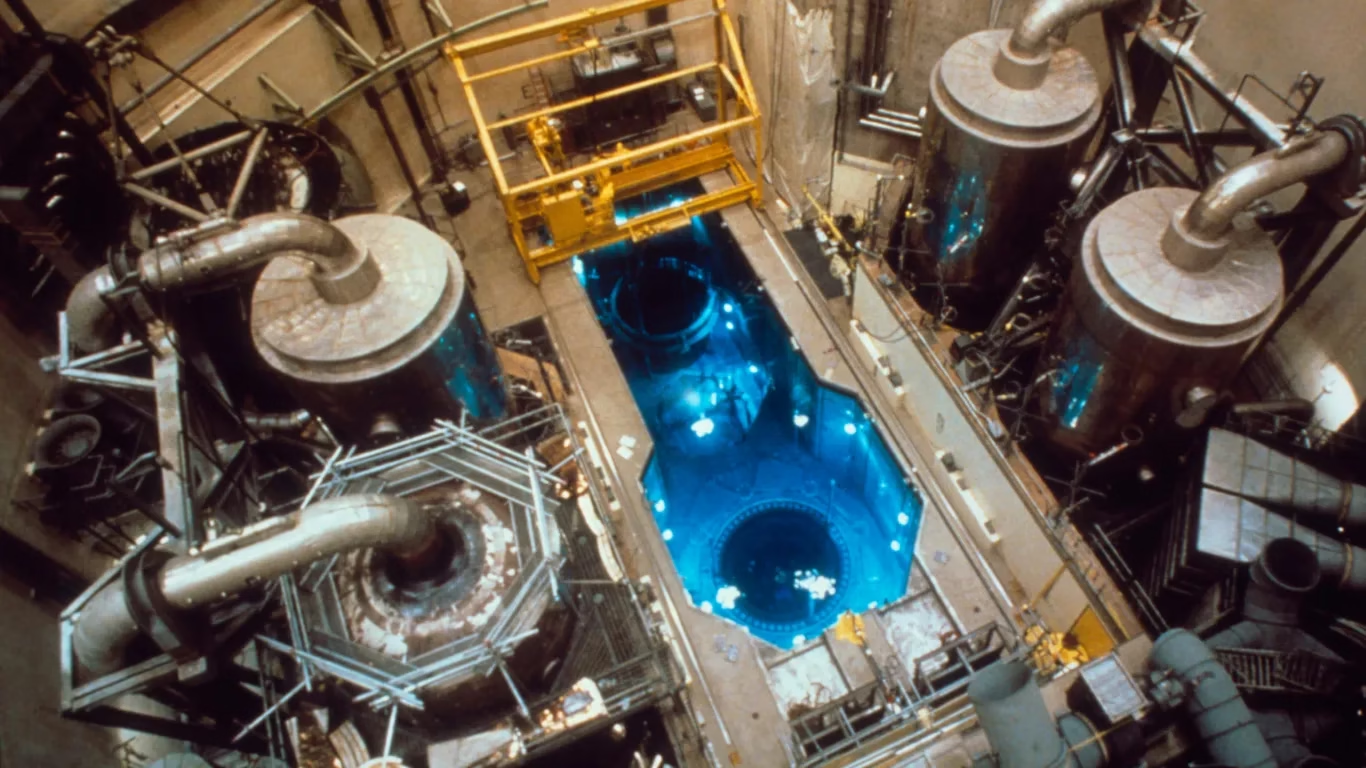
The proposed reactor will be dedicated to producing medical isotopes used in nuclear medicine procedures, including diagnostic imaging and targeted cancer therapies.
According to the reported project timeline, Visakhapatnam was selected as the site in October 2025. Although the project had received approval, funding arrangements were still pending at that stage.
The facility is planned under a public-private partnership model, with the Bhabha Atomic Research Centre (BARC) and the Nuclear Power Corporation of India involved in its development and operations.
The proposed production capacity is approximately 500,000 curies, representing a substantial expansion over India’s existing medical isotope production capabilities.
India Continues to Depend on Imported Isotopes
India currently produces certain medical isotopes through BARC’s Dhruva research reactor. However, production capacity remains limited because the reactor also supports scientific and radiation-related research activities.
According to figures cited from an August 2026 parliamentary response, molybdenum-99 production at Dhruva declined from 693 curies in 2022–23 to 268 curies in 2023-24.
Production also fell short of scheduled targets, with 13 batches affected in 2023–24 and 19 batches in 2024–25, against an annual schedule of 52 batches.
To address supply requirements, India imported several medical isotopes, including 516 curies of molybdenum-99, 421 curies of iodine-131 and 136 curies of lutetium-177, from countries including Russia, Belgium and South Africa.
These isotopes support diagnostic procedures and treatments for conditions including cancer and thyroid disorders.
Medical Isotopes Play a Critical Role in Cancer Care
Radioactive isotopes are essential components of modern nuclear medicine, particularly in cancer detection, disease staging and targeted treatment.
For example, prostate-specific membrane antigen (PSMA) PET-CT imaging can help identify the spread of prostate cancer more accurately than conventional imaging in certain patients.
The proPSMA clinical trial reported diagnostic accuracy of 92% with PSMA PET-CT compared with 65% using conventional imaging. The newer imaging approach also led to changes in planned treatment in 28% of patients.
Similarly, lutetium-177-based radioligand therapy has demonstrated clinical benefits in selected patients with advanced prostate cancer.
In the VISION trial, median overall survival increased from 11.3 months to 15.3 months among eligible patients receiving lutetium-177 PSMA therapy alongside standard care, compared with standard care alone.
These developments highlight the growing importance of reliable isotope supplies for specialised cancer services.
Transportation and Distribution Remain Major Challenges
Medical isotopes have limited usable lifespans because their radioactivity decreases over time.
Molybdenum-99 has a half-life of approximately 66 hours, while fluorine-18, commonly used in PET imaging, has a half-life of around 110 minutes.
Consequently, delays in transportation, customs clearance or distribution can reduce the usable activity of these materials before they reach hospitals.
The proposed reactor will therefore require supporting infrastructure for isotope processing, quality assurance, regulatory compliance and specialised transportation.
Efficient distribution networks will be particularly important if India intends to supply medical isotopes to neighbouring countries.
Potential to Expand Regional Healthcare Access
The proposed facility could strengthen India’s position as a regional supplier of medical isotopes, particularly for countries with limited domestic production capacity.
Neighbouring countries such as Nepal and Bangladesh depend on imported radioactive materials for several nuclear medicine applications.
A larger production facility in India could help improve regional access to diagnostic and therapeutic radiopharmaceuticals, provided appropriate regulatory and transportation arrangements are established.
International cooperation is also gaining attention through initiatives such as the BRICS Nuclear Medicine Working Group, established in 2024, which aims to encourage collaboration in nuclear medicine.
Production Target Set for 2035
While the Visakhapatnam reactor represents a major long-term infrastructure initiative, its implementation will depend on financing, construction, regulatory approvals, technical readiness and the development of supporting supply chains.
With production anticipated around 2035, the project could contribute to India’s efforts to strengthen nuclear medicine services, improve access to cancer diagnostics and treatment, and reduce reliance on overseas isotope suppliers.
However, the actual production schedule and commercial supply capacity will depend on the project’s implementation progress.