


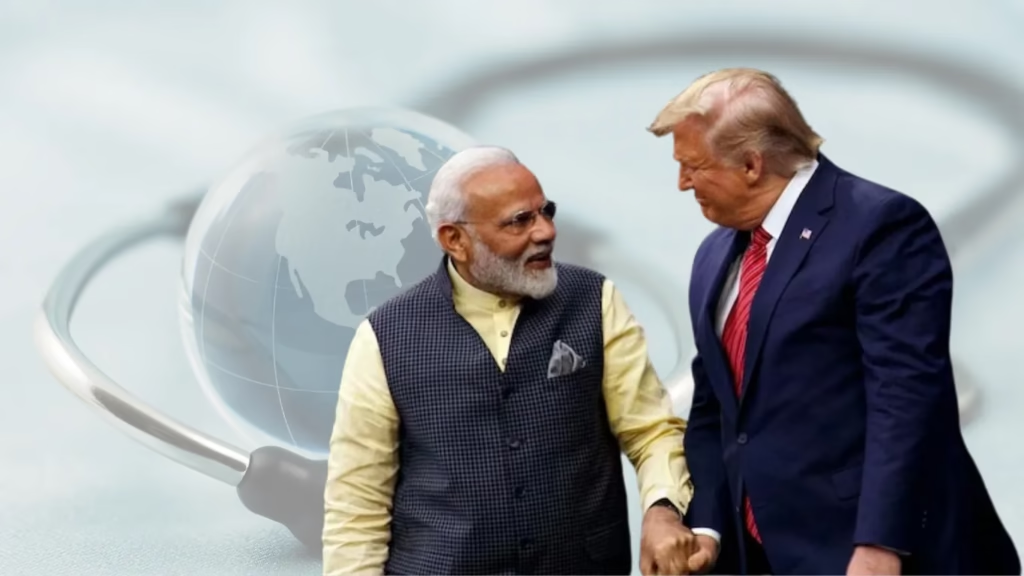
The reduction of U.S. reciprocal tariffs on Indian exports to 18%, announced under the new India-US trade agreement, is expected to have a measurable impact on India’s healthcare and medical technology sectors, which had been among the most affected by the earlier tariff regime.
Under the previous tariff structure which at one stage reached 50% Indian exports of medical devices, diagnostics, consumables and laboratory equipment faced significantly higher landed costs in the U.S. market. Industry bodies had warned that the elevated duties were eroding competitiveness, leading to order losses, deferred contracts and reduced market access for Indian manufacturers, particularly in price-sensitive segments.
Relief for Medical Device Exporters
The revised 18% tariff, while still higher than historical duty levels, improves commercial viability for Indian medical device exporters supplying products such as disposables, surgical instruments, imaging accessories, in-vitro diagnostics and basic hospital equipment. Exporters say the lower rate allows continued participation in U.S. tenders and distributor contracts, albeit with tighter margins.
Manufacturers are expected to reassess pricing strategies and resume negotiations that had stalled due to tariff uncertainty. However, industry participants have noted that clarity on product-wise tariff application and customs implementation will be critical before volumes fully recover.
Implications for Healthcare Supply Chains
The tariff cut may also help stabilise supply chains serving U.S. healthcare providers that rely on Indian-made cost-effective medical products. During the period of higher tariffs, several buyers had shifted sourcing to alternative markets in East Asia and Europe. The revised duty structure may enable partial reversal of those shifts, particularly in commodity and mid-value product categories.
Limited Direct Impact on Domestic Healthcare Costs
Within India, the immediate impact on patient-level healthcare costs is expected to be limited. Domestic pricing of medical devices continues to be influenced primarily by local tax policy, regulatory controls and customs duties on imports, which remain largely unchanged under Budget 2026–27. The Budget focused customs relief on select pharmaceuticals, including cancer and rare disease therapies, rather than broad medical device categories.
Interaction with India’s Broader Trade Strategy
The healthcare sector’s response to the U.S. tariff reduction is also being viewed alongside India’s longer-term trade engagements, including free trade agreements with the United Kingdom and the European Union. While those agreements promise phased tariff reductions and regulatory cooperation, they involve longer timelines and compliance obligations that may affect healthcare manufacturers differently across product segments.
In contrast, the India-US tariff adjustment provides immediate, though conditional, relief tied to broader trade and geopolitical commitments.
Outlook
Healthcare exporters are expected to adopt a cautious approach in the near term, balancing renewed U.S. market access against margin pressures and regulatory requirements. Over the medium term, industry stakeholders indicate that competitiveness will increasingly depend on quality standards, regulatory compliance and scale, rather than tariff advantages alone.
The tariff cut marks a stabilising development for India’s healthcare exports, even as the sector continues to operate within a complex and evolving global trade environment.