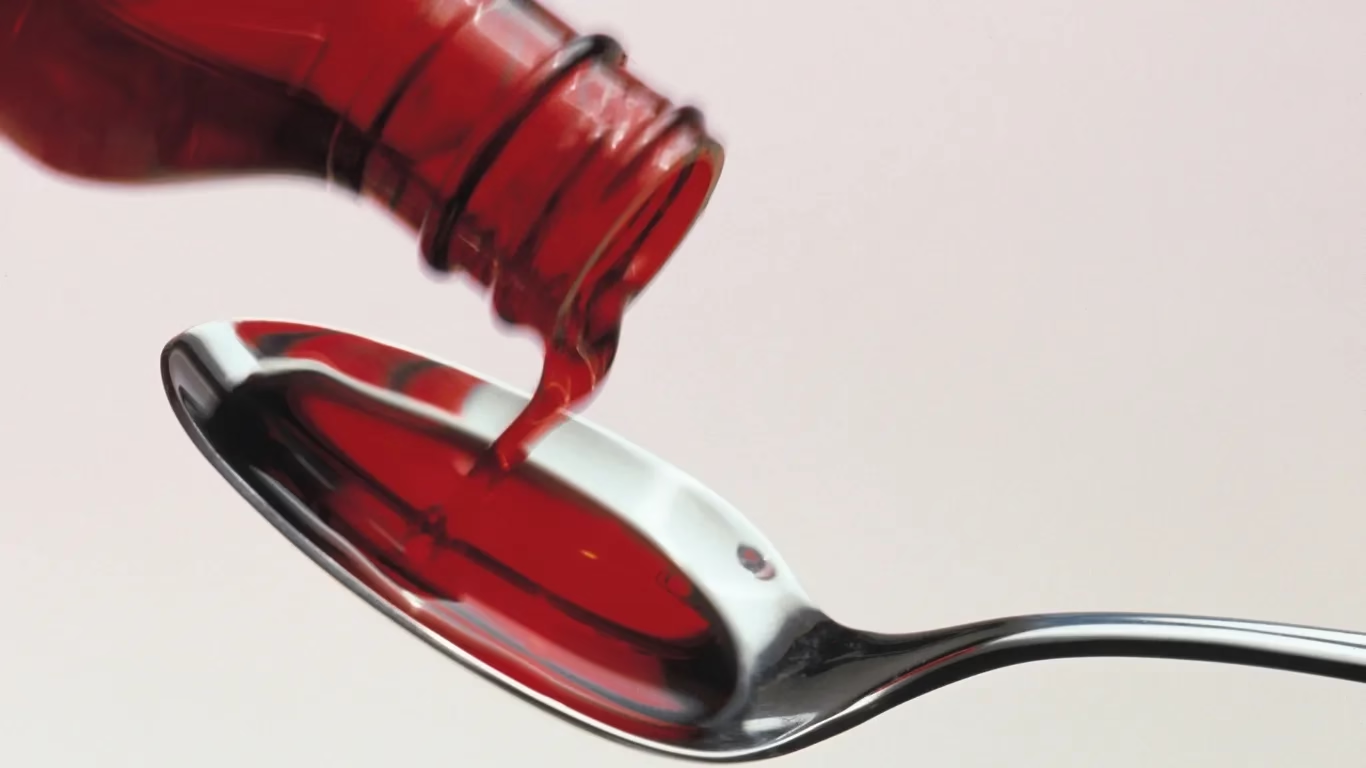
The Government of India has ended the over-the-counter (OTC) sale of cough syrups by amending the Drugs Rules, 1945. Under a notification issued by the Ministry of Health and Family Welfare on June 9, cough syrups have been removed from Schedule K, the category of medicines previously exempt from certain retail licensing requirements and available without a doctor’s prescription in specific circumstances.
The decision follows a public consultation process based on a draft proposal released in December last year. The proposal gained urgency after several children in Madhya Pradesh reportedly died after consuming contaminated cough syrups, drawing attention to concerns related to raw material quality and manufacturing oversight.
With the amendment, cough syrups can now be sold only on the prescription of a registered medical practitioner. Popular brands such as Benadryl, Glycodin, Zedex, Tusq DX, Grilinctus, Cofsils, Himalaya Koflet, and Dabur Honitus will no longer be available without a prescription. However, cough lozenges and throat-soothing products remain eligible for OTC sale.
The notification, issued under Sections 12 and 33 of the Drugs and Cosmetics Act, 1940, states that the revised provisions are part of the Drugs (Fifth Amendment) Rules, 2026, and came into effect upon publication in the Official Gazette.
Schedule K was originally introduced to improve access to medicines in areas with limited pharmacy infrastructure by exempting certain drug categories from specific licensing provisions. One such exemption allowed cough syrups to be sold in villages with populations below 1,000 without meeting all retail pharmacy licensing requirements. The latest amendment removes cough syrups from this exemption, requiring their sale exclusively through licensed pharmacies nationwide.
Healthcare experts have welcomed the move, citing concerns over inappropriate use of cough medications. Some cough syrups contain ingredients such as codeine sulphate and dextromethorphan, which have been associated with misuse, particularly among adolescents and young adults. Medical professionals have also highlighted instances where antihistamine-based cough syrups were used in children without medical supervision.
According to physicians, cough is often a symptom of underlying conditions such as respiratory infections, asthma, or allergies that require proper diagnosis and treatment. Restricting access through prescriptions is expected to encourage medical evaluation and more appropriate use of these medicines.
The All India Organisation of Chemists and Druggists (AIOCD) described the amendment as a positive measure that could help reduce misuse and promote responsible dispensing practices. At the same time, the organisation called for broader consultations and a review of other exemptions that permit medicines to be distributed outside licensed pharmacies.
The amendment addresses the sale and distribution of cough syrups but does not introduce new provisions related to manufacturing practices. Public health experts have noted that several past incidents involving contaminated cough syrups were linked to failures in quality control during production rather than weaknesses in retail distribution.
India has witnessed multiple cases of toxic contamination involving cough formulations over the decades. Fatal incidents linked to diethylene glycol (DEG) contamination have been reported in Chennai, Mumbai, Bihar, Gurgaon, and Jammu and Kashmir. Internationally, Indian-made cough syrups were connected to child deaths in Gambia in 2022 and Uzbekistan in 2023, leading to investigations, product recalls, and increased scrutiny of pharmaceutical manufacturing standards.
Experts have emphasized that while the new prescription requirement may help curb misuse and improve patient safety, stronger quality assurance mechanisms and stricter manufacturing standards remain essential. They have also recommended the development of detailed prescribing guidelines and enhanced oversight of raw material sourcing to further safeguard public health.