


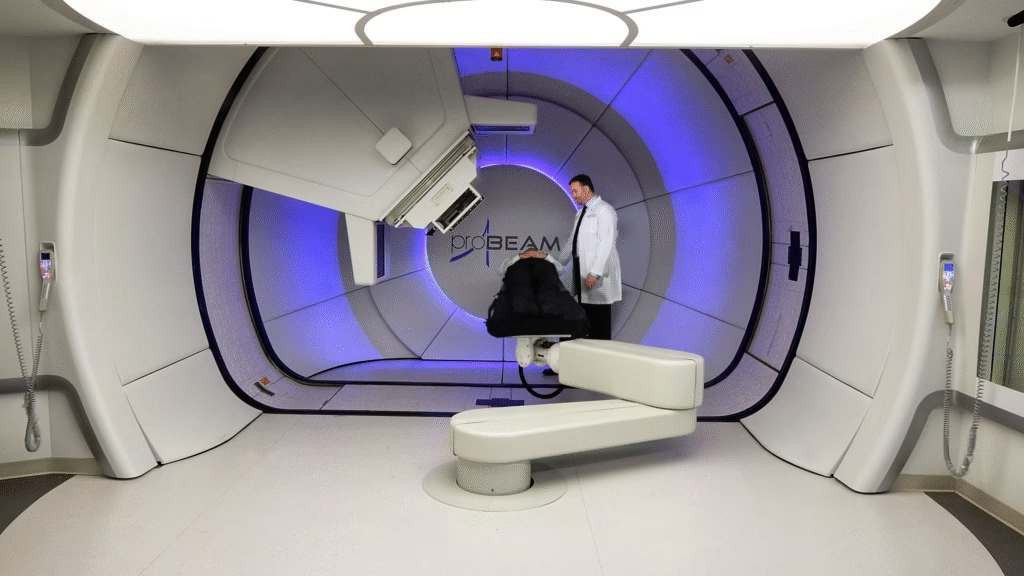
India is preparing to expand its proton therapy infrastructure with new centres planned in Delhi, Hyderabad, and Bengaluru, aiming to enhance advanced cancer treatment capacity and global competitiveness. Proton therapy is widely regarded as a more precise alternative to conventional radiation, reducing damage to surrounding tissues.
Currently, the country has two operational proton therapy facilities one run by Apollo Proton Cancer Centre in Chennai and the other at Tata Memorial Centre. Together, they account for roughly 6–7% of global proton treatments, treating over 1,000 patients annually. Apollo handles around 800 cases each year, while Tata Memorial treats about 200.
Globally, there are around 110 proton therapy centres, though only about 40 operate at consistent patient volumes, collectively treating 15,000-16,000 patients per year. Despite limited capacity, India is emerging as a key player, driven by cost advantages and growing demand. Estimates suggest that by 2040, over 161,000 patients in India may require proton therapy.
India’s first proton therapy unit was launched in 2019 in Chennai by Apollo. Since then, the centre has treated over 2,500 patients, with nearly a quarter coming from overseas. Patients from regions such as Africa, the Middle East, and South Asia and even some from the US and Europe are choosing India due to lower costs and efficient care delivery.
The entry of the public sector through Tata Memorial’s facility at Kharghar represents a shift toward broader access. Supported by the government, the centre integrates advanced technology into a subsidised, high-volume cancer care system. Proton therapy is especially beneficial for paediatric cancers, skull-base tumours, and cases requiring high precision.
However, access remains limited. While around 2,000 children in India could benefit from proton therapy annually, only a fraction currently receive it. Experts highlight a significant gap between demand and supply, particularly for complex and paediatric cases.
Globally, proton therapy capacity is concentrated in North America, Europe, and East Asia. The US leads with over 45 centres, while Europe and Asia continue to expand their networks.
Industry experts note that while demand is high, the specialised nature and high costs of proton therapy restrict availability. Treatment in private hospitals can range from ₹25-50 lakh, making it unaffordable for many, despite being cheaper than in Western countries. Public hospitals offer subsidised or free care but often face long waiting periods.
To address these challenges, analysts suggest adopting blended financing models, including insurance expansion, public-private partnerships, and corporate funding support. These measures could help scale infrastructure and improve affordability.
Medical tourism is also emerging as a growth driver. With costs 50-60% lower than in developed markets and supportive government initiatives, India is positioning itself as a competitive global destination for proton therapy.