A team of researchers at the Indian Institute of Technology (IIT) Madras has designed a low-cost diagnostic device that can quickly reveal whether bacteria are resistant or sensitive to antibiotics. Officials say the innovation could be a breakthrough for affordable healthcare in smaller hospitals and rural areas.
The device, described as a lab on a chip, uses screen-printed carbon electrodes built into a microfluidic system. Unlike conventional diagnostic tools that depend on expensive materials, intricate manufacturing, and highly trained personnel, this design makes the technology simpler, cheaper, and more accessible.
Professor S. Pushpavanam, Y.B.G. Varma Institute Chair in the Department of Chemical Engineering at IIT Madras, explained that the device was developed with three goals in mind speed, sensitivity, and simplicity. Results can be obtained in just three hours using a method known as Electrochemical Impedance Spectroscopy. This rapid turnaround could make a crucial difference in treating bacterial infections, especially in settings where advanced laboratory support is lacking.
Antimicrobial resistance (AMR) is a growing global health crisis. The World Health Organization (WHO) lists it among the top ten threats to public health, with estimates showing that bacterial AMR contributed to nearly 5 million deaths in 2019. The problem is particularly severe in low- and middle-income countries, where diagnostic facilities are scarce and antibiotics are often misused.
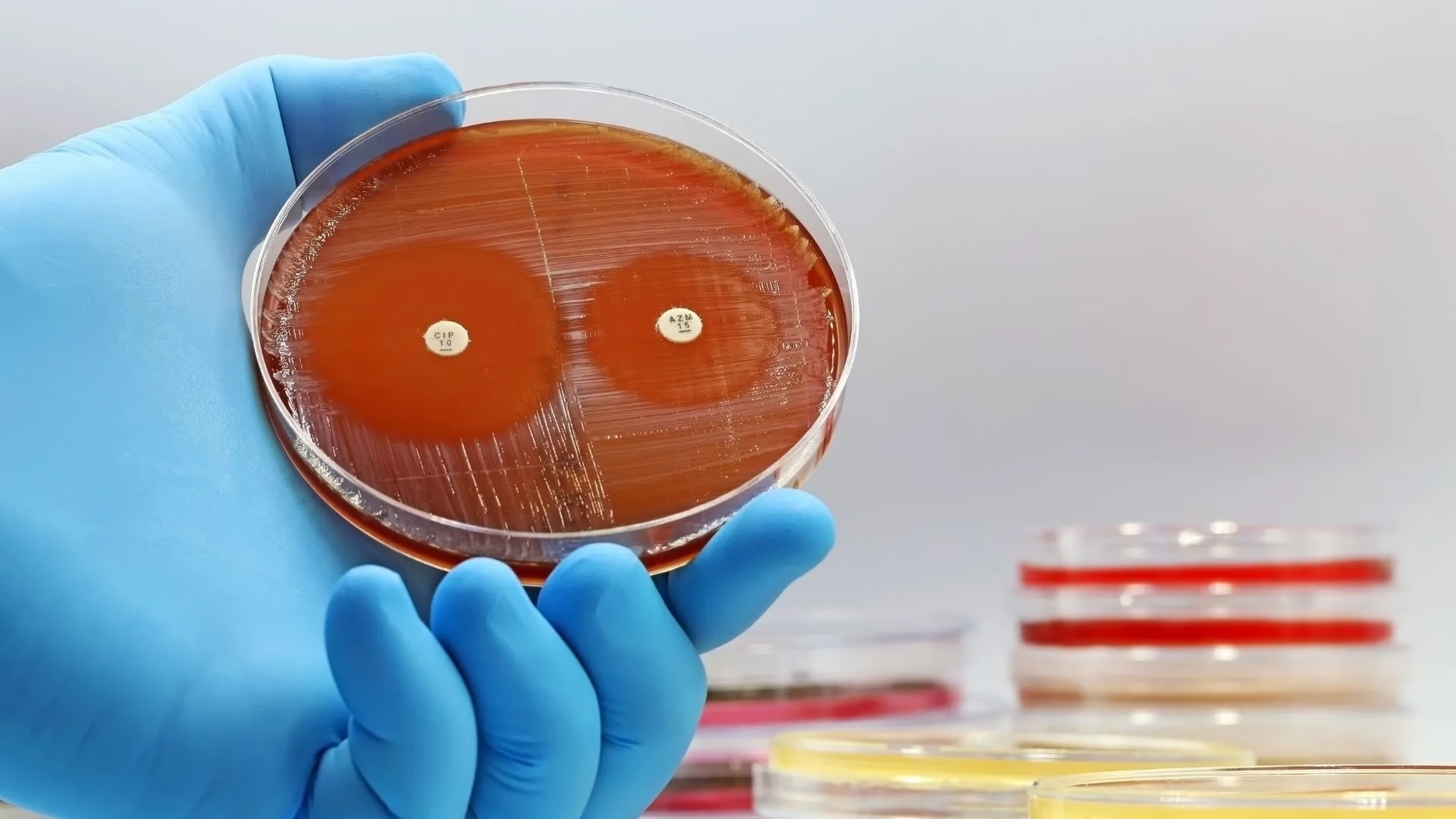
At present, the gold standard for Antimicrobial Susceptibility Testing (AST) involves culturing bacteria and observing their response to different antibiotics a process that can take two to three days. Because of this delay, doctors often prescribe broad-spectrum antibiotics, which can worsen resistance.
To overcome these hurdles, the IIT Madras team has developed ε-D, an economical phenotypic testing platform that detects bacterial activity and their antibiotic response through electrochemical signals. The system aligns with WHO’s criteria for effective diagnostics: affordability, speed, reliability, and user-friendliness.
A unique feature of the device is the nutrient solution used in the process. It not only supports bacterial growth needed for the test but also amplifies the electrical changes caused by this growth, making detection more precise. According to Pushpavanam, such an approach could be especially valuable for patients in critical care, where rapid and accurate treatment decisions are vital.
Currently, the device is undergoing clinical trials at the IITM Institute Hospital. Once validation is complete, plans are in place to bring it to market through a startup, Kaappon Analytics India Pvt. Ltd.
The system has already been tested on two model bacteria: Escherichia coli (a gram-negative strain) and Bacillus subtilis (a gram-positive strain). Using antibiotics with different mechanisms ampicillin, which kills bacteria, and tetracycline, which stops their growth the team demonstrated the device’s ability to distinguish between these responses effectively.
The work has been published in Nature Scientific Reports, a peer-reviewed journal from the Nature publishing group.