


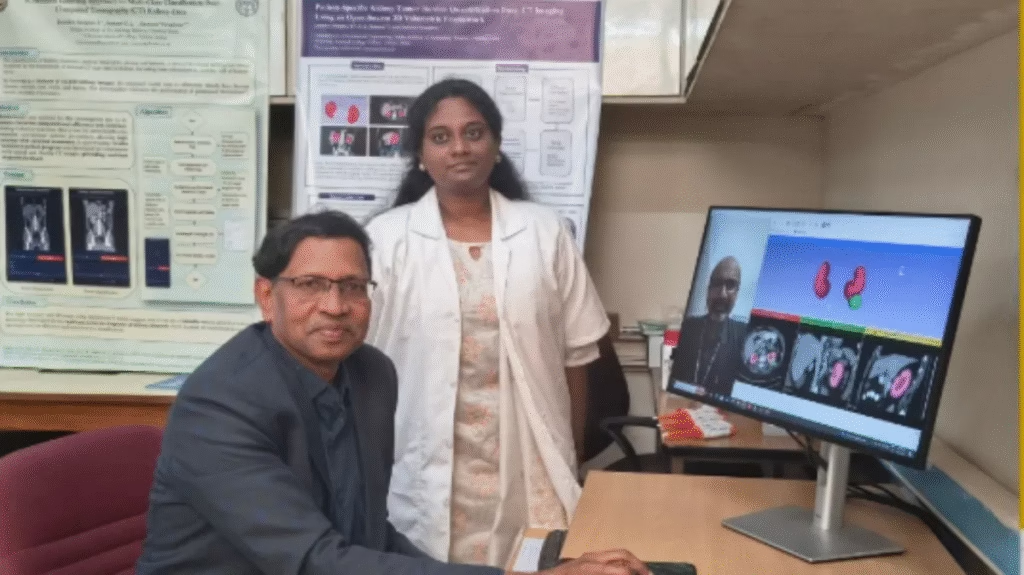
Researchers from IIT Madras and Christian Medical College (CMC), Vellore, have developed three Artificial Intelligence (AI)-based technologies aimed at improving the early detection, diagnosis and assessment of kidney diseases.
The tools are designed to help doctors identify patients at risk of chronic kidney disease (CKD), analyse kidney abnormalities in CT scans and assess the extent of kidney tumours through patient-specific 3D imaging.
AI Model to Predict Chronic Kidney Disease Risk
One of the technologies is a machine learning model that uses clinical and laboratory data to predict a patient’s risk of developing CKD. The model has also been developed with a user-friendly interface to support its potential use in clinical settings.
Researchers said the technology could help doctors identify high-risk patients at an earlier stage, when timely intervention may help slow disease progression and reduce the likelihood of complications.
CT Scan Tool Identifies Kidney Abnormalities
The second technology is a deep learning-based CT image classification system trained on more than 12,000 images.
The system can classify CT scans into four categories:
- Normal kidney
- Kidney cyst
- Kidney stone
- Kidney tumour
By automatically analysing medical images, the tool is intended to provide doctors with faster and more consistent assessments.
3D Imaging Helps Measure Kidney Tumours
The third technology is a 3D imaging platform that reconstructs kidneys from CT scans. It can be used to calculate tumour volume and determine the percentage of the kidney affected by the tumour.
Developed using open-source software, the framework offers a relatively inexpensive and repeatable approach to assessing tumour burden. Researchers believe such patient-specific information could support treatment planning and clinical decision-making.
Focus on Earlier Diagnosis
GL Samuel, Professor in the Department of Mechanical Engineering at IIT Madras, said kidney diseases can remain unnoticed during their early stages and may only be diagnosed after significant damage has occurred.
The researchers said the AI tools were developed to help clinicians make quicker and better-informed decisions by combining machine learning with clinical knowledge.
Jennifer Delighta, a research scholar at IIT Madras, highlighted the importance of detecting kidney disease early and said the patient-specific imaging framework could provide a more comprehensive assessment of disease severity.
Towards a Kidney Digital Twin
The research also marks a step towards developing a “Digital Twin” of the kidney, in which AI-assisted medical image analysis could be combined with patient-specific 3D anatomical models.
Such technology could eventually help doctors monitor disease progression, forecast outcomes and plan personalised treatment strategies.
Researchers Plan Further Validation
The research team plans to test the AI models using larger and more diverse patient datasets to establish their clinical reliability. The researchers are also looking to strengthen partnerships with healthcare institutions for potential real-world deployment.
In the longer term, the team is exploring the integration of these AI technologies with minimally invasive wearable sensing systems and Digital Twin platforms, with the aim of enabling more personalised and continuous kidney health monitoring.