


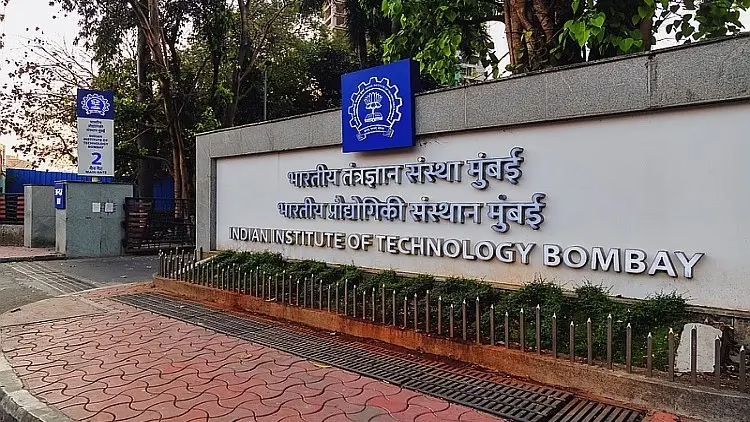
Researchers at the Indian Institute of Technology Bombay (IIT Bombay) have designed a novel DNA-based method that could restore the effectiveness of antibiotics against drug-resistant bacteria.
Antibiotics are widely used to treat infections such as pneumonia, tuberculosis, urinary tract infections, and bloodstream infections, and are also essential during surgeries, organ transplants, and chemotherapy. However, their excessive and inappropriate use has contributed to the growing challenge of antimicrobial resistance.
In two recent studies, led by Prof Ruchi Anand and Prof P I Pradeepkumar from the Department of Chemistry, the focus was not on creating new antibiotics but on enhancing the performance of existing ones. The team developed short DNA fragments that can inhibit enzymes responsible for bacterial resistance.
According to Prof Anand, improving current antibiotics may be a more practical solution than developing new drugs, given the time and cost involved in drug discovery and approval, as well as the known safety profiles of existing treatments.
The first study examined DNA molecules called aptamers short, synthetic nucleic acid sequences that are stable and can be easily modified. While these aptamers showed promising results in lab experiments, delivering them inside bacterial cells posed challenges, as they can be degraded by enzymes and struggle to penetrate bacterial membranes.
To overcome this, the second study explored the use of liposomes tiny, fat-based vesicles similar to cell membranes as a delivery system. Liposomes are already widely used in medicine, and the researchers noted that DNA stability can be further enhanced through standard chemical modifications.
If successfully developed for clinical use, these DNA aptamers could be administered alongside existing antibiotics. By blocking the mechanisms that bacteria use to resist drugs, this approach could make older antibiotics effective once again. However, further studies, including animal testing and pharmacokinetic evaluations, are required before clinical application.