


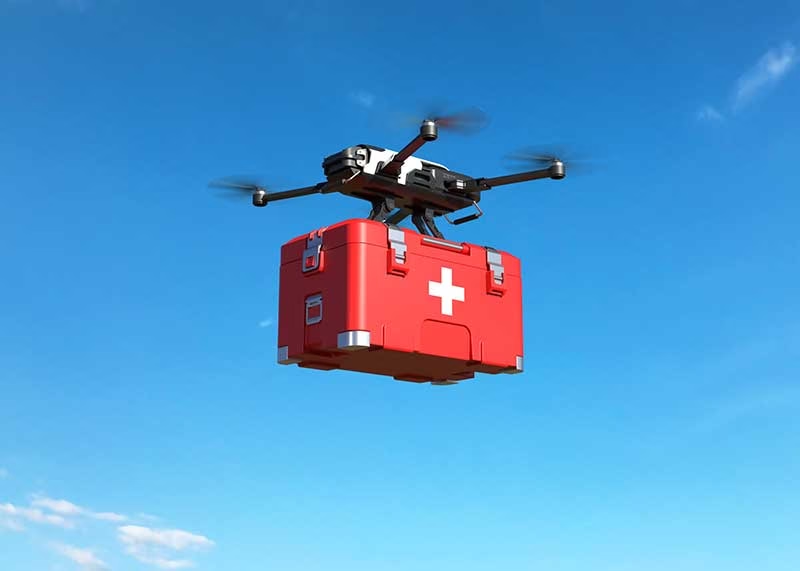
Transporting blood and other essential medical supplies to remote villages has long been expensive and slow when done through conventional means. However, a recent study by the Indian Council of Medical Research (ICMR) highlights how drone technology can transform healthcare logistics in such hard-to-reach areas, making life-saving deliveries faster and more efficient.
Published in the Springer Nature journal, the study suggests that, like several other countries, India could soon use drones to transport urgent medical items such as emergency medicines and pharmaceutical products. The ICMR researchers assessed the practicality, efficiency, and challenges of drone-based blood transport versus traditional road vehicles, particularly during emergencies and in difficult terrains where delays in medical care are common.
The findings were promising. During drone deliveries, critical factors like blood temperature and cell integrity were preserved. Moreover, a drone covered a 36-kilometre distance in just eight minutes a journey that took almost an hour by van.
Encouraged by these results, ICMR now plans to expand pilot projects in collaboration with the National Blood Transfusion Council. These will focus on areas where geographical barriers often delay critical care. According to Dr Sumit Aggarwal, Scientist and Program Officer of ICMR’s I-Drone project and the lead author of the study, these pilots will also help develop operational guidelines for drone-based medical logistics.
The study points out that India’s varied and often challenging terrain creates significant obstacles for timely healthcare delivery. In this context, drones or Unmanned Aerial Vehicles (UAVs) have the potential to revolutionize last-mile healthcare logistics, enhancing the overall health system’s responsiveness.
The research confirms that drones can safely transport blood products while adhering to quality standards. This capability is especially crucial in emergencies and inaccessible areas, where the availability of blood for transfusions can mean the difference between life and death. By dramatically reducing delivery times, drones help bridge the gap between supply and demand, ensuring that critical medical resources reach patients when they are needed most.
ICMR’s study also emphasizes that drones could eventually be used to deliver a broader range of essential medical supplies, such as emergency medications and other time-sensitive pharmaceuticals.
That said, the researchers caution that drones have limitations. Their effective use depends on factors like flight range, payload capacity, and speed. Successful and sustainable adoption will require careful planning, compliance with safety standards, and systematic problem-solving using frameworks such as EPIS (Exploration, Preparation, Implementation, Sustainment).
Overall, the study shows that drones hold immense promise for strengthening India’s healthcare supply chain, particularly in rural and remote regions where timely access to life-saving treatments is still a challenge.