


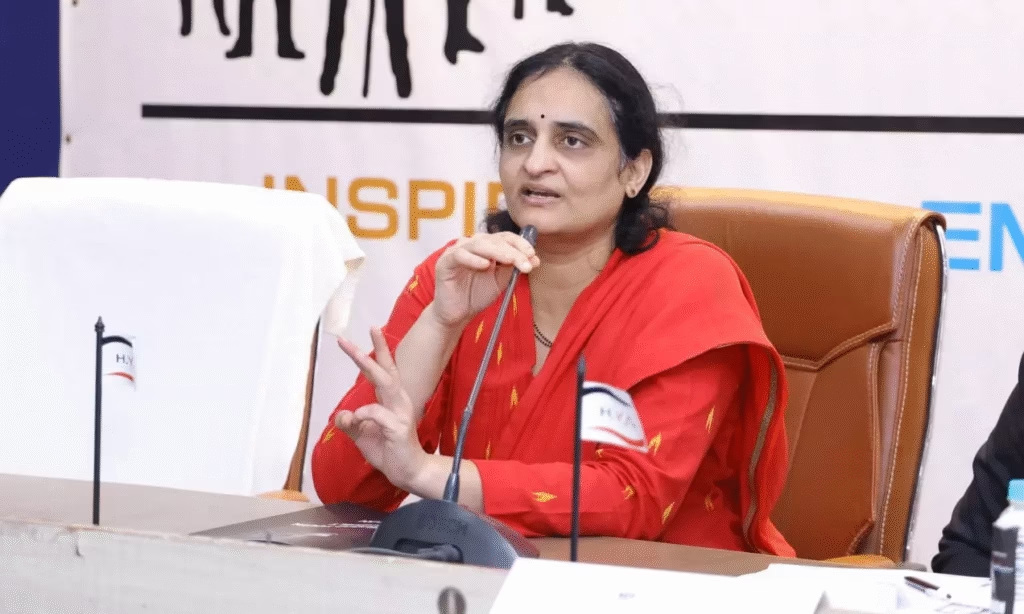
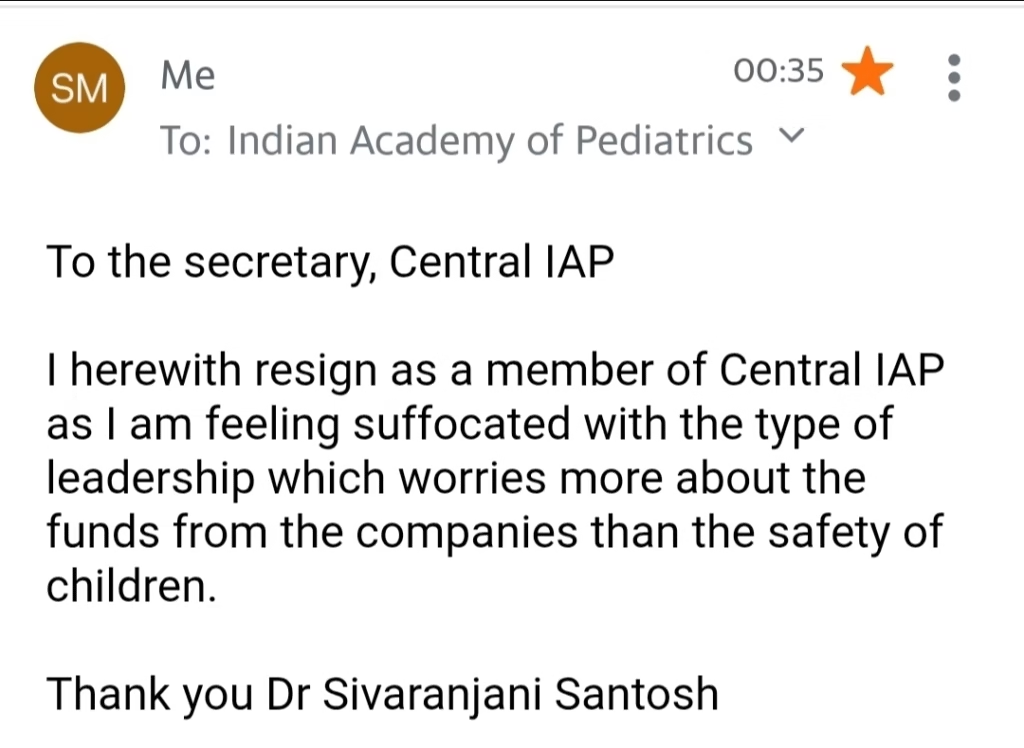
A Hyderabad-based pediatrician, Dr. Sivaranjini Santhosh, has resigned from the Indian Academy of Pediatrics (IAP), alleging that the body failed to support her campaign against the misleading branding of certain electrolyte drinks as Oral Rehydration Solution (ORS). Her long-standing efforts had earlier led India’s food regulator to bar beverage companies from using the term “ORS” for fruit-based, non-carbonated drinks that do not meet prescribed standards.
Dr. Santhosh said her concerns were reignited after a product by Kenvue was rebranded but retained packaging elements similar to its earlier version, potentially confusing consumers into believing it was genuine ORS. She criticised the company’s claim of scientific validation, noting that displaying a product at a conference does not amount to formal scientific presentation. She also expressed disappointment that the IAP did not publicly back her or counter the company’s statements, instead advising members to remain silent and later issuing what she termed a vague position note.
According to her, the IAP’s statement focused narrowly on sucralose while ignoring broader concerns around non-nutritive sweeteners such as aspartame, saccharin, and stevia. She warned that this could weaken her position if faced with legal action. Dr. Santhosh has consistently argued that such sweetened drinks do not follow the World Health Organization’s recommended salt-sugar balance, which is critical for effective rehydration.

She highlighted that excess sugar or artificial sweeteners can draw water into the gut, potentially worsening diarrhoea and dehydration in children. In severe cases, this could be life-threatening without timely treatment. She also cited a WHO report linking non-sugar sweeteners to increased risks of type-2 diabetes and cardiovascular diseases.
The controversy began after regulators directed companies to stop selling beverages labeled as ORS unless they met WHO standards. Kenvue subsequently introduced a new brand, “eRZL,” for its hydration drinks, while retaining “ORSL” for its WHO-compliant ORS products. Dr. Santhosh, however, argued that similarities in branding, packaging, and design could still mislead consumers. She filed a trademark opposition in February on these grounds.
Kenvue, formerly part of Johnson & Johnson’s consumer health division, has maintained that its product lines are clearly differentiated. The company stated that ORSL is reserved for medically approved ORS formulations, while eRZL is marketed as an everyday hydration drink for general use.
ORS remains a critical, life-saving intervention for diarrhoeal diseases, particularly in children under five. It works by replenishing fluids and essential electrolytes lost during illness, using a precise balance of glucose and salts that aids water absorption. Any deviation from this formula, especially higher sugar content, can reduce its effectiveness and even worsen the condition.
Experts advise that genuine ORS products clearly mention adherence to WHO standards on their packaging and are regulated as medicines, not food items. They are typically sold as powder sachets to be mixed with water, though ready-to-drink variants are also available.