


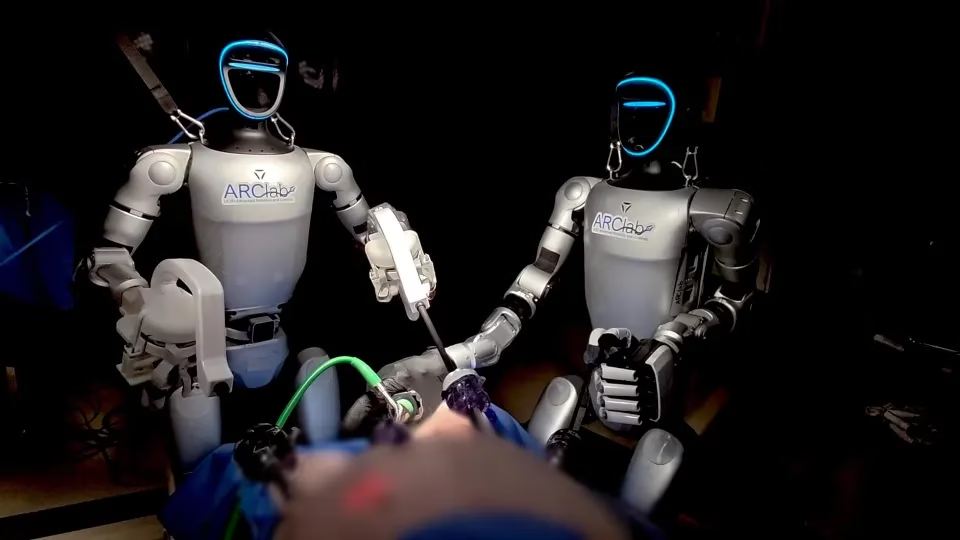
Researchers at the University of California San Diego have achieved a major milestone by using Unitree G1 humanoid robots, developed and adapted for surgical research by ARClab (Advanced Robotics and Controls Laboratory), to perform live minimally invasive surgeries in preclinical trials. The achievement marks the first successful use of humanoid robots in live surgical procedures, representing an important advance in surgical robotics.
Two Gallbladder Surgeries Completed
During the study, the research team successfully carried out two gallbladder removal surgeries on large non-primate animals. In the first procedure, a remotely operated humanoid robot worked alongside a human surgeon. In the second, two teleoperated humanoid robots performed the surgery together under the supervision of remote human operators. The study has been published in the journal Nature.
Potential to Improve Surgical Access
According to the researchers, humanoid robots could help expand access to advanced surgical care because they are designed to function in conventional hospital settings without the need for specialized robotic operating systems. This could make robotic-assisted surgery more practical for hospitals in rural and underserved areas.
Despite the successful demonstration, the technology remains at an early stage of development. The surgical team had to pause multiple times during the procedures to recalibrate and reposition the robots, resulting in longer operation times compared to existing dedicated surgical robotic platforms. Researchers say further improvements in accuracy, speed and reliability are essential before the technology can be tested in human patients.
The researchers describe the work as an important advance in surgical robotics. They believe teleoperated humanoid robots could initially serve as assistants to surgeons and, with continued development, eventually perform more complex procedures under human supervision, potentially improving access to high-quality surgical care across the world.