


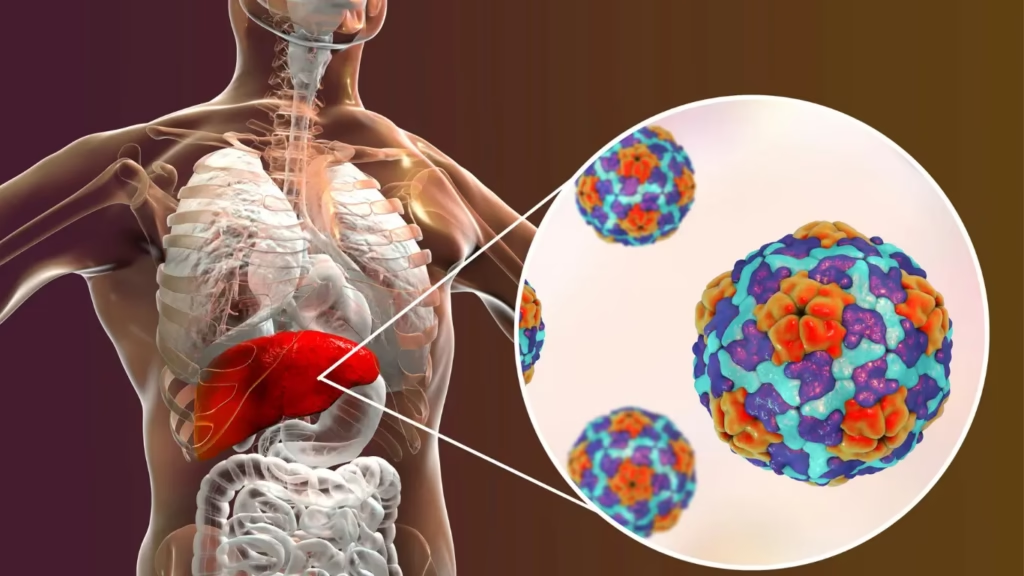
Drugs that can effectively manage hepatitis B are not being given to most of those who need them, and starting treatment earlier could prevent countless deaths, according to a new paper in The Lancet Gastroenterology & Hepatology.
Hepatitis B (HBV) claims over 3,000 lives every day-more than two people every minute. Among those who fail to clear the virus and develop chronic HBV, between 20% and 40% are expected to die without proper treatment.
Although current therapies cannot completely cure the infection, scientists emphasize that these medicines are safe, proven to work, and affordable.
“These are good, effective drugs, but they are shockingly underused,” said John Tavis, Professor of Molecular Microbiology and Immunology at Saint Louis University School of Medicine. “Fewer than 3% of people living with HBV are on treatment, yet evidence shows far more would benefit. Starting therapy earlier can drastically reduce disease progression and deaths.”
The study highlights that early intervention not only slows the damage caused by HBV but also minimizes the lifelong liver injury that often leads to liver cancer or failure after decades of infection.
Researchers further pointed out that hepatitis B also carries a heavy emotional and social burden. “The infection is most often passed from mother to child at birth,” Tavis noted. “Most mothers are unaware they carry the virus, and the anguish of discovering you unknowingly passed on a serious illness to your baby is overwhelming.”
While HBV does not spread through casual contact, many patients still face stigma within their communities.
“If we expand access to these medicines, we could cut liver cancer cases by two‑thirds-or even three‑quarters,” Tavis said. “That’s the kind of impact that could save millions of lives in the long run.”
Source: MidDay