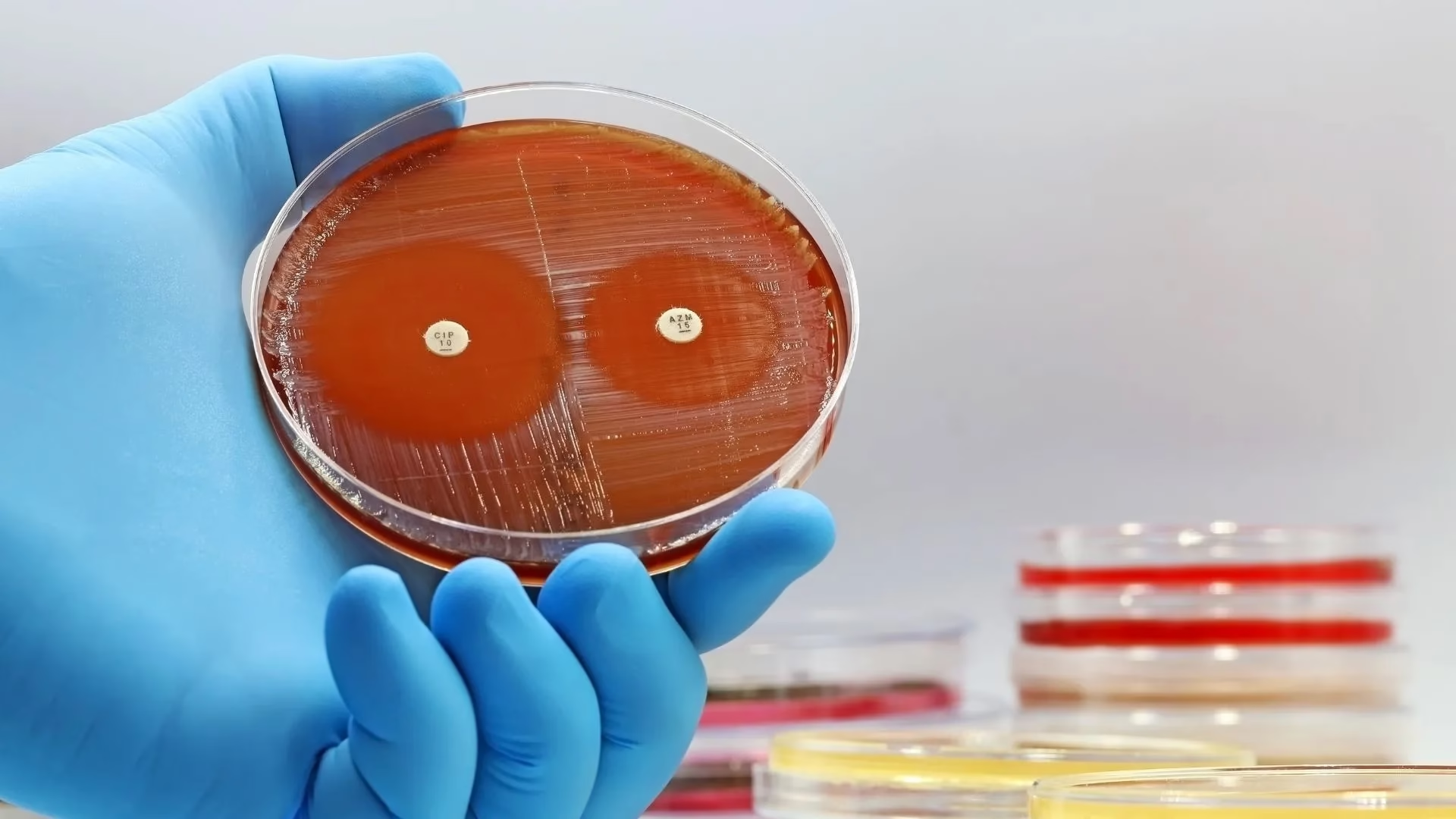
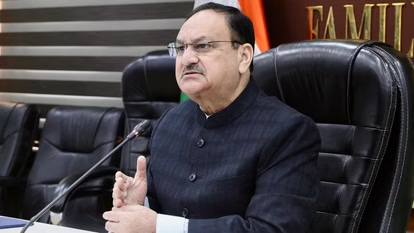
Union Health Minister JP Nadda has unveiled the updated National Action Plan on Antimicrobial Resistance (NAP-AMR 2.0), renewing India’s framework first introduced in 2017 to tackle the escalating threat of drug-resistant infections.
The revised plan sets out strengthened strategies to combat antimicrobial resistance (AMR), with a major focus on boosting laboratory capacity, improving infection prevention and control in healthcare facilities, and enhancing coordinated action across sectors.
During the launch, Nadda said that NAP-AMR 2.0 addresses shortcomings identified in the earlier plan by expanding ownership of AMR-related initiatives, improving inter-ministerial collaboration, and ensuring deeper involvement of the private sector. He noted that the widespread misuse and overuse of antibiotics has become routine, worsening AMR and posing severe risks especially for surgeries, cancer care, and other critical treatments.
Dr. A.K. Sood, Principal Scientific Advisor to the Government of India, also highlighted that AMR is “like a pandemic” affecting many countries, particularly developing nations in Asia, and emphasized that the updated plan comes at a crucial time for creating a more unified national response.
Development of NAP-AMR 2.0 began in 2022 through multiple stakeholder consultations and high-level meetings involving representatives from more than 20 ministries and departments. Like its predecessor, the new plan continues to prioritise awareness, education, and training.
The Compiled Report of National Expert Consultations for developing NAP-AMR 2.0, released by the National Centre for Disease Control (NCDC), points out gaps in the 2017 plan including the absence of standardized methods for Knowledge, Attitude, and Practices (KAP) studies, insufficient consolidation of existing KAP data, poor stakeholder coordination, and the lack of an integrated information-sharing platform.
India has recognised AMR as a national priority for over a decade. The National Task Force on AMR containment was set up in 2010, followed by the country’s first National AMR policy in 2011. The initial National Action Plan on AMR, aligned with the WHO’s Global Action Plan, was launched in 2017 for implementation over five years (2017–2021).