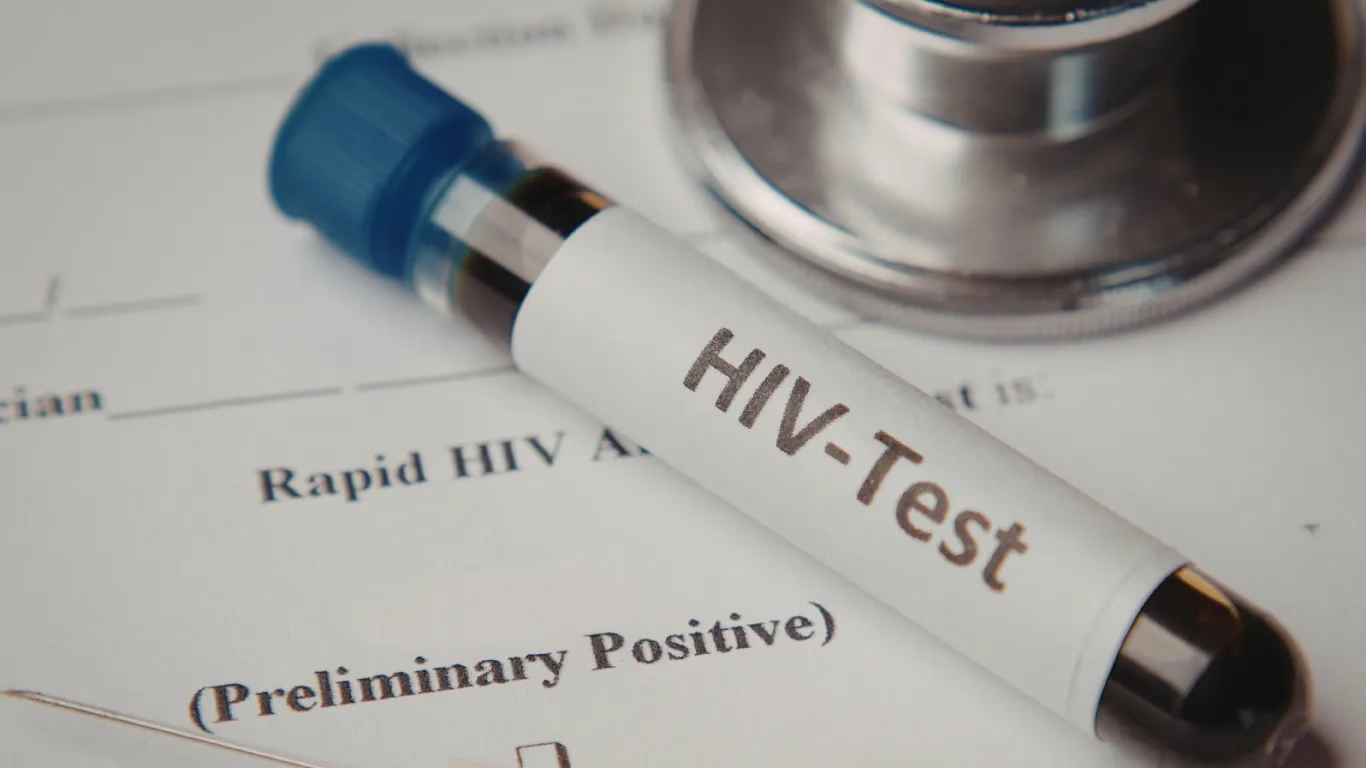
Haryana has conducted HIV screening of nearly 12.40 lakh individuals during the current financial year, with 5,877 cases testing positive, according to officials. Between April 2025 and January 2026, a total of 12,40,205 samples were examined.
Additional Chief Secretary, Health and Family Welfare, Sumita Misra said the state has intensified its HIV/AIDS response by expanding both testing coverage and treatment facilities to ensure wider access. Haryana now operates 104 Integrated Counselling and Testing Centres (ICTCs), including a mobile unit in Faridabad, offering free and confidential services.
The official said the government is focused on ensuring stigma-free access to testing and care for all sections of society. During the same period, 5,65,830 pregnant women were screened for HIV, with 613 found positive and promptly linked to treatment to prevent mother-to-child transmission.
On the treatment front, the state has strengthened its anti-retroviral therapy (ART) network with 24 centres across districts such as Rohtak, Gurugram, Faridabad, Karnal, Hisar, Ambala and Mewat. Thirteen of these centres have recently been set up in medical colleges. Additionally, five facility-integrated ART centres and four link ART centres are functional. At present, 40,851 patients are receiving treatment across Haryana.
Haryana also continues to provide financial support to People Living with HIV (PLHIV) under a monthly assistance scheme launched in December 2021, offering Rs 2,250 per beneficiary. So far, Rs 54.3 crore has been disbursed under the initiative.
To tackle sexually transmitted infections, 31 designated clinics are providing free counselling, syphilis testing and treatment. The state has also implemented 42 targeted intervention projects through Red Cross Societies and NGOs to reach high-risk groups, including female sex workers, men who have sex with men, intravenous drug users, truckers and migrant workers.
For individuals battling opioid dependence, 12 opioid substitution therapy centres and three satellite units are operational, with 9,014 people registered and around 4,570 currently undergoing regular treatment.
Officials added that multiple government departments have been engaged in awareness and sensitisation efforts as part of broader mainstreaming initiatives.