


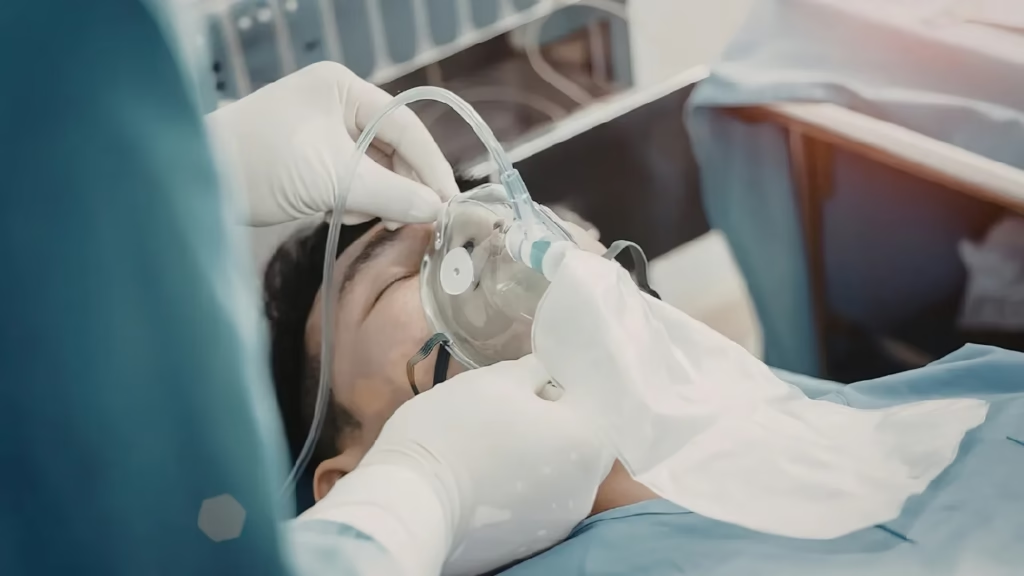
The Haryana Government has released detailed guidelines to regulate the withdrawal of life-sustaining treatment for patients suffering from terminal illnesses or irreversible medical conditions. The framework is designed to ensure that such sensitive decisions are taken through a transparent, ethical, and legally sound process while respecting the patient’s dignity and rights.
Specialist Medical Boards to Review Cases
As per the new guidelines, hospitals will establish dedicated medical boards comprising specialists from relevant disciplines to evaluate every request for the withdrawal of life support. These boards will conduct a thorough assessment of the patient’s medical condition and determine whether the withdrawal of life-sustaining treatment is clinically appropriate. The multidisciplinary review process is intended to ensure objective, evidence-based decision-making.
Based on Supreme Court Directives
The policy has been formulated in line with the legal principles laid down by the Supreme Court concerning the right to die with dignity and the withdrawal of life-sustaining treatment. It emphasises that any such decision must strictly follow the prescribed legal procedures, supported by comprehensive medical evaluation and proper documentation.
Providing Clarity in End-of-Life Care
According to ET, the guidelines are expected to provide greater clarity for hospitals and healthcare professionals dealing with complex end-of-life situations. By introducing a uniform framework, the state aims to minimise uncertainty for clinicians and families while promoting compassionate, patient-centred care.
Promoting Accountability and Consistency
The mandatory constitution of medical boards is expected to improve transparency, accountability, and consistency in end-of-life decision-making across healthcare institutions. The structured process will assist healthcare providers in managing these sensitive situations responsibly while safeguarding patients’ rights and strengthening public confidence in the healthcare system.