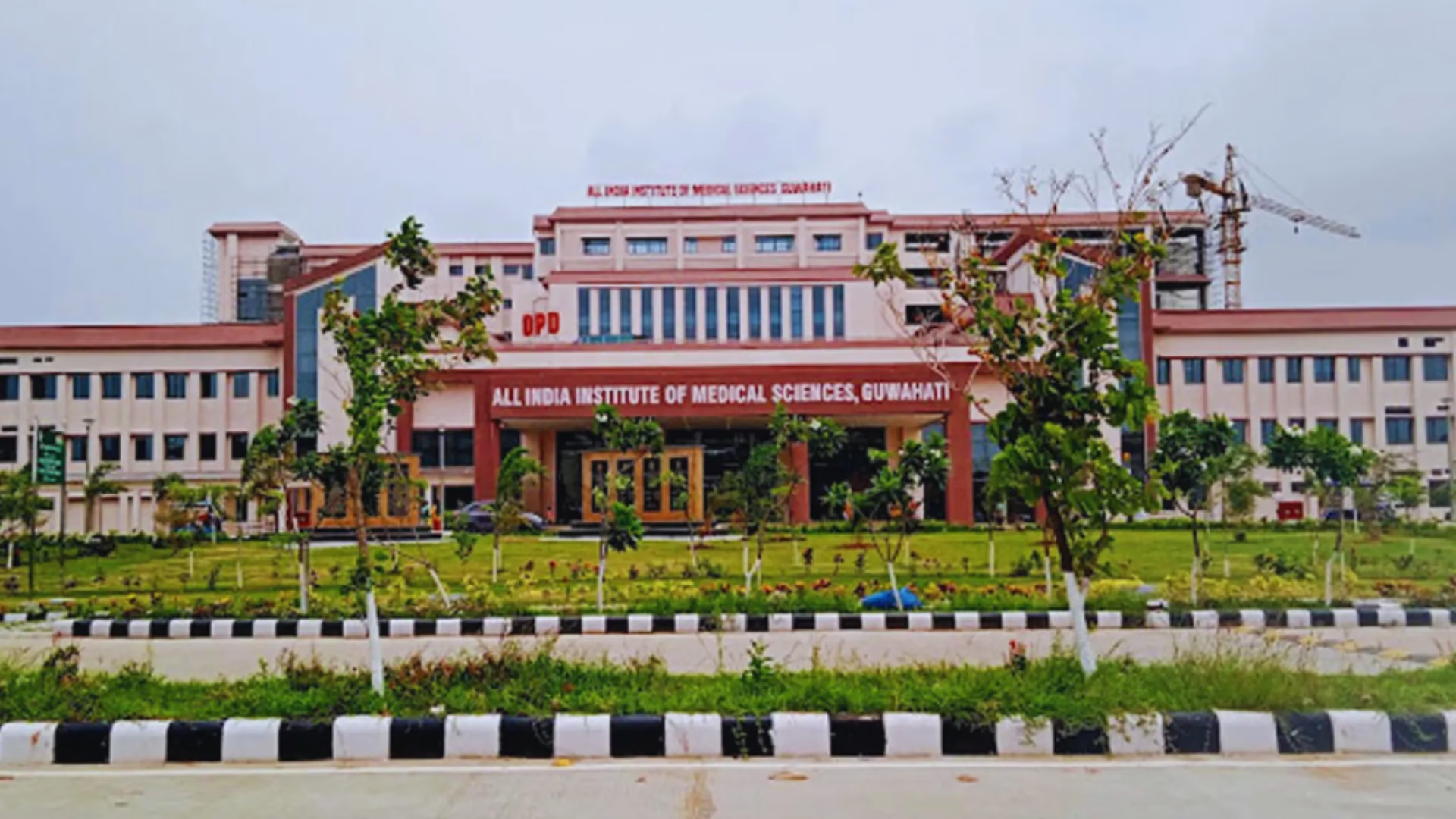
Recent revisions to the Goods and Services Tax (GST) framework indicate a shift in policy focus toward improving affordability and access to cancer care, according to researchers from the All India Institute of Medical Sciences (AIIMS), Delhi.
In a commentary published in the journal Frontier, Dr Abhishek Shankar and Dr Vaibhav Sahni from the Department of Radiation Oncology at Dr BR Ambedkar Institute Rotary Cancer Hospital stated that the reforms address the financial burden often faced by cancer patients and seek to reduce treatment-related costs.
During its 56th meeting, the GST Council recommended a complete exemption on 33 life-saving drugs, including several used in cancer treatment, reducing the tax rate from 5% to zero. The exemption also covers certain patented medicines without generic alternatives. The Council further proposed removing GST on individual health and life insurance policies, which were previously taxed at 18%.
The Council also increased the tax slab on tobacco products to 40%, the highest among goods in the country. However, tobacco products will remain under the 28% slab until outstanding loans and compensation cess requirements are met. The researchers noted that higher taxation on tobacco products has been associated in previous studies with improved public health outcomes.
They cited modelling studies suggesting that increases in tobacco prices can lead to reduced smoking rates, lower mortality, and savings in healthcare expenditure. One study across four Indian states estimated that a price increase of ₹10 per cigarette, combined with a 10% ad valorem tax, could significantly reduce smoking prevalence and associated deaths, while generating savings for the healthcare system, including for Ayushman Bharat Pradhan Mantri Jan Arogya Yojana (AB-PMJAY).
Additional research referenced by the authors indicates that a 50% increase in tobacco tax could avert a substantial number of deaths over a decade and reduce long-term healthcare costs. They also observed that cigarette and smokeless tobacco affordability has either remained stable or increased over time in India.
Dr Shankar stated that removal of GST on cancer drugs, rare disease therapies, medical equipment and diagnostics could lower out-of-pocket expenses for patients, subject to manufacturers passing on the tax benefits. The exemption of health and life insurance policies from GST may also reduce financial barriers for households.
The authors added that effective implementation, timely tax refunds, and monitoring mechanisms would be important to ensure that the reforms achieve their intended outcomes. Overall, they described the GST changes as measures that could contribute to improving affordability and access to cancer care while also addressing public health considerations.