
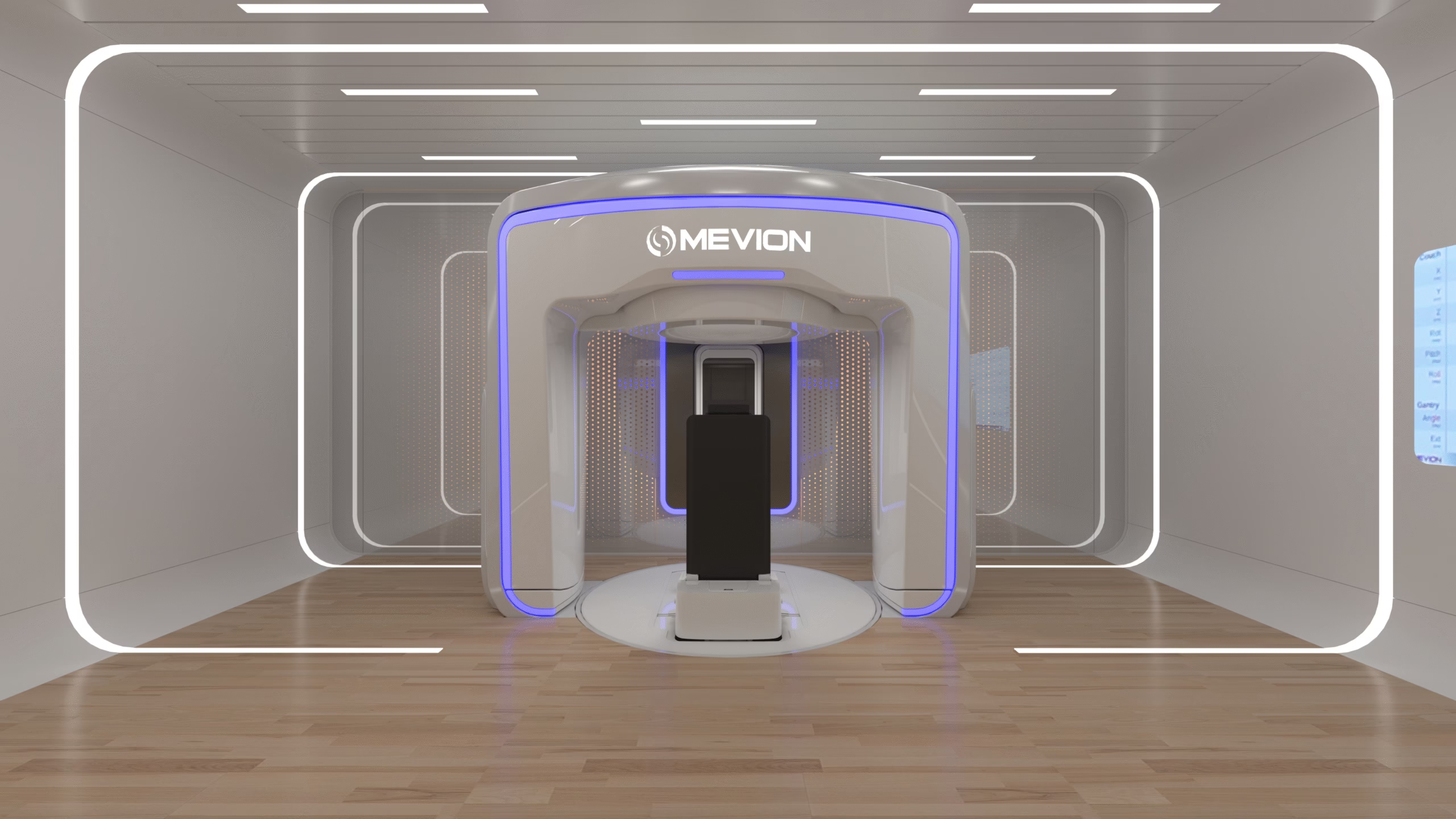
Fortis Healthcare, part of IHH Healthcare, has announced plans to install the MEVION S250-FIT Proton Therapy System at Fortis Memorial Research Institute (FMRI), Gurugram. Subject to regulatory approvals and site preparations, the facility will become the first in India to introduce upright proton therapy and the first in the country to install Leo Cancer Care’s Marie upright patient positioning and imaging system.
Proton therapy to strengthen precision cancer care
The planned system is designed to deliver highly targeted radiation to tumours while limiting radiation exposure to surrounding healthy tissues. Unlike conventional X-ray-based radiation therapy, proton therapy can minimise exit radiation beyond the tumour, potentially reducing the dose received by nearby organs.
The technology may be particularly useful for selected adult and paediatric cancers, including tumours located close to sensitive structures such as the brain, spinal cord, heart and lungs.
Seated treatment instead of conventional gantry
The MEVION S250-FIT combines a compact proton accelerator and fixed-beam delivery system with Leo Cancer Care’s Marie 360-degree upright positioning platform and integrated CT imaging.
Instead of using a large rotating gantry around a patient lying on a treatment table, the system positions patients in a seated, upright orientation in front of a fixed proton beam.
The upright approach may also benefit patients who have difficulty lying flat because of pain, breathing problems, limited mobility or anxiety. Its open configuration is designed to reduce the sense of confinement during treatment.
Integrated imaging and treatment planning
The platform incorporates CT imaging at the treatment position, allowing clinicians to image, position and treat patients in the same orientation. This is intended to support alignment and image-guided treatment workflows.
Treatment planning will be supported by RayStation software from RaySearch Laboratories, which is designed for proton therapy treatment planning.
Compact system may reduce infrastructure requirements
A key feature of the planned installation is its compact architecture. Fortis said the system can be installed within an existing building at FMRI, whereas a conventional gantry-based proton therapy facility would require substantially more space and infrastructure.
The technology could therefore provide an alternative pathway for established cancer centres seeking to introduce proton therapy without constructing a large dedicated facility.
Fortis to expand advanced oncology capabilities
FMRI houses the Fortis Cancer Institute, which brings together medical, surgical and radiation oncology, precision diagnostics and multidisciplinary cancer-care expertise.
Dr Ashutosh Raghuvanshi, Managing Director & CEO, Fortis Healthcare, said the planned installation is aimed at strengthening precision oncology, addressing infrastructure barriers and expanding access to advanced cancer treatment.
Stephen Towe, CEO of Leo Cancer Care, said the project marks the company’s entry into India and demonstrates how upright radiotherapy can help overcome infrastructure limitations associated with conventional proton therapy facilities.
The proposed installation at FMRI remains subject to applicable regulatory approvals and completion of necessary site preparations.